Get Full Government Meeting Transcripts, Videos, & Alerts Forever!
Get email alerts on the Maternity Cost Sharing topic
No spam. Unsubscribe anytime.
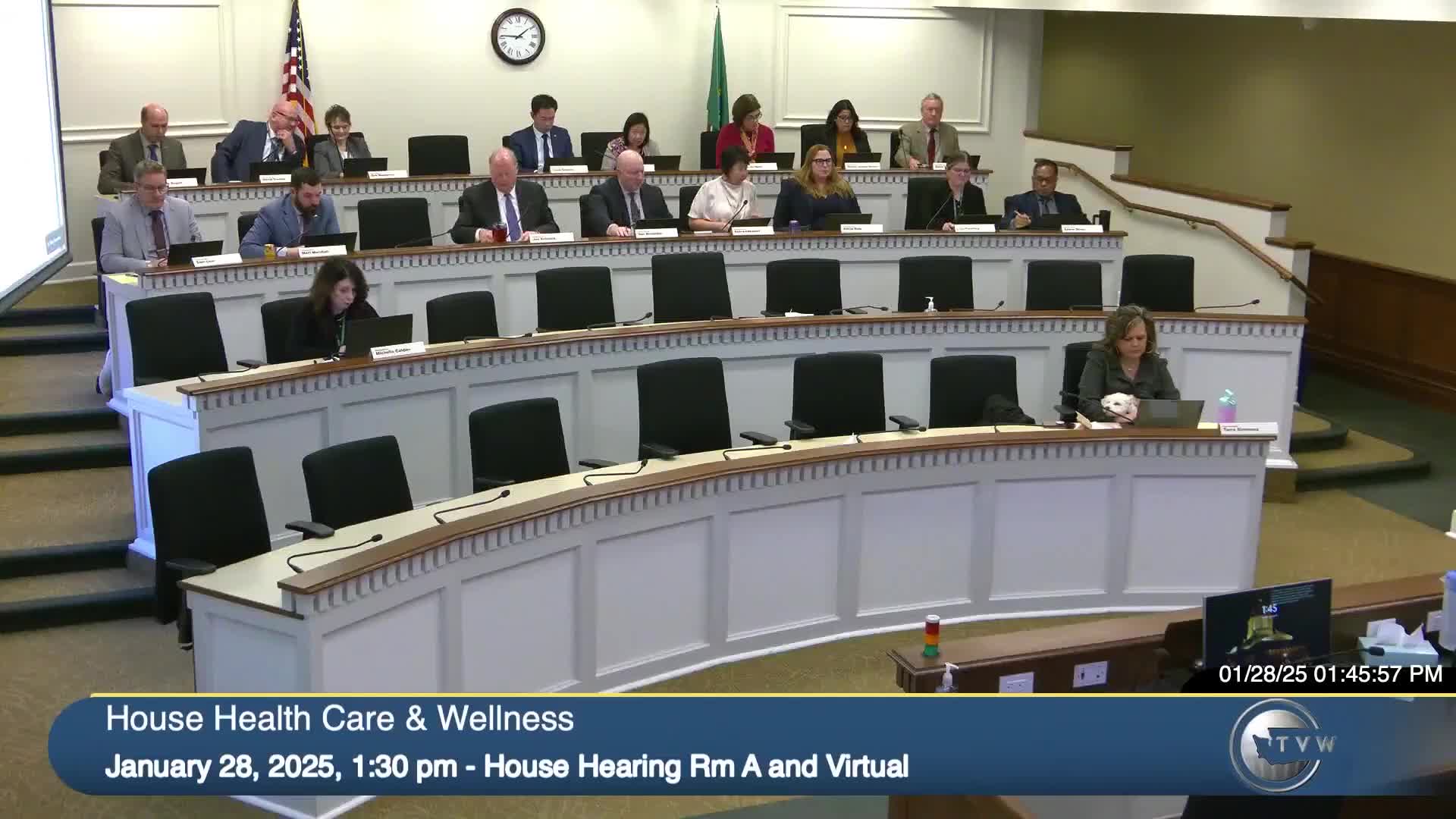
Committee considers removing deductibles for labor-and-delivery services starting 2026
Summary
House Bill 1291 would require health plans issued or renewed on or after Jan. 1, 2026, to cover labor-and-delivery services without applying the enrollee deductible, while any enrollee cost-sharing payments must count toward the deductible; health plans that are high-deductible must preserve HSA eligibility.
The House Health Care & Wellness Committee heard testimony on House Bill 1291, a measure that would require health plans issued or renewed on or after Jan. 1, 2026, to cover labor-and-delivery services before an enrollee meets the plan deductible. Any cost-sharing payments an enrollee makes for those services would still be applied to the enrollee’s deductible, and high-deductible health plans must set the deductible at the minimum level necessary to preserve Health Savings Account tax treatment.
Kim Weidner, committee staff, summarized the bill and its legislative background, noting a 2023 OIC-directed actuarial analysis by Milliman that produced five options to eliminate cost sharing for maternity care. Widespread testimony framed the bill as intended to reduce financial barriers to childbirth and improve maternal and infant outcomes.
Representative Alicia Ruehl, prime sponsor, described personal experience with long-term bills after childbirth and said the measure would help many families. “Having a baby in this country and particularly in Washington state is very, very expensive,” Ruehl said. She told the committee she took eight years to pay off bills after her last child’s birth and said removing the deductible for maternity care would improve health outcomes and financial stability for families.
Health-plan and employer representatives urged caution and asked for clearer scope language. Peggy Lewis Fu, executive director of the Association of Washington Health Care Plans, testified that removing or reclassifying cost sharing changes fiscal dynamics; she urged the committee to consider cumulative impacts of multiple cost-sharing bills and recommended clarifying that the bill apply only to in-network providers and align with billing codes for labor-and-delivery services. Lewis Fu noted that allowing copays and coinsurance to count toward deductibles can accelerate when enrollees hit deductible thresholds, shifting coverage of other services earlier in the year.
Patient advocates and clinicians testified in favor. Katherine Lewandowski, a registered nurse with Whole Washington (testifying remotely), called the bill a “nice stopgap” while urging broader reforms such as a state Health Trust proposed in another bill. Testimony highlighted the cost burdens families face, the role of deductibles and high out-of-pocket costs, and the need to evaluate cumulative fiscal impacts.
Committee members questioned tradeoffs with other non-negotiable services such as stroke or cancer care and asked where costs would be borne—through premiums, employer contributions, or plan design changes. Representative Caldier asked whether costs should be shifted to monthly premiums; Ruehl said the committee must weigh priorities and work together on tradeoffs.
The hearing was limited to testimony; no committee vote or amendment was recorded in the transcript. The bill’s effective date language in the staff summary states the plan changes apply to health plans issued or renewed on or after Jan. 1, 2026.