Get Full Government Meeting Transcripts, Videos, & Alerts Forever!
Get email alerts on the Interpreter Background Checks topic
No spam. Unsubscribe anytime.
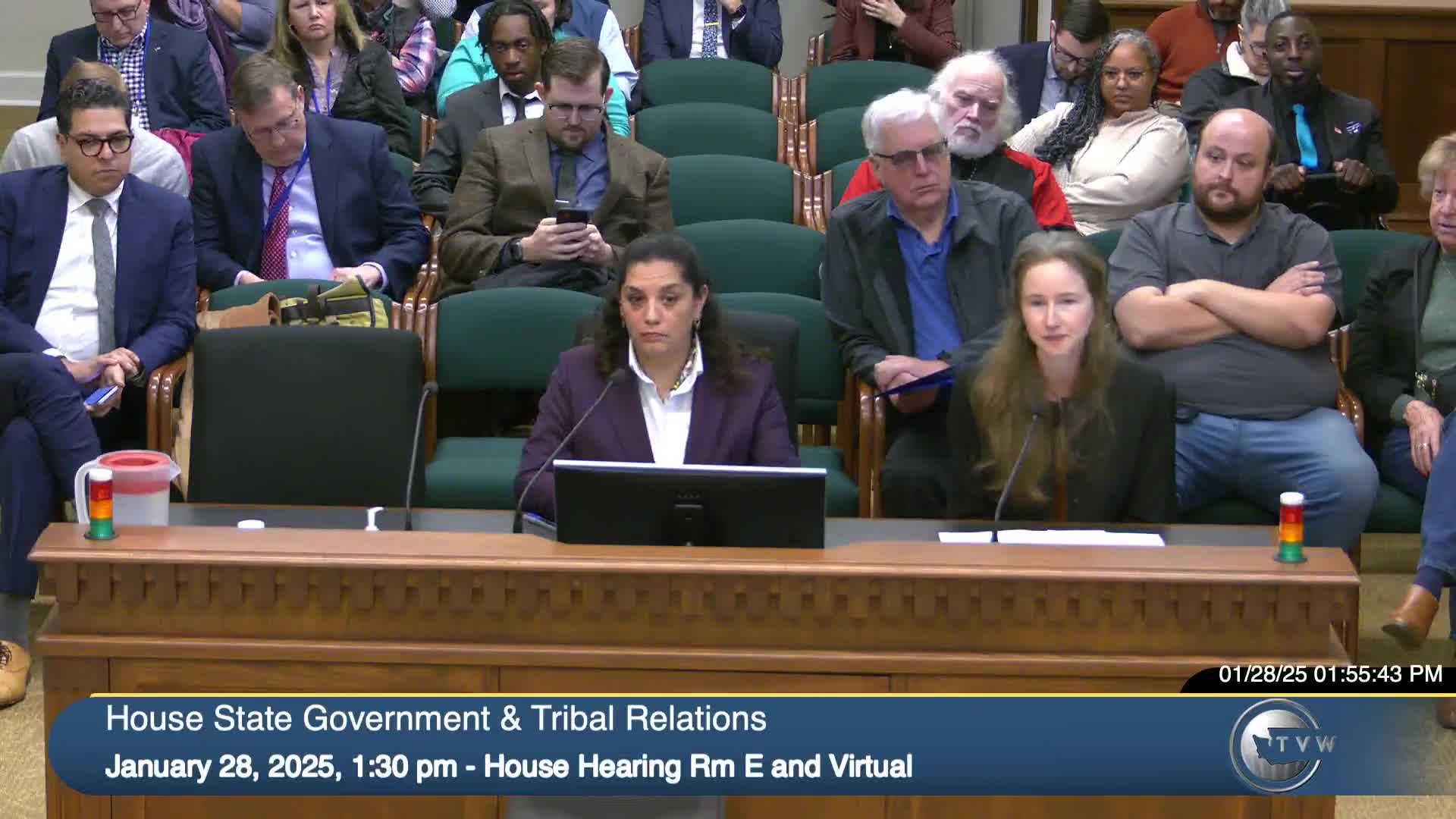
Committee hears bill to require FBI fingerprint checks for interpreters working with state agencies
Summary
A public hearing on House Bill 1419 drew testimony from interpreters and union representatives urging fingerprint-based FBI background checks for interpreters who work with DSHS, HCA, DCYF and L&I; bill proponents say the change would close out-of-state criminal-record gaps, while opponents were not recorded during the hearing.
House Bill 1419 would require interpreters hired by state agencies that provide services to limited-English-speaking people to submit fingerprints for a Federal Bureau of Investigation identity-history summary, and to provide that summary at least once per year.
The measure was introduced to the State Government and Tribal Relations Committee with a staff briefing from Connor Schiff, counsel to the committee. Schiff summarized the agencies affected and the core change: “House bill 1419 requires interpreters hired by these entities to submit a fingerprint background check to the Federal Bureau of Investigation. In addition, interpreters must submit an FBI identity history summary at least once per year.”
Supporters at the hearing described the work interpreters do and why national checks matter. Representative Sam Lowe, prime sponsor, told the committee many interpreters work in high‑trust settings: “They're in custody situations. They're with DSHS, LNI, and even in very, personal, very close doctor‑patient relationship situations doing interpretations.” Lowe said the Washington State Patrol background check only covers crimes in Washington and that a low‑cost national check would “bring peace of mind” for vulnerable people who rely on interpreters.
Katie Durkin, representing the Washington Federation of State Employees, said interpreters serve populations that require particularly careful vetting. “We don't want to risk someone convicted of financial fraud in Idaho or child abuse in Oregon having detailed access to financial and medical records alone in the room with vulnerable individuals,” she said. Durkin also raised concerns about outsourcing of interpretation services to contractors based outside Washington and, potentially, overseas, and said current protocols can leave gaps in who is screened.
Two interpreters testified in support. James Martin, identifying himself as DSHS‑certified and authorized for Spanish, described routine access to sensitive medical and social‑services encounters and said voters and patients “believe that the interpreter who's moving the information between them and their provider is somebody who can be trusted.” Quan Tran, president of Interpreters United, said the union represents about 1,000 interpreters across roughly 45 languages and called for fingerprinting and national background checks to “protect this vulnerable group.”
No formal committee action or vote was recorded during the hearing; sponsors and witnesses limited their remarks to testimony and answered committee questions. The committee closed the public hearing on HB 1419 after the panel testified and moved on to the next bill on the agenda.
The bill would change hiring and certification requirements for interpreters who work for the Health Care Authority, Department of Social and Health Services (DSHS), Department of Children, Youth, and Families (DCYF), and Department of Labor and Industries (L&I) by adding a requirement for FBI fingerprint‑based identity‑history summaries. The hearing record does not include opponents speaking against the bill nor a formal cost estimate in testimony; staff noted a physical fiscal note had been requested but was not yet available at the time of the briefing.