Get Full Government Meeting Transcripts, Videos, & Alerts Forever!
Get email alerts on the Sentencing Reform topic
No spam. Unsubscribe anytime.
Bill would let people sentenced before 2023 seek resentencing when juvenile adjudications inflated offender scores
Summary
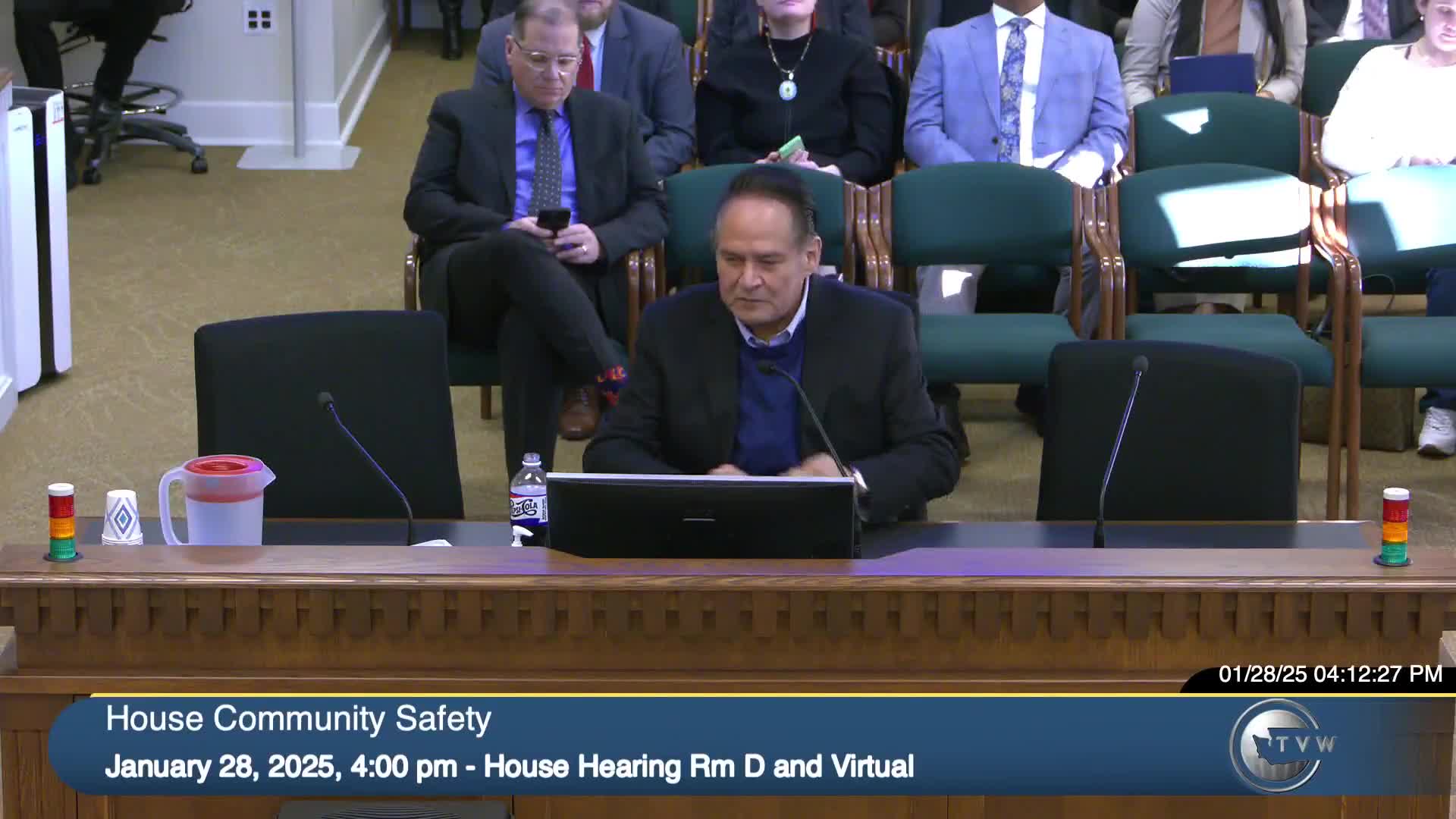
Representative Chris Stearns told the House Community Safety Committee on Jan. 28 that House Bill 1274 would let people sentenced for offenses committed before July 23, 2023, petition for resentencing if juvenile adjudications improperly increased their adult offender score.
Representative Chris Stearns, prime sponsor of House Bill 1274, told the committee the 2023 change that largely removed juvenile adjudications from adult offender-score calculations left many people behind because the change was not retroactive. Stearns said about 856 people currently incarcerated could be affected and emphasized disproportionate impacts on Native American people.
Staff described the proposed substitute, which would: establish resentencing procedures for people sentenced before July 23, 2023, whose offender score included juvenile dispositions that are not scorable under current law; set timing and confinement criteria tied to release dates and length served; create a rebuttable presumption in favor of resentencing for qualifying petitions; provide for limited appointed counsel subject to appropriations; and strengthen victim and survivor notice and advocacy resources for resentencing hearings.
Testimony for the bill came from tribal leaders, judges and survivor-restorative-justice advocates. Jared Michael Erickson, chair of the Confederated Tribes of the Colville Reservation, told the committee tribal members are disproportionately affected, saying more than 40% of people in DOC with juvenile points were from tribes in Washington, Idaho and Oregon, and that the Colville tribe has high representation. Superior Court Judges Brienne Beggs and Catherine Loring, both testifying in support on behalf of the Minority and Justice Commission in their individual capacities, said the measure addresses fairness and racial disproportionality and noted the bill staggers resentencings to reduce administrative burden.
Opponents, including the Washington Association of Prosecuting Attorneys, the Association of Sheriffs and Police Chiefs, and some victim advocates, said resentencings can retraumatize victims and create court and prosecutor capacity problems. Prosecutors raised concerns about identifying eligible cases and county capacity to handle additional hearings; prosecutors asked for better case-level data to determine how many eligible files exist and what the practical burden would be. The Office of Public Defense and the state's public-defense representatives said they can perform case identification work if resourcing is provided and presented sampling estimates suggesting hundreds of eligible individuals and significant sentence-month reductions on average.
The committee took testimony and indicated staff and stakeholders would continue negotiations on timing, capacity and victim-notification issues before the bill moves forward.