Get Full Government Meeting Transcripts, Videos, & Alerts Forever!
Get email alerts on the Corrections Communications topic
No spam. Unsubscribe anytime.
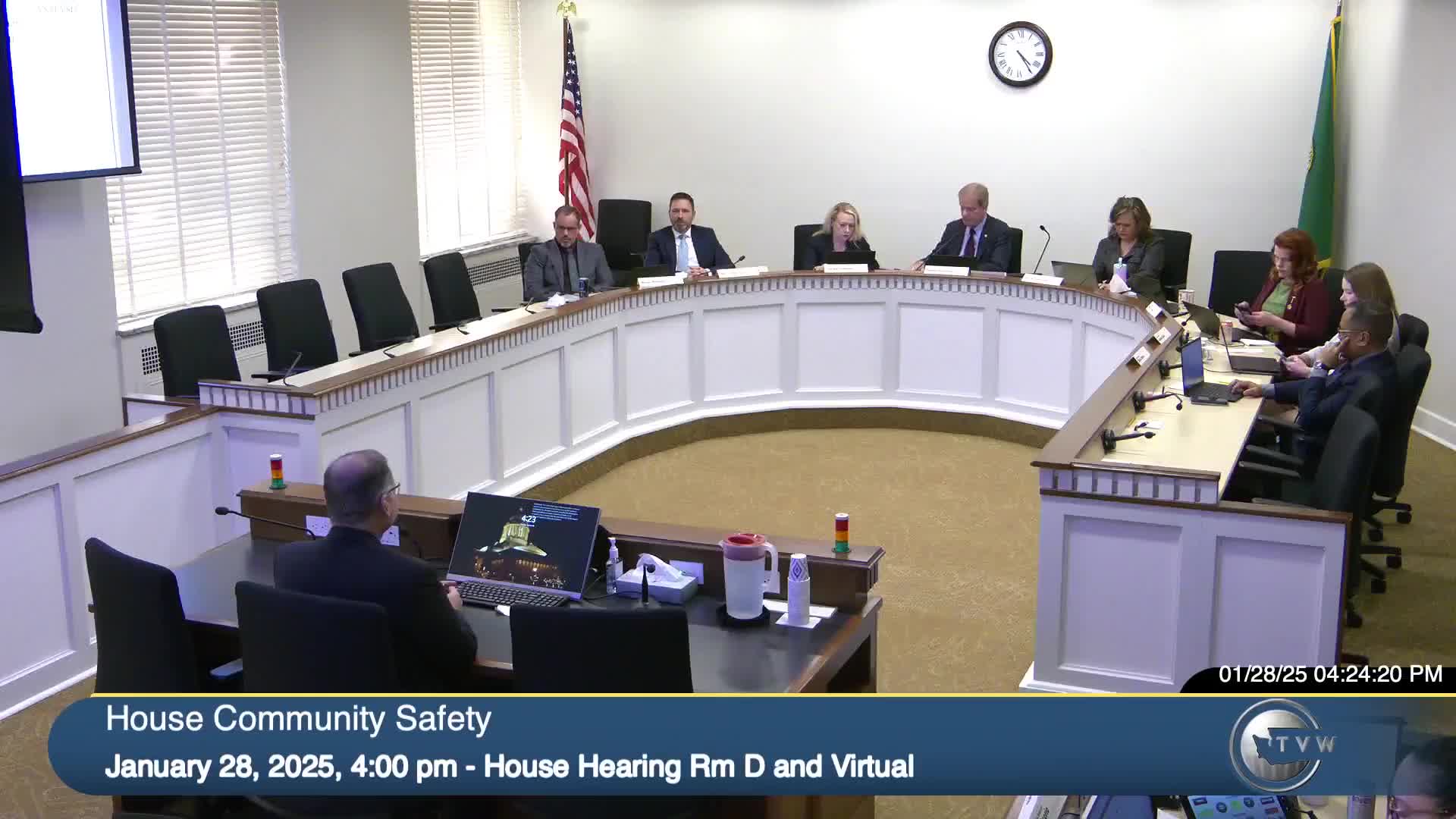
Committee hears bill to make prison phone calls and tablets free for incarcerated people
Summary
Representative Strom Peterson told the House Community Safety Committee on Jan. 28 that House Bill 1301 would require DOC and DCYF to provide voice communications at no cost to callers or recipients and to preserve existing access levels to phones and tablets.
Representative Strom Peterson, prime sponsor of House Bill 1301, told the House Community Safety Committee that the bill would remove the financial burden on families by requiring voice communication services to be provided at no charge to people in DOC and DCYF custody and to their contacts.
Committee staff summarized the bill's main provisions: voice communication must be free for both the initiating and receiving party; DOC and DCYF may not receive revenue from the services; DOC must preserve the number of wall phones per housing unit as of Jan. 1, 2025; tablets and other electronic media must be provided free if the agency offers them; contract information must be posted prominently online and in housing units and on tablets; and contractors must report expanded data annually. Staff noted the agencies currently contract with a private vendor (Securus) for telecommunications and that youth in DCYF juvenile facilities are not charged for calls under existing policy.
Family members, reentry advocates and public defense representatives testified in favor. Larry Jefferson, Director of Public Defense, said "This has to be free," describing the families who pay for calls as often being low-income mothers, grandparents and partners. Jay (Jerry) Thomas, who identified himself as incarcerated, described the calls as vital to maintaining a relationship with his daughter and urged the committee to pass the bill. Kelly Olsen, policy manager at Veil Survival and formerly incarcerated, said free communications help incarcerated people contact advocacy groups that support reentry.
Representative Peterson told the committee that evidence shows family connections support successful reentry and that Washington already ranks better than many states on phone fees; he said the state should nevertheless go further. Committee members raised questions about safeguards for victims and monitoring. Peterson and witnesses said monitoring and safety controls are already part of current contracts and that agencies would retain those safeguards.
The committee took public testimony and did not vote on the bill during the hearing.