Get Full Government Meeting Transcripts, Videos, & Alerts Forever!
Legislators hear overview of Oregon civil‑commitment law, case counts and eligibility questions
Summary
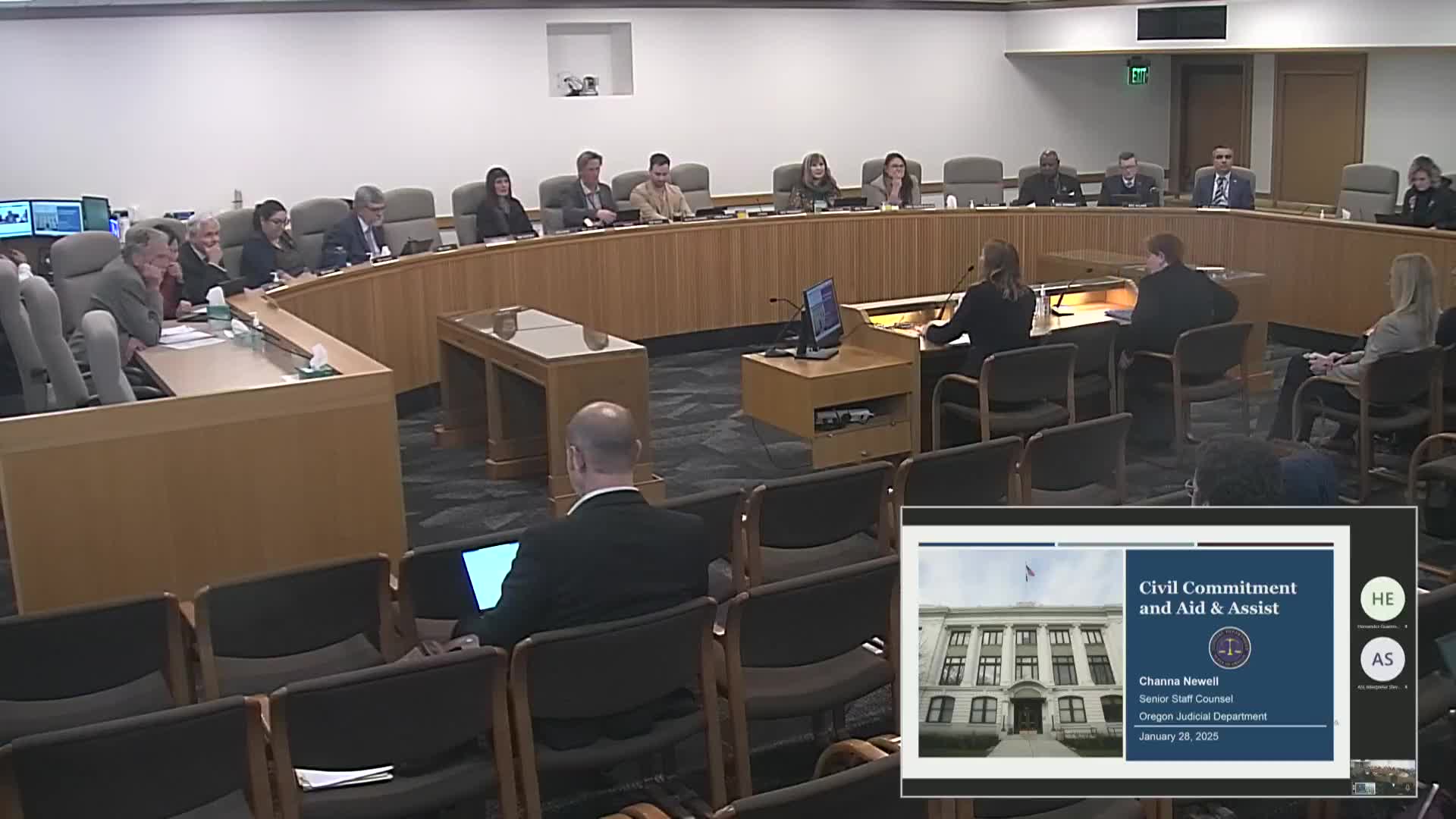
Chana Newell, senior staff counsel at the Oregon Judicial Department, told a joint Senate and House Judiciary Committee hearing that civil commitment is “involuntary treatment of a person after a finding that they are a danger to themself, a danger to others, or unable to meet their basic needs.”
Chana Newell, senior staff counsel at the Oregon Judicial Department, told a joint Senate and House Judiciary Committee hearing that civil commitment is “involuntary treatment of a person after a finding that they are a danger to themself, a danger to others, or unable to meet their basic needs.”
Newell gave committee members a statutory primer on Oregon’s civil‑commitment framework and basic annual counts, saying the most common pathway is a 426 mental‑illness commitment and that the state files nearly 8,000 to 9,000 notice‑of‑mental‑illness (NMI) filings each year. She said most NMIs do not reach a full commitment hearing: “14% end up in some kind of diversion, and about 6% end up in a commitment hearing.”
The numbers reflect a short timeline in statute: a person placed on certain holds must be brought to a hearing within five days, Newell said, and counties must complete investigations, a probable‑cause check and an examiner’s evaluation within that span. A voluntary 14‑day diversion option exists for people willing to accept treatment; Newell said practice varies across the state.
Why the matter matters: Commitments remove a person’s liberty and attach stigma, Newell told the committees, so courts balance individual liberty and public safety. Newell and lawmakers also flagged statutory gaps and interpretive questions that affect who can be committed and how: for example, the 427 commitment process for…
Already have an account? Log in
Subscribe to keep reading
Unlock the rest of this article — and every article on Citizen Portal.
- Unlimited articles
- AI-powered breakdowns of topics, speakers, decisions, and budgets
- Instant alerts when your location has a new meeting
- Follow topics and more locations
- 1,000 AI Insights / month, plus AI Chat