Get Full Government Meeting Transcripts, Videos, & Alerts Forever!
Get email alerts on the Department Of Revenue Technical Changes topic
No spam. Unsubscribe anytime.
Department of Revenue presents technical omnibus bill; staff outline modest policy and administrative changes
Summary
Department of Revenue staff presented House Bill 2339, an omnibus bill containing technical and administrative statutory changes intended to align statute with agency practice and fix inadvertent implementation issues.
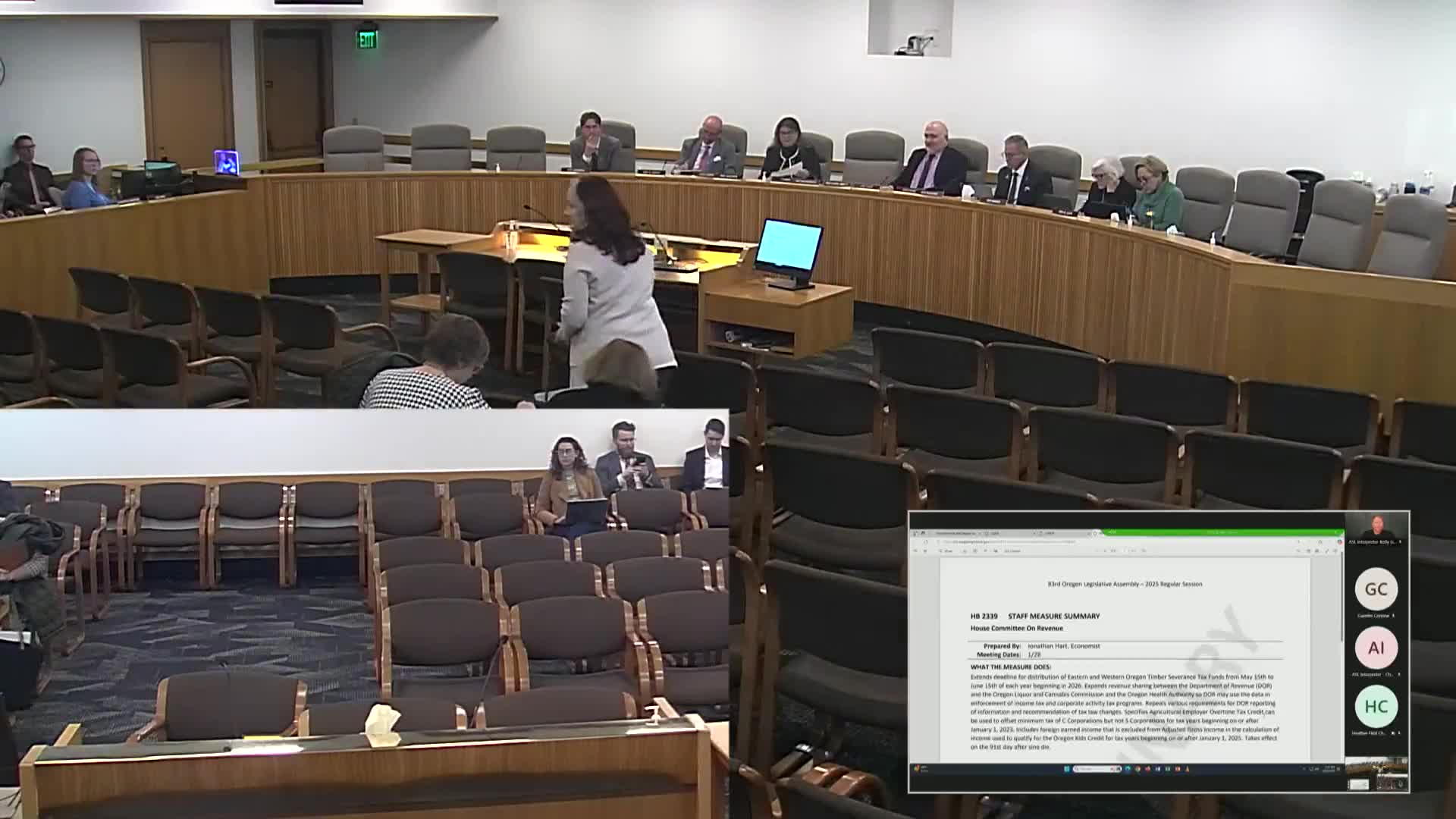
The House Committee on Revenue received a presentation Tuesday on House Bill 2339, a Department of Revenue omnibus bill that compiles several technical and administrative changes the agency says will improve operations and align statute with legislative intent.
Marjorie Taylor of the Department of Revenue summarized the package and said the bill groups “minor changes that are technical or they align statute with legislative intent or codify current practice.” Taylor described five groups of changes in the written testimony and the section-by-section analysis posted to the Oregon Legislature’s OLIS web portal.
Key items identified during the hearing included a realignment of calculation and distribution dates for the small-tract forest-land severance tax; proposals to share data internally between the agency’s business programs and personal tax/compliance teams for the marijuana and psilocybin programs; elimination of five reports the agency considers duplicative; conforming amendments to other statutes; alignment changes for an agricultural overtime tax credit; and a correction that would limit foreign earned income from qualifying for the Oregon Kids Credit.
Committee members asked whether the change to the Oregon Kids Credit was intended. Taylor said agency staff believe it was an inadvertent implementation issue; Ben Gilley with the Department of Revenue explained the correction is expected to reduce eligibility. Gilley told the committee the agency identified about 60 returns that claimed the credit under the current implementation and that the total value involved was about $70,000. Gilley said the agency does not believe the claims reflected intentional manipulation but rather software and eligibility issues that produced unintended claims.
Members asked whether any of the omnibus items constituted a substantive policy change; agency staff described the package as largely technical and said significant items would be split into standalone bills. No committee vote was recorded during the public hearing.