Oregon insurance commissioner: wildfire losses, reinsurance and inflation driving higher homeowners premiums; no carriers have left state
Loading...
Summary
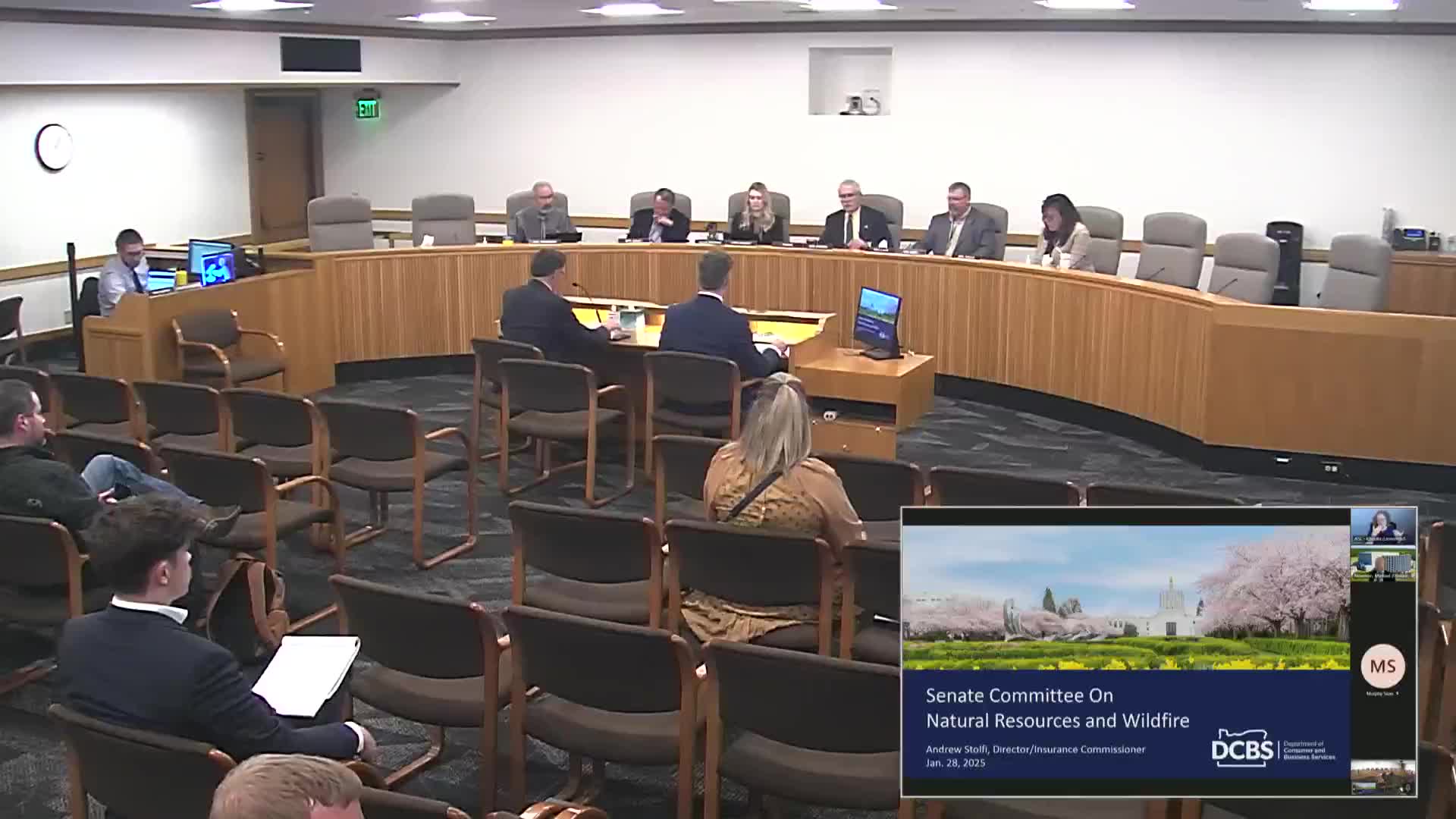
Oregon Department of Consumer and Business Services Director and State Insurance Commissioner Andrew Stolfi told the Senate Committee on Natural Resources and Wildfire on Jan. 28, 2025, that escalating catastrophe losses, rising reinsurance costs and inflation are the main drivers of higher homeowners insurance premiums and some nonrenewals in Oregon.
Oregon Department of Consumer and Business Services Director and State Insurance Commissioner Andrew Stolfi told the Senate Committee on Natural Resources and Wildfire on Jan. 28, 2025, that escalating catastrophe losses, rising reinsurance costs and inflation are the main drivers of higher homeowners insurance premiums and some nonrenewals in Oregon.
Stolfi said his office’s data through 2023 (with updated Fair Plan figures for 2024) show a statewide average homeowners premium of about $886 in 2023, roughly a 52% increase since 2018, and estimated catastrophe losses of more than $4 billion over the last five years. He told the committee that insurers have raised rates and tightened underwriting nationwide because of catastrophic wildfire and other climate-fueled losses, higher rebuilding costs, and more expensive reinsurance.
Why it matters: homeowners premiums, availability and company renewal decisions affect housing stability for residents across wildfire-prone and lower-risk parts of Oregon. The commissioner described how those market pressures differ from California’s experience and what regulators and consumers should expect next.
Stolfi opened by saying homeowners coverage decisions are driven primarily by (1) the likelihood a policyholder will file a claim and (2) how large that claim will be, as estimated by insurers and actuaries. He presented charts showing a sharp rise in insured catastrophe losses in recent years, noting Oregon’s five-year cat losses are roughly four times the previous 40 years combined. He said that combination of large wildfire losses, inflation and rising reinsurance prices has pushed insurer costs up and led to market adjustments.
Stolfi compared Oregon and California markets to explain different outcomes. He said California’s market has larger concentrations of structure loss and that its regulatory history includes two features that affect insurer behavior: California law prohibits insurers from passing reinsurance costs through to policyholders and restricts the use of catastrophe modeling for underwriting. By contrast, Oregon allows insurers to pass reinsurance costs as an operating expense and to use modeling; Stolfi argued those differences reduce incentives to replicate California’s regulatory trade-offs here.
On policy counts and the Fair Plan: Stolfi said the standard market in Oregon held just under 1.6 million policies at the end of 2023, an increase of about 10% since 2018, while the Fair Plan (the insurer of last resort) is a much smaller share of Oregon’s market than California’s. He characterized Fair Plan enrollment as a small fraction of Oregon’s market (on the order of a few tenths of a percent), though he said Fair Plan enrollments spiked in 2024 compared with prior years.
Nonrenewals, cancellations and filings: Stolfi noted that the statewide nonrenewal rate ended 2023 near 7.8 per 1,000 policies (about 0.78%), that nonrenewals have risen modestly since 2018, and that cancellations for nonpayment rose about 22% comparing 2018 to 2023. He emphasized that, despite these effects, his office has not observed insurers leaving Oregon because of wildfire risk; rather, companies have tightened risk tolerances in higher‑risk areas and raised rates.
On the state wildfire hazard map and consumer reports: the commissioner said his office has received complaints from consumers who believed insurers were using the state wildfire hazard map in underwriting. DCBS reviewed dozens of complaints and underwriting documents the insurers file with the regulator and found no evidence insurers were using the state map in underwriting decisions. Stolfi said the department is educating agents and insurers about what tools they do use, and that misleading statements to consumers about the map could violate Oregon’s insurance code and be subject to enforcement.
Rate review and public hearings: Stolfi flagged a regulatory detail he said affects filing behavior: under Oregon practice, certain rate increases trigger public hearings in other states (for example, a 7% threshold cited for another state), and he said that can create incentives for insurers to file slightly below public‑hearing triggers even if larger increases may be actuarially supported. He said Oregon’s rate‑review framework differs and that those differences affect comparative behavior.
Consumer assistance and next steps: Stolfi closed by urging affected policyholders to contact DCBS’s consumer advocates for help and by noting the department is collecting zip‑code level data and will present more granular findings in future briefings.
Ending: Committee members asked follow-up questions about extreme premium increases, tsunami and flood insurance on the coast, and the role of rebuilding costs and underinsurance. Stolfi said he would follow up on requests for additional data and reiterated the department’s consumer complaint process and outreach efforts.