Get Full Government Meeting Transcripts, Videos, & Alerts Forever!
Get email alerts on the Veterans Services topic
No spam. Unsubscribe anytime.
Oregon Department of Veterans Affairs outlines programs, budget priorities and outreach plans to House committee
Summary
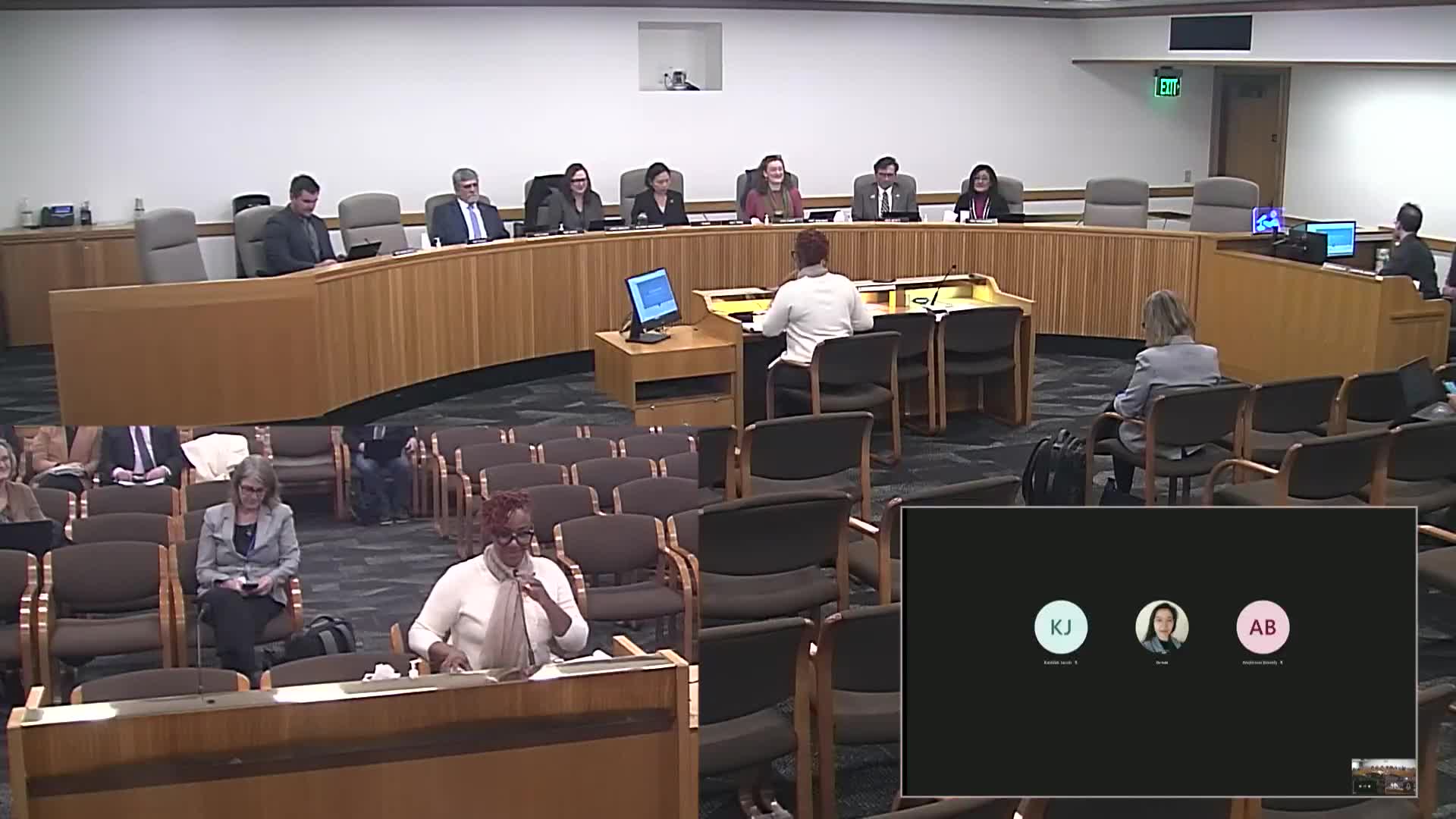
Dr. Nakia Counsel Daniels, director of the Oregon Department of Veterans Affairs, told the House Committee on Emergency Management, General Government, and Veterans on Jan. 28 that ODVA is marking roughly 80 years of service, is expanding outreach and continues to prioritize behavioral health, long‑term care and benefits advocacy.
Dr. Nakia Counsel Daniels, director of the Oregon Department of Veterans Affairs, told the House Committee on Emergency Management, General Government, and Veterans on Jan. 28 that ODVA is marking roughly 80 years of service, is expanding outreach and continues to prioritize behavioral health, long‑term care and benefits advocacy.
Daniels gave the committee an overview of ODVA programs and funding sources, including Measure 96 — the 2016 constitutional dedication of 1.5% of lottery proceeds to veterans services — and large federal Veterans Affairs expenditures in Oregon. She said the agency administers multiple grants and programs and described divisions that handle home loans, appeals and advocacy, strategic partnerships, veterans homes and aging veterans services.
The director highlighted several numerical details for the committee: ODVA administers 27 veteran services grants and programs; federal VA expenditures in Oregon in fiscal year 2023 were described as nearly $4,000,000,000, with disability compensation described as just under $2,000,000,000 and health care spending described as more than $1,800,000,000. Daniels said about 96,000 veterans are enrolled in federal VA health care in Oregon and that roughly 6,970 veterans used GI Bill benefits supported by about $128,000,000 in federal education benefits in the most recent fiscal year she cited. She said more than half of Oregon veterans are age 65 or older and that veterans of color, women veterans and LGBTQ+ veterans are growing groups the agency seeks to serve.
Daniels described ODVA’s historic home‑loan program as self‑sufficient, providing low‑interest mortgages and, she said, having issued more than $8,000,000,000 in loans to more than 350,000 Oregonians since inception. She also told the committee ODVA oversees two veterans homes (Dallas and Lebanon) and is working with the Legislature to establish a third in Roseburg.
Committee members asked about specific programs and authority. Daniels confirmed ODVA already has statutory authority to offer refinancing under its home loan program and said the agency is in the rulemaking process to implement a refinance option described in the governor’s recommended budget. She also described expanded outreach staff enabled by Measure 96 funding — including tribal, women’s, LGBTQ+ and corrections‑focused veterans coordinators — and said the agency uses a mix of mail, email, in‑person outreach and a veterans magazine to connect with veterans.
Deputy Director Jamal Fox, Chief Operating Officer Rex Emery and Legislative Director Jay DeFilippo each introduced themselves and described areas of responsibility. Committee members thanked ODVA for work on veterans homes and for outreach in Douglas County and Roseburg, where a future veterans home is planned.
Daniels and staff said behavioral health and suicide prevention remain urgent priorities because of Oregon’s veteran suicide rate; the director framed those services as driving multiple budget and program requests in the governor’s recommended budget. She also listed several legislative concepts ODVA identified for the session, including HB 2341 (data sharing of email addresses), HB 2344 (updates to the World War II Memorial on the Capitol Mall) and HB 2559 (alignment of Oregon’s statutory definition of “veteran” with federal definitions), and repeated that ODVA is developing a home‑loan refinance program by rule.
The presentation closed with an invitation for committee members to tour the Lebanon and Dallas veterans homes and to meet ODVA staff at a follow‑up visit.