Get Full Government Meeting Transcripts, Videos, & Alerts Forever!
Get email alerts on the Education Administration topic
No spam. Unsubscribe anytime.
ESDs present regional role to lawmakers as committee hears bill clarifying bond authority
Summary
House Education held an informational hearing on Oregons Education Service Districts (ESDs) and a short public hearing on House Bill 2514, which would clarify statutory language allowing ESDs to seek voter approval for general obligation bonds in the same manner as school districts.
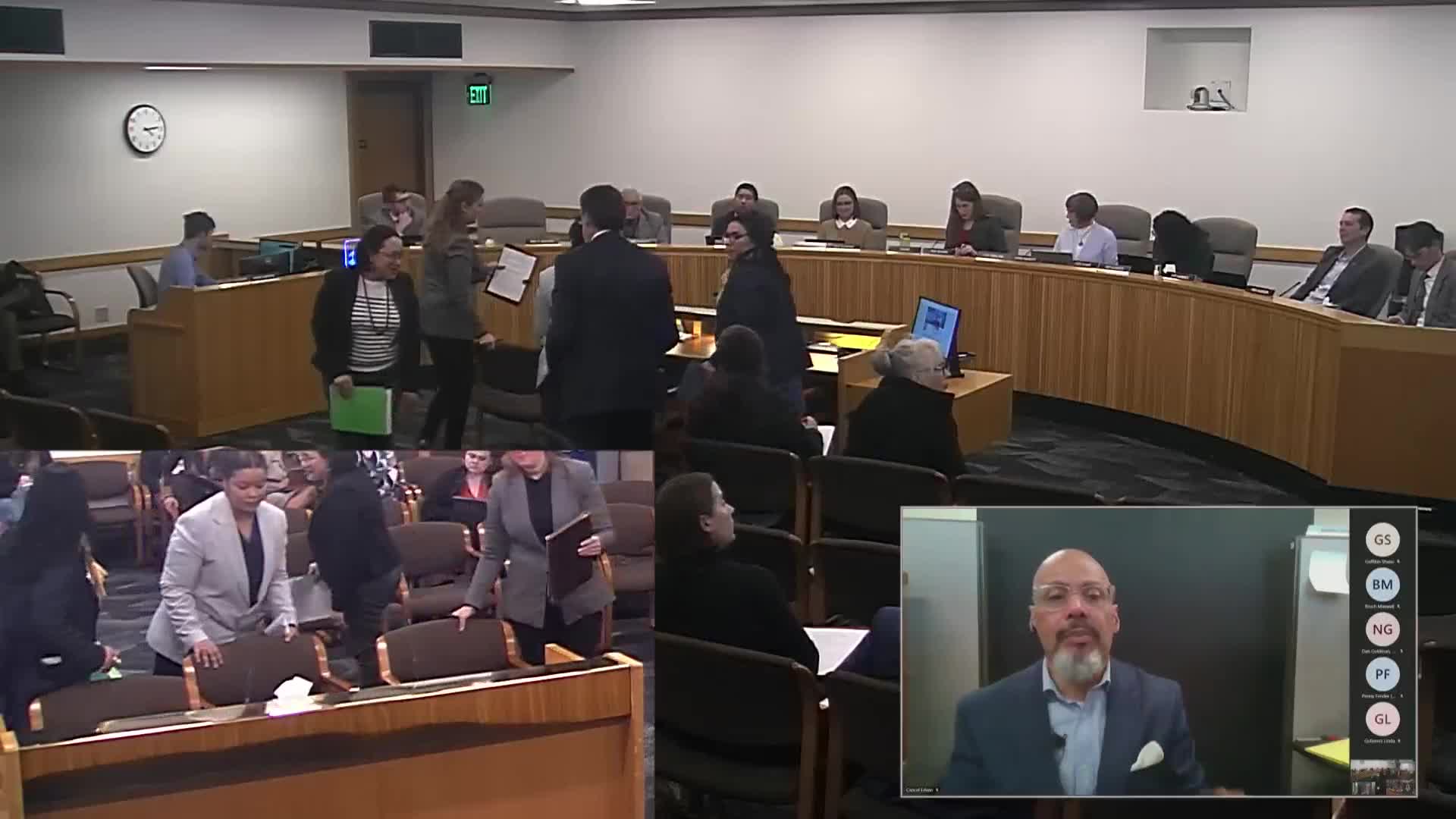
The House Education Committee held an informational session Jan. 27 on Oregons Education Service Districts (ESDs), hearing from the Oregon Association of Education Service Districts and superintendents about ESD responsibilities and regional services. The committee then opened a public hearing on House Bill 2514, a technical measure to clarify that ESDs may seek voter approval for general obligation bonds and that statutory implementation should mirror the procedures available to school districts.
Amber Eaton, executive director of the Oregon Association of Education Service Districts, and superintendents Penny Fender (North Central ESD), Dan Goldman (Northwest Regional ESD) and Dr. Joe Morlock (Willamette ESD) described ESDs as regional service providers that help small and rural districts access special education services, technology systems, professional learning, career and technical education and operational supports. "ESDs are here to help support our districts so they can focus on the important work of educating kids and working with families," Fender told the committee.
Witnesses stressed the scale and variety of ESD work: Oregon has 19 ESDs and 197 school districts; more than 100 districts are considered rural or frontier and many districts have fewer than 1,000 students. Dan Goldman told the committee that ESDs generate revenue through property tax collections and are part of the State School Fund framework, accounting for about 4.5% of the state school fund in his estimate. ESD services are governed in part by annually approved local service plans that must be approved by a majority of component district boards and by pupil-count thresholds; that annual approval process, speakers said, creates a built-in accountability mechanism.
House Bill 2514, presented by Laurie Sattenspiel on behalf of ESDs, would add statutory language implementing general obligation bonding for ESDs in the same manner as school districts. Sattenspiel told the committee the Oregon Constitution already allows ESDs to use GO bonding authority but existing implementing statutes discuss only school districts; HB 2514 would align statutory language with constitutional authority and require voter approval for any ESD bond in the same way voters approve district bonds.
Superintendents gave practical examples of ESD work: shared special education specialists who can serve children across multiple small districts, regional technology contracts that host student information systems for dozens of districts, and the Willamette Career Academy, a regional career-technical program serving multiple high schools. Dr. Morlock said such shared services allow small districts to access services they could not sustainably provide on their own.
Ending: The committee closed the public hearing on HB 2514 after testimony; no vote was taken during the Jan. 27 meeting. Panels asked lawmakers to consider how bonding authority and capital planning could support regional education facilities and infrastructure while preserving local voter oversight.