Get Full Government Meeting Transcripts, Videos, & Alerts Forever!
Get email alerts on the Education Funding topic
No spam. Unsubscribe anytime.
Governor backs bill to change Oregonstate school fund calculation, codify 49%/51% biennial split
Summary
House Education opened a public hearing on House Bill 2140, which would revise how the state calculates the current service level for the State School Fund and codify a 49%/51% distribution across biennial years. Governor Tina Kotek and education groups testified in support.
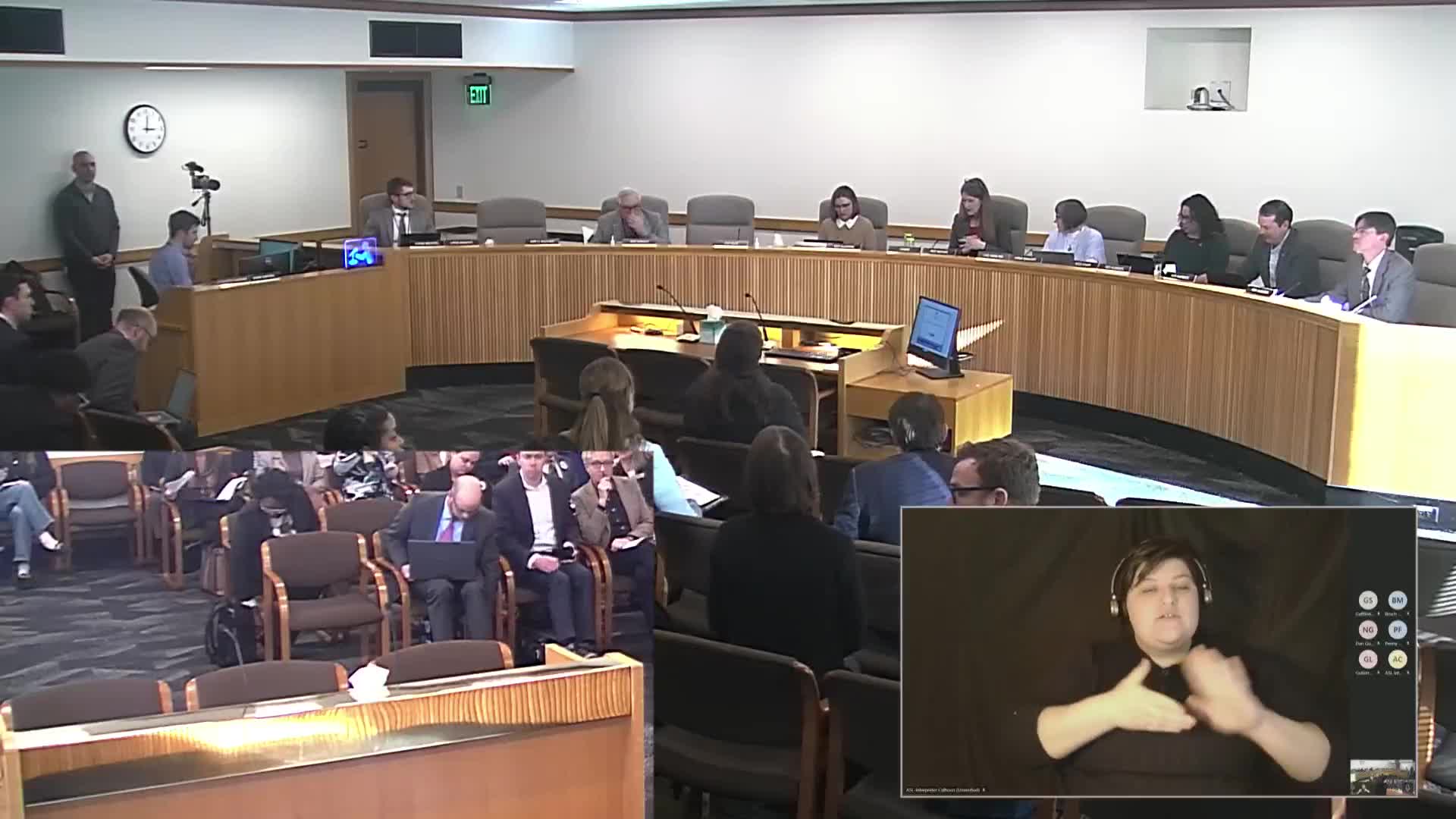
The Oregon House Committee on Education opened a public hearing Jan. 27 on House Bill 2140, a measure that would change how the state calculates the current service level (CSL) for the State School Fund and place into law a practice of distributing state school fund dollars as 49% in the first year of a biennium and 51% in the second year. Governor Tina Kotek testified in support and described changes to the methodology intended to make K-12 funding more accurate and predictable.
The bill matters because the CSL is the baseline calculation lawmakers use to determine how much funding districts need to maintain existing services; small errors compounded over successive biennia, supporters said, have produced substantive forecasting gaps. "We need more predictability," said Governor Tina Kotek, who told the committee her office convened a work group that recommended methodology changes, including using a 10-year historical lookback, accounting for PERS and benefit cost changes, and adjusting for forecasting errors. The measure also declares an emergency and would take effect July 1, 2025.
Supporters said the bill has two principal effects: a technical change to the CSL calculation and a statutory requirement that the Department of Administrative Services and the Legislative Fiscal Office align on a 49%/51% distribution of the school fund across the two years of each biennium. Kotek told the committee that the revised calculation increased the recommended CSL used in her budget by an estimated $600 million for the upcoming biennium and yielded a projected total State School Fund level of about $11.36 billion for that biennium. She and other witnesses stressed that the CSL calculation is not the same as the final legislative appropriation.
Labor and education organizations echoed support. Sarah Wofford, state president of the Oregon School Employees Association, said HB 2140 "creates a more accurate picture of what the real needs in our schools are over a two-year budgeting cycle," and noted the bill would require the Department of Administrative Services and the Department of Education to account for projected local revenues. Reid Scott Schwabach, president of the Oregon Education Association, said codifying the "51% jump-off point" replaces a prior 50% starting assumption that effectively acted like a budget reduction for schools because K-12 lacks an analogous statewide "salary pot." Morgan Allen of the Coalition of Oregon School Administrators and Laurie Sattenspiel of the Oregon School Boards Association also expressed appreciation for the collaborative work leading to the bill and said it would free legislative and advocacy time now spent disputing the baseline calculation.
Committee members asked technical questions about why the 49/51 distribution was not already codified and emphasized that the CSL is a calculation, not a guarantee of legislative funding. Chair Neron and members noted the change should allow the Legislature to shift the debate toward investment choices and accountability for student outcomes rather than the baseline arithmetic.
The committee closed the public hearing on HB 2140 after a panel of supporters testified; no committee vote occurred during the Jan. 27 meeting. If enacted, the bill would change the statutory methodology for the CSL and set the biennial distribution of State School Fund payments; the Legislature would still determine final appropriations and policy priorities during the budget process.
Ending: The committee will consider next steps for HB 2140 in future hearings; witnesses asked lawmakers to continue the parallel work of aligning accountability and outcome measures with any increase in baseline funding.