Get Full Government Meeting Transcripts, Videos, & Alerts Forever!
Get email alerts on the Housing Investments topic
No spam. Unsubscribe anytime.
Oregon housing agency details $1.14 billion in recent investments, rapid rehousing and preservation work
Summary
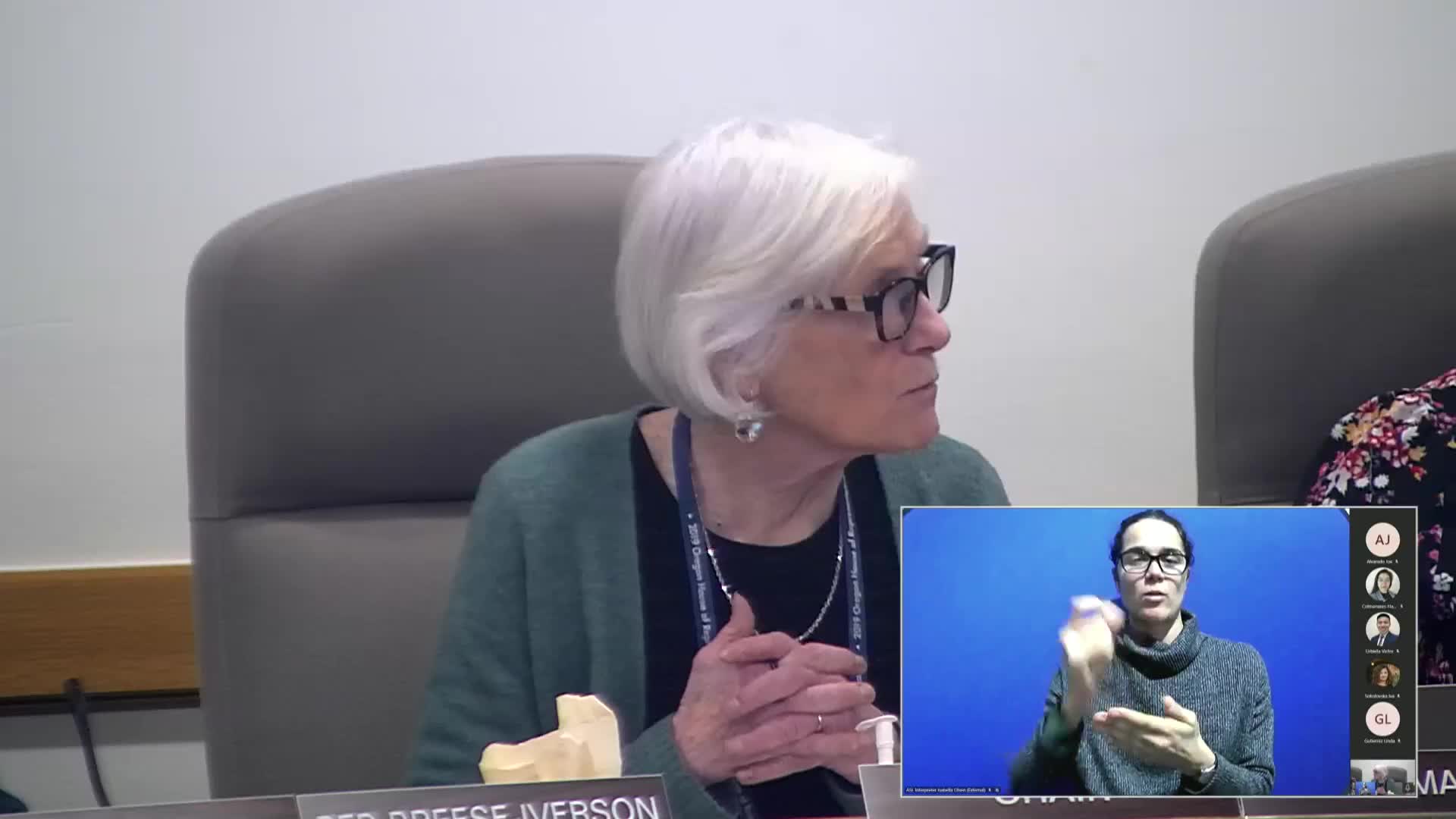
Oregon Housing and Community Services told the House Committee on Housing and Homelessness on Jan. 27 about pandemic-era shifts, new legislative investments and program priorities including modular housing, preservation and a new moderate-income revolving loan program.
Andrea Bell, executive director of Oregon Housing and Community Services, told the House Committee on Housing and Homelessness on Jan. 27 that the agency administers federal and state financing and a “full continuum of housing” programs aimed at preventing homelessness and expanding affordable options across Oregon.
Bell said OHCS’ work combines resources and policy, and emphasized community engagement and locally driven solutions. “We are the state's housing agency. We are federally designated by the federal government to administer bonds and tax credits and other critical community development programs,” Bell said.
The agency highlighted investments from the 2023 and 2024 legislative sessions that staff said totaled about $1.14 billion in 2023 and roughly $212 million in 2024 for housing and homelessness work. Officials described major program areas funded by those appropriations: preservation and new affordable supply, permanent supportive housing, emergency homelessness response and shelter, manufactured home replacement and homeownership assistance including down-payment support and foreclosure-prevention counseling.
Kayla Vann, identified in the record as a deputy director at OHCS, and a second presenter who described program-level details, told the committee that the 2023 package included about $350 million for emergency homelessness response and shelter, and that the agency reports rehousing and prevention outcomes tied to those investments: about 33,100 households rehoused and about 17,000 households assisted to avoid eviction. The presentation stated the state now accounts for roughly 61,100 shelter beds across 136 shelters and that 421 at-risk affordable homes had been preserved. (Transcript provided these figures during the presentation.)
Officials described specific new programs and recent awards: House Bill 2001 established a modular housing development fund; OHCS staff said they awarded $20 million across several modular manufacturers named in the presentation (Blazer Industries, IntelliFab, Pacific Wall Systems and Zaug Timber Solutions) and that these awards are intended to expand production capacity and reduce per-unit costs. House Bill 3395 was described as funding a community-based agricultural worker housing program, with $10 million appropriated; presenters showed a Salem rehabilitation project with 48 units, 47 of which were described as affordable at 40–50% of area median income.
OHCS staff also described a new moderate-income revolving loan program created by Senate Bill 1537 (internally referred to as the MURAL program). Staff said the program — structured as loans to local municipalities rather than only to nonprofit developers — is intended to boost moderate-income rental and homeownership supply, and can finance predevelopment, infrastructure, and land buy-downs. OHCS emphasized the loans are designed to revolve so repaid funds can be reused by local jurisdictions.
On data and statewide context, Bell referred the committee to a recently released State of the State housing report and an online preservation dashboard that forecasts expiring affordability restrictions and preservation needs. Bell said the report shows population growth and diverging income and housing price trends: “for every additional dollar that was earned, we also saw home prices increase, nearly tenfold,” she said, later summarizing that “for every dollar an Oregonian earned, we saw the median home increase by $7.”
Committee members asked technical and policy questions about program timing, cost controls and whether more housing production can lower rents without wage growth. Representatives pressed for follow-up on per-unit cost figures; OHCS staff agreed to provide specific cost-per-unit data and additional detail requested by the committee.
The session was informational; no votes or formal committee actions were taken during the OHCS presentation. The information session closed and the committee moved on to its next panel after lawmakers submitted questions to be answered by staff after the hearing.
Ending: The presentation concluded with OHCS offering to provide follow-up information on cost per unit, program outcomes and other details requested by committee members.