Get Full Government Meeting Transcripts, Videos, & Alerts Forever!
Get email alerts on the Legislative Audits Committee Rules topic
No spam. Unsubscribe anytime.
Legislative audit committee adopts rules, discusses role, audit priorities
Summary
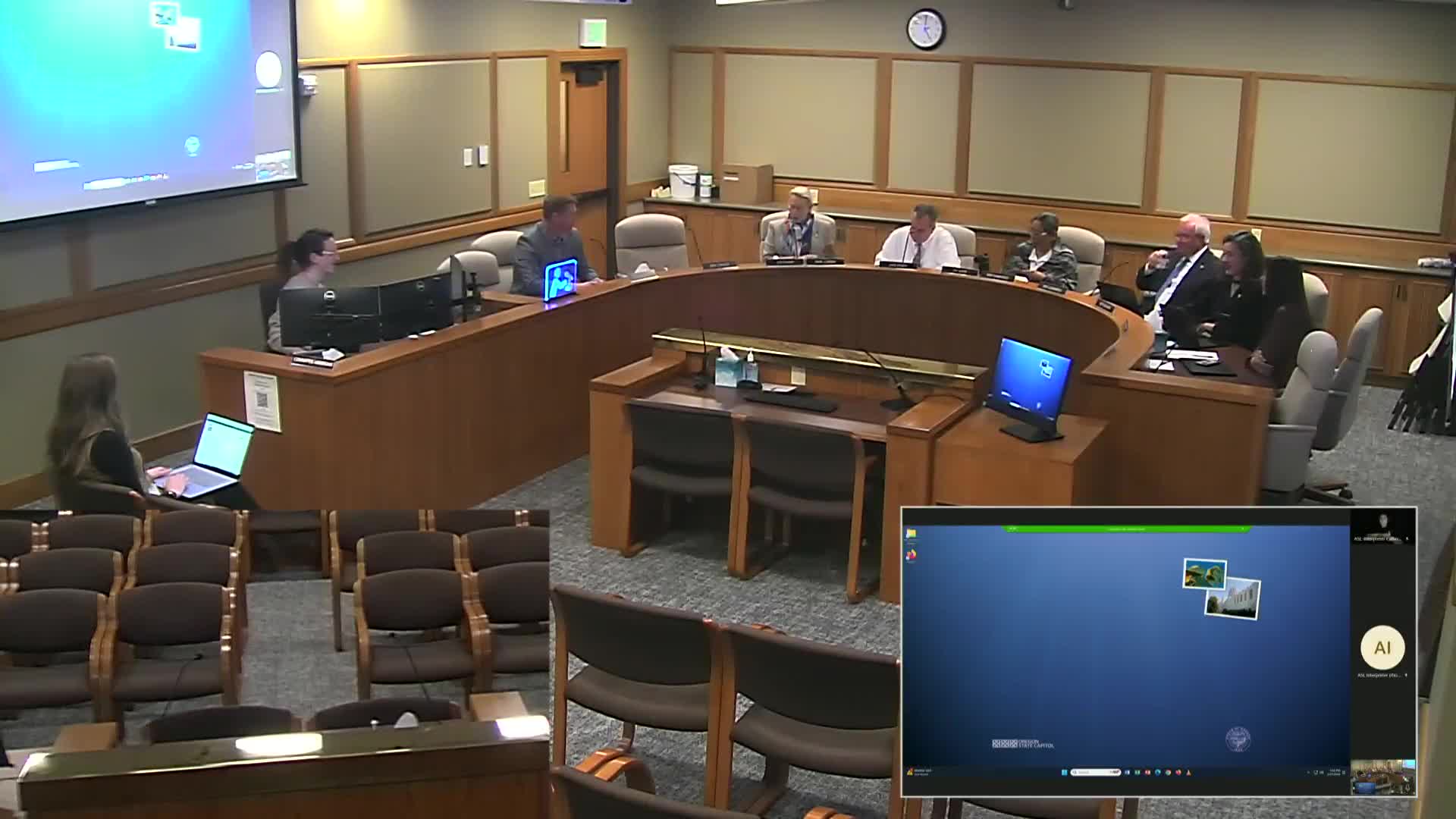
The Joint Committee on Legislative Audits adopted its rules by voice vote Jan. 27 and spent its organizational meeting reviewing statutory duties, quorum rules, and upcoming audit plans from the Secretary of State and the Department of Administrative Services.
The Joint Committee on Legislative Audits adopted committee rules by voice vote and opened an informational orientation on the committee’s duties and work plan on Jan. 27, 2025, the committee’s co-chair announced.
The rules adoption mattered because it clarifies how the committee will operate this session and includes a change allowing a co-chair, in the absence of a quorum, to assign one or more members to receive public testimony. Paul Siebert, deputy legislative fiscal officer with the Legislative Fiscal Office, told members the new rule aligns the committee with the procedure other joint committees use.
Committee members discussed what the committee should do beyond receiving audits prepared by the Secretary of State. Paul Siebert summarized the committee’s statutory duties, including reviewing audits, setting priorities for performance and program audits in conjunction with the Secretary of State, monitoring implementation of audit recommendations, and overseeing LFO-prepared reports. Siebert noted the committee has not consistently exercised all statutory duties and suggested the panel could strengthen follow-up on agencies’ action plans to implement audit recommendations.
Co-Chair Sanchez moved adoption of the committee rules during the organizational portion of the meeting. The rules were adopted by voice vote after no objections were raised.
Members pressed on several recurring themes: how the audit committee should relate to Ways and Means and policy subcommittees on key performance measures (KPMs); whether the committee should play a larger role in setting or reviewing KPMs tied to agency budgets; and whether the committee has the staff capacity or statutory authority to perform audits or follow grant spending to nonprofits. Several members noted the Secretary of State historically prepares and presents audits and the committee’s role has often been limited to receiving those reports and recommending follow-up.
Representative Graeber and others asked about whether the committee could propose or influence KPMs; staff responded that committee members who serve on subcommittees and Ways and Means can carry those recommendations and that the committee can convey its preferences to the relevant budget and policy panels. One member asked for a list of audits produced over a recent multi-year window to help prioritize follow-up; staff noted Secretary of State audits are posted online by year and indicated the committee will hear the draft Secretary of State audit plan on Feb. 24.
Members also raised questions about oversight of grant funding flowing to nonprofits and whether the committee has authority to audit recipients; staff said legislative or budgetary reporting requirements can require recipients to report how funds were spent, but the legal authority for the committee to conduct audits of private nonprofit organizations is limited. Several members said they want the committee to explore how best to provide accountability and oversight without overstepping statutory limits.
Staff identified practical details for the committee: it meets Mondays from 5 to 6:30 p.m.; quorum for the committee requires two senators and three house members (three senators and five house members are the total membership, per the orientation); amendments to measures must be submitted electronically and posted four hours before consideration; and, as of the Jan. 27 meeting, two bills had been assigned to the committee (House Bill 2336 and House Bill 2946).
The committee scheduled two upcoming items: a presentation of the Secretary of State’s draft audit plan (scheduled for Feb. 24) and the Department of Administrative Services’ statewide internal audit report at the next meeting. With no further business, the co-chair adjourned the meeting.