Get Full Government Meeting Transcripts, Videos, & Alerts Forever!
Get email alerts on the Funding Risks topic
No spam. Unsubscribe anytime.
Subcommittee briefed on funding risks: federal and other funds reliance, uncollected debt and reserve funds
Summary
Members and LFO staff flagged fiscal risks for the Transportation and Economic Development subcommittee, including reliance on federal and other funds, $4 billion of uncollected state debt, and the role of reserve funds in smoothing revenue volatility.
Legislative Fiscal Office staff and members used the orientation to flag budgetary risks related to funding sources, uncollected state receivables and reliance on federal and other funds that could shift the subcommittee’s options during final budgeting.
Why it matters: agencies in this subcommittee receive a large share of their resources from non‑general‑fund sources—federal grants, fee revenue and other funds—and those revenue streams can vary. The subcommittee was also reminded that the state has a nontrivial amount of uncollected debt that affects fiscal capacity.
LFO explained basic fund types and examples relevant to the subcommittee’s portfolio: general fund (personal and corporate income taxes, liquor revenue), other funds (agency fees, corporate activities tax, bond proceeds) and federal funds (formula and grant dollars). Michelle Dyster used examples to show how agency funding mixes differ by agency and generate different budget risks. She described other funds that are “dedicated for a specific purpose” and noted that some other‑fund expenditures are unlimited (for example, unemployment insurance benefits and certain rent subsidy payments).
Representative David Gomberg called attention to state receivables and collections and gave the figure cited by LFO: “that is the money that is owed to Oregon by Oregonians in uncollected fines, fees, restitution and taxes totaling at this point about $4,000,000,000,” he said. Members discussed the larger budget picture and pointed to an example in recent years when federal reimbursement timing required a special session to make payments to contractors for wildfire costs; Dyster said roughly $60,000,000 was late from the federal government in that instance.
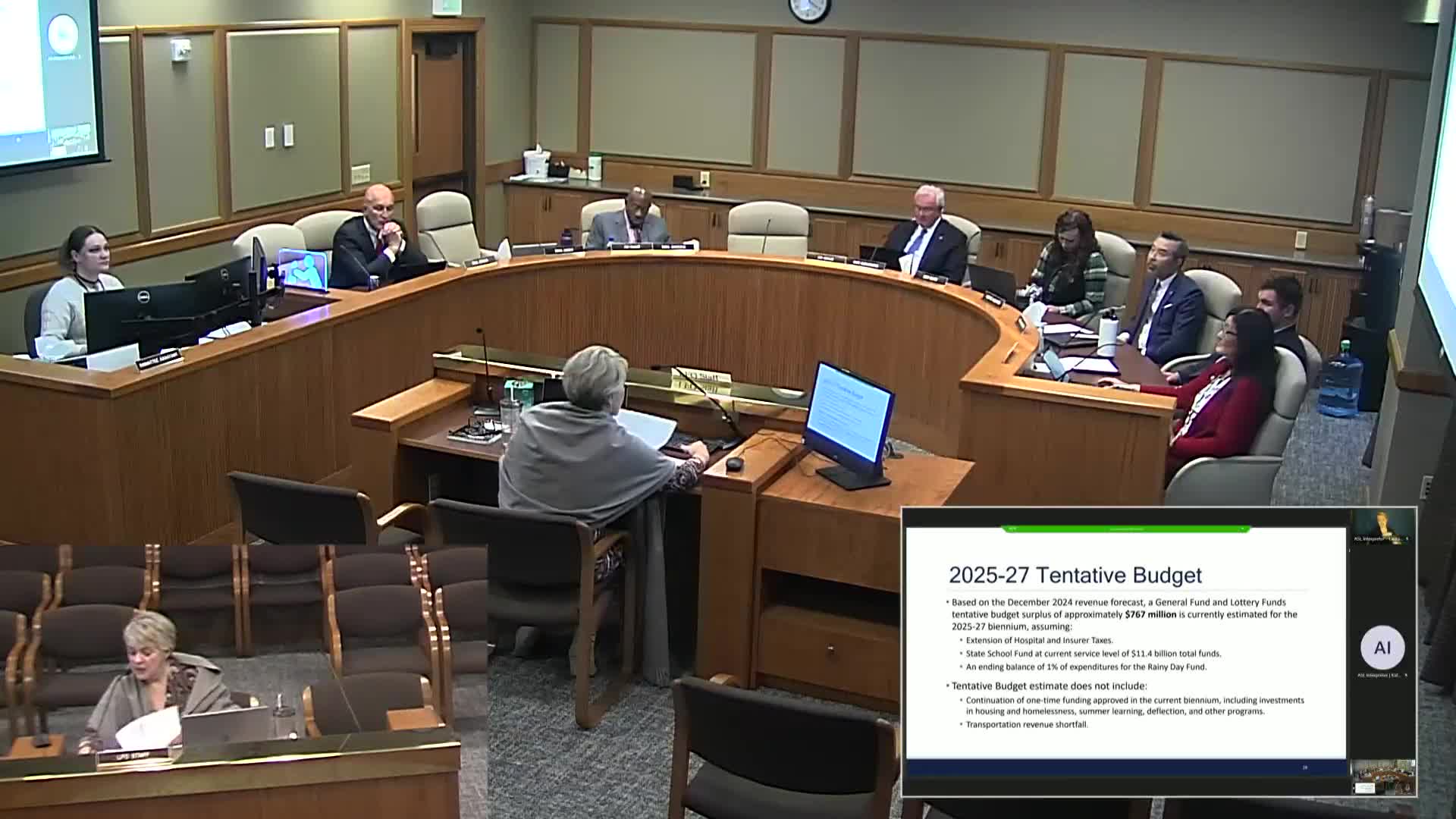
Members were also briefed on state reserve funds that are available to smooth volatility, including the rainy day fund and the education stability fund, and were reminded these reserves and the timing of federal receipts can materially change available funds in May when the official revenue forecast is released.
Next steps: members were urged to watch agencies’ revenue mixes during presentations, to examine which expenditures are supported by one‑time general fund and which are sustainable, and to consider the long‑term sustainability of programs tentatively funded in the current biennium.