Get Full Government Meeting Transcripts, Videos, & Alerts Forever!
Get email alerts on the Fiscal Impact Statements topic
No spam. Unsubscribe anytime.
LFO explains fiscal impact statements, current-service level and 5% reduction target
Summary
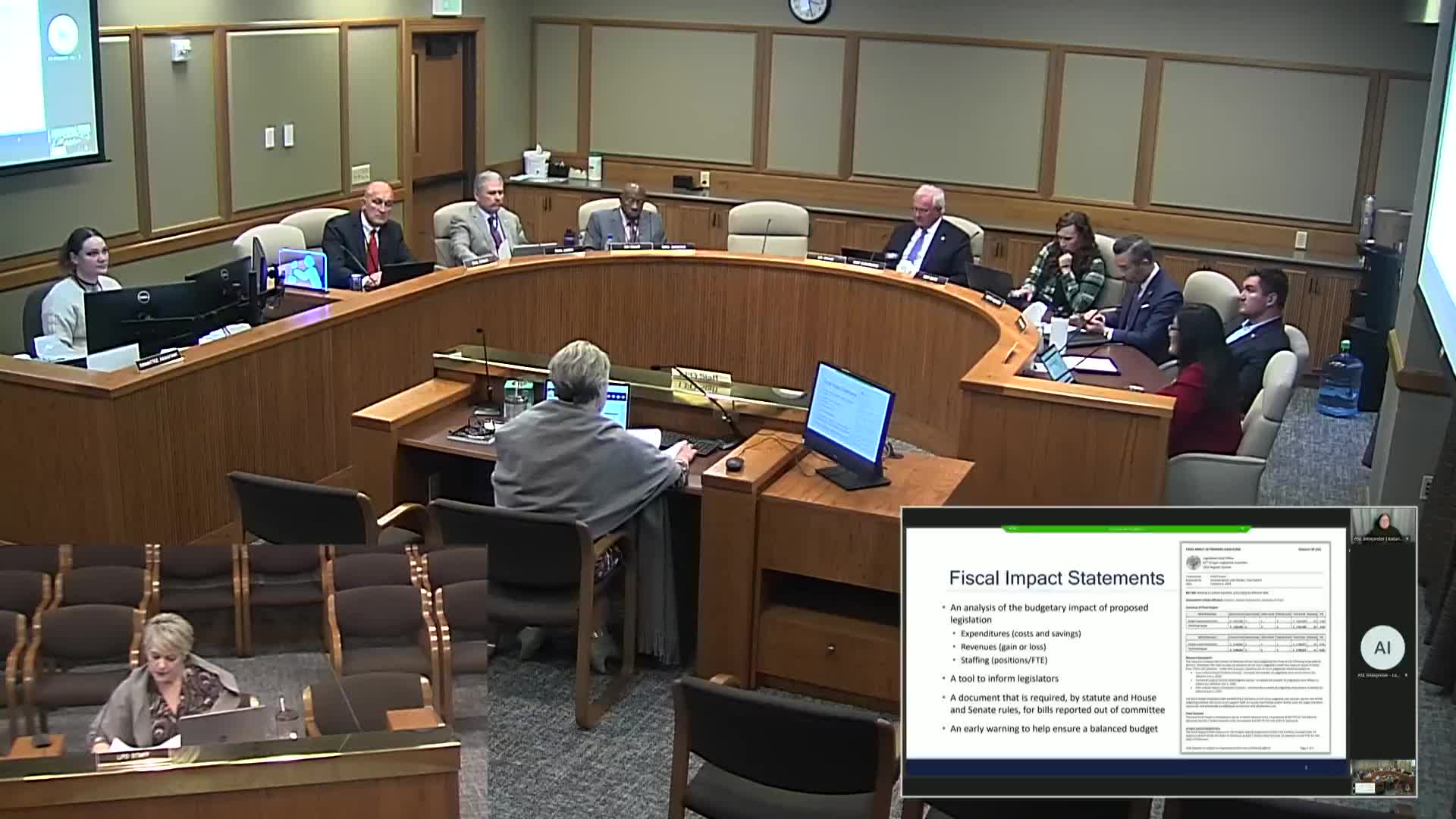
Legislative Fiscal Office staff outlined how fiscal impact statements are developed, the calculation of current service level and a planned 5% across‑the‑board reduction in agency budgets for initial planning.
Legislative Fiscal Office staff briefed the Transportation and Economic Development subcommittee on how fiscal impact statements are prepared, what constitutes a current service level and why the subcommittee is planning a 5% across‑the‑board reduction in agency budgets as a contingency.
Why it matters: fiscal impact statements and current‑service‑level calculations frame the numerical baseline that the Legislature uses to decide what to fund. The 5% reduction is an early planning assumption intended to prepare for a weaker revenue forecast.
Michelle Dyster, LFO lead analyst for the subcommittee, described the fiscal impact statement as “an objective analysis of the direct financial impacts of a measure” and explained the office’s methodology. Dyster said the LFO seeks input from agencies, cities, counties and tribes, then evaluates those responses against existing programs and staffing to produce the final fiscal impact statement. “We try to cast a wide net,” she said, when assessing potential costs and affected entities.
Dyster outlined categories of fiscal impact statements members are likely to see: no fiscal impact, minimal fiscal impact (small or difficult-to-quantify costs), full fiscal impact statements with quantified costs for the current biennium and out‑years, and explanatory fiscal impact statements when costs cannot be quantified reliably.
The staff also described the “current service level” calculation that underlies budget baselines: inflation factors and negotiated salary adjustments are applied, one‑time expenditures are phased out and caseload changes are incorporated. Agencies submit what they calculate is required to maintain services; the governor’s recommended budget then becomes a starting point for legislative adjustments. Dyster summarized the relationship concisely: “Governor proposes; legislature disposes.”
Members heard that the subcommittee will begin the review of agency budgets with presentations by the agencies themselves and that LFO will present proposed amendments to the governor’s recommendation during work sessions. The subcommittee was told to expect a multi‑phase process: agency presentations (phase 1), deeper dives on specific packages or one‑time continuations (phase 2) and formal work sessions to vote recommendations to full Ways and Means (phase 3).
On contingency planning, Dyster said staff are instructing agencies to prepare proposals reflecting a 5% reduction across the board so the Legislature can respond if the May revenue forecast shows lower receipts. That 5% reduction is a planning device, not a final decision, and would be revisited as revenue and policy priorities are clarified.
Members asked how the LFO handles agency estimates that include implementation choices made later through rulemaking. Representative Jamie Kate asked how rule changes affect fiscal estimates; Dyster said LFO treats agency responses as a starting point and follows up with agencies to understand the methodology behind their calculations, asking for clarifying details and sometimes revising estimates based on further information.
Next steps: members will receive agency presentations beginning the next day. LFO will post fiscal impact statements, budget reports, and summary recommendation memos on OLIS and provide amendment drafts (the “ponies”) to assist members who carry budget bills to the floors.