Get Full Government Meeting Transcripts, Videos, & Alerts Forever!
Get email alerts on the Health Workforce Wellbeing topic
No spam. Unsubscribe anytime.
Arizona health leaders warn of clinician burnout, urge systemwide well‑being drive
Summary
At the Arizona House Health & Human Services Committee, the Well‑Being Collaborative said clinician burnout is driving workforce losses and urged policy and leadership changes to retain clinicians and protect patient safety.
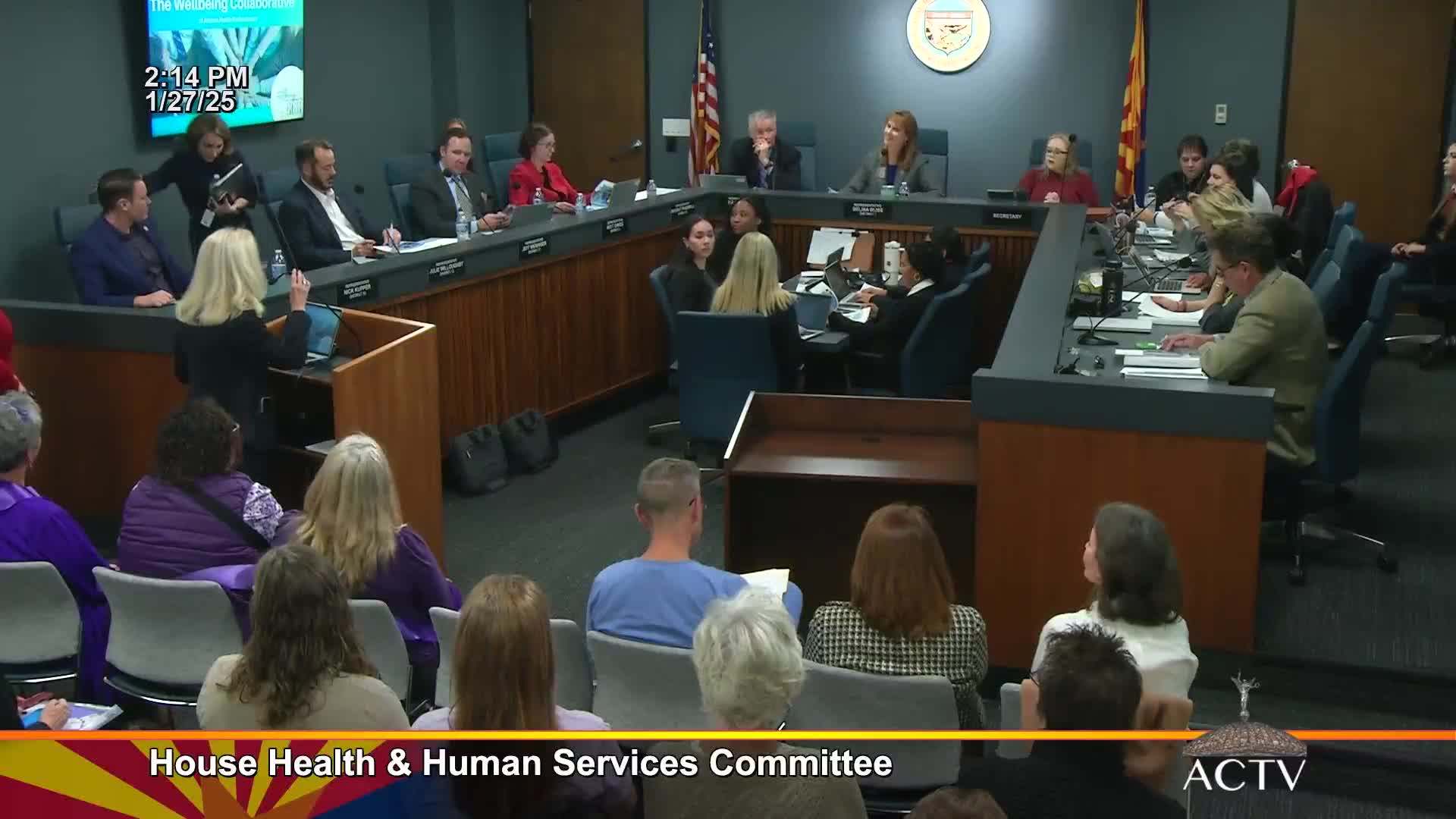
At a meeting of the Arizona House Health and Human Services Committee, leaders of the Well‑Being Collaborative of Arizona Health Professionals told lawmakers the state faces a growing health‑workforce crisis driven by clinician burnout and called for leadership, team and system changes to retain staff and protect patients.
The collaborative’s executive director, Flo Spiro, and family physician Tiffany Panko, M.D., said more than half of clinicians nationwide report burnout and that Arizona’s rapid population growth will worsen shortages of physicians, nurses and behavioral‑health specialists.
“By burnout we don’t just mean having a bad day,” Dr. Tiffany Panko said. “The definition of burnout is really emotional exhaustion, depersonalization, and a lack of a sense of self‑efficacy.” She added that burnout is appearing early in training programs: “We’re seeing this in our young clinicians, our medical students, and our residents.”
Why it matters
The presenters linked workforce strain to patient safety and access: research shows clinician burnout raises the risk of medication errors and can delay diagnosis and treatment when clinicians leave practice. Spiro told the committee the collaborative is pushing three pillars of change — leadership development, inclusive and high‑performing teams, and organizational culture that prioritizes clinician well‑being.
What presenters told the committee
Spiro described the collaborative as a statewide, multidisciplinary group that includes health systems, public‑health organizations, professional associations, tribal partners and academic institutions. She said membership exceeds 350 individuals and roughly 50 organizations, and that the group is working on measurement and evidence for programs such as a leadership course called “Leading with Kindness.”
“We want resilient systems,” Spiro said. “We have resilient health‑care workers, but we need the systems to be resilient to support them.”
Panko said the collaborative will help state leaders identify policies and pilot programs that reduce burdens and stigma around mental‑health care for clinicians. She noted technology can help in some settings but also creates uncompensated burdens — for example, the volume of unremunerated electronic messages to outpatient clinicians.
Committee exchange
Members pressed presenters on concrete next steps. Rep. Willoughby, a nurse, said leadership matters: “I’ve had leaders in health care that I would follow through hell and high water.” Rep. Weniger asked whether technology and automation fit into the collaborative’s plan; Panko said technology is one of several topics for an upcoming summit, but that implementation must avoid adding uncompensated work.
Next steps and context
Presenters asked the committee to consider how state policy can support workforce well‑being, for example through funding for leadership development, mental‑health access for clinicians and programs that bolster rural networks. The collaborative said it will continue to work with state leaders, health systems and educators to pilot interventions and measure outcomes.
The collaborative’s presenters offered to provide the committee with the organization’s assessment tools and summit materials for follow‑up.