Get Full Government Meeting Transcripts, Videos, & Alerts Forever!
Get email alerts on the Subcommittee Procedure topic
No spam. Unsubscribe anytime.
Ways and Means subcommittee opens with orientation; quorum, rules and schedule outlined
Summary
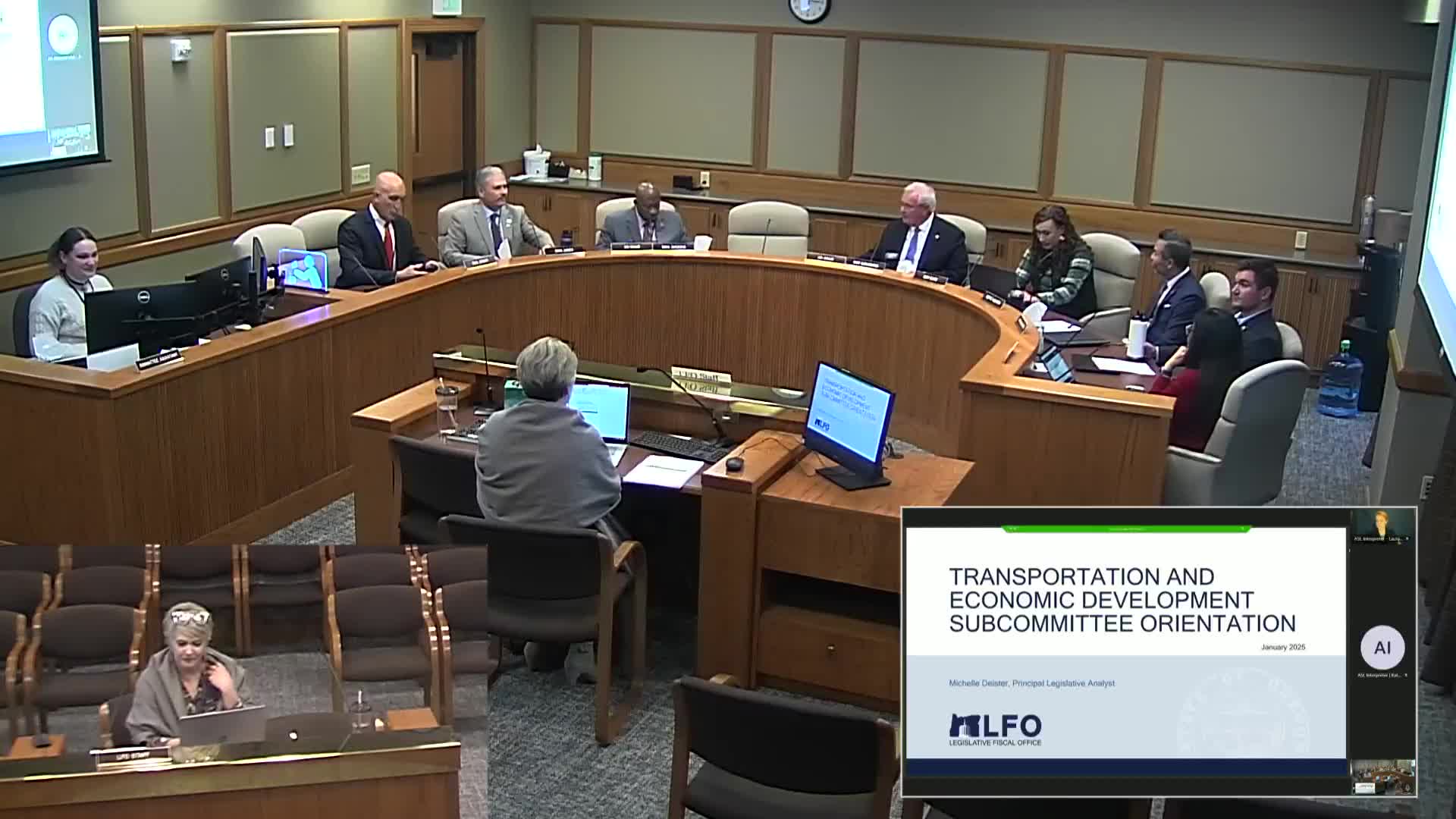
The Joint Committee on Ways and Means Subcommittee on Transportation and Economic Development opened its first meeting on Jan. 27 with an orientation covering committee rules, quorum requirements and the subcommittee’s hearing schedule.
The Joint Committee on Ways and Means Subcommittee on Transportation and Economic Development opened its first meeting on Jan. 27 with an orientation covering committee rules, quorum requirements and the subcommittee’s hearing schedule.
The orientation laid out procedural expectations for members and staff and explained how budget work will move from subcommittee to full Ways and Means and then to each chamber. Co-chair Senator Aaron Woods (Senate District 13) said the subcommittee will follow full Ways and Means rules and emphasized formalities in the hearing room: “I like to refer to our staff, as Miss Dyster, rather than calling her Michelle because I think that our staff are entitled to the same respect that we show each other,” he said.
Why it matters: the orientation set the ground rules that will govern how the subcommittee reviews agency budgets, hears policy bills with fiscal impacts and transmits recommendations to the full Ways and Means committee and both legislative floors. Members heard how meeting materials will be posted and how staff from the Legislative Fiscal Office (LFO) will support hearings and floor carriers.
The co-chairs and LFO staff described basic procedural items members should expect. The subcommittee requires a quorum on both sides of the dais to open a meeting and to pass measures: at minimum two senators and three representatives must be present, the chairs said. Members were told to alert staff if they will be delayed. LFO lead analyst Michelle Dyster told members that “we're gonna have meeting materials posted under the date of the committee meeting” on OLIS (the Oregon Legislative Information System) and that slides and orientation materials are available there.
Committee staffing and roles were described in detail. Michelle Dyster introduced LFO analysts assigned to this subcommittee, including Ben Roof (budget analyst for the Oregon Department of Transportation and related agencies), Emily Coats, Walt Campbell and Taz Bridal. The committee’s Legislative Fiscal Officer, Amanda Bridal, and committee manager were also noted as recurring supports for scheduling, posting and procedural questions.
The co-chairs previewed immediate scheduling: the subcommittee will begin agency presentations the next day with the Department of Aviation and will consider two grant applications from the Oregon Department of Transportation, one of which is a request for retroactive approval to apply. Those grant requests were announced as items to be considered at the next meeting and were not decided at this orientation.
Members were reminded of posting requirements (72 hours for an initial public hearing; 48 hours for a work session, with shortened requirements possible later in the session) and were encouraged to submit questions to agencies in advance so agencies can bring answers to hearings. The co-chairs and LFO staff said they will provide “ponies” (prepared floor-carrier materials and talking points) for members who carry budget bills to the floor.
Looking ahead: members were encouraged to review the committee rules, the LFO orientation materials posted on OLIS, and the published budget overviews for agencies to prepare for a concentrated schedule of hearings and work sessions in the coming months.