Get Full Government Meeting Transcripts, Videos, & Alerts Forever!
Get email alerts on the Sb 1068 topic
No spam. Unsubscribe anytime.
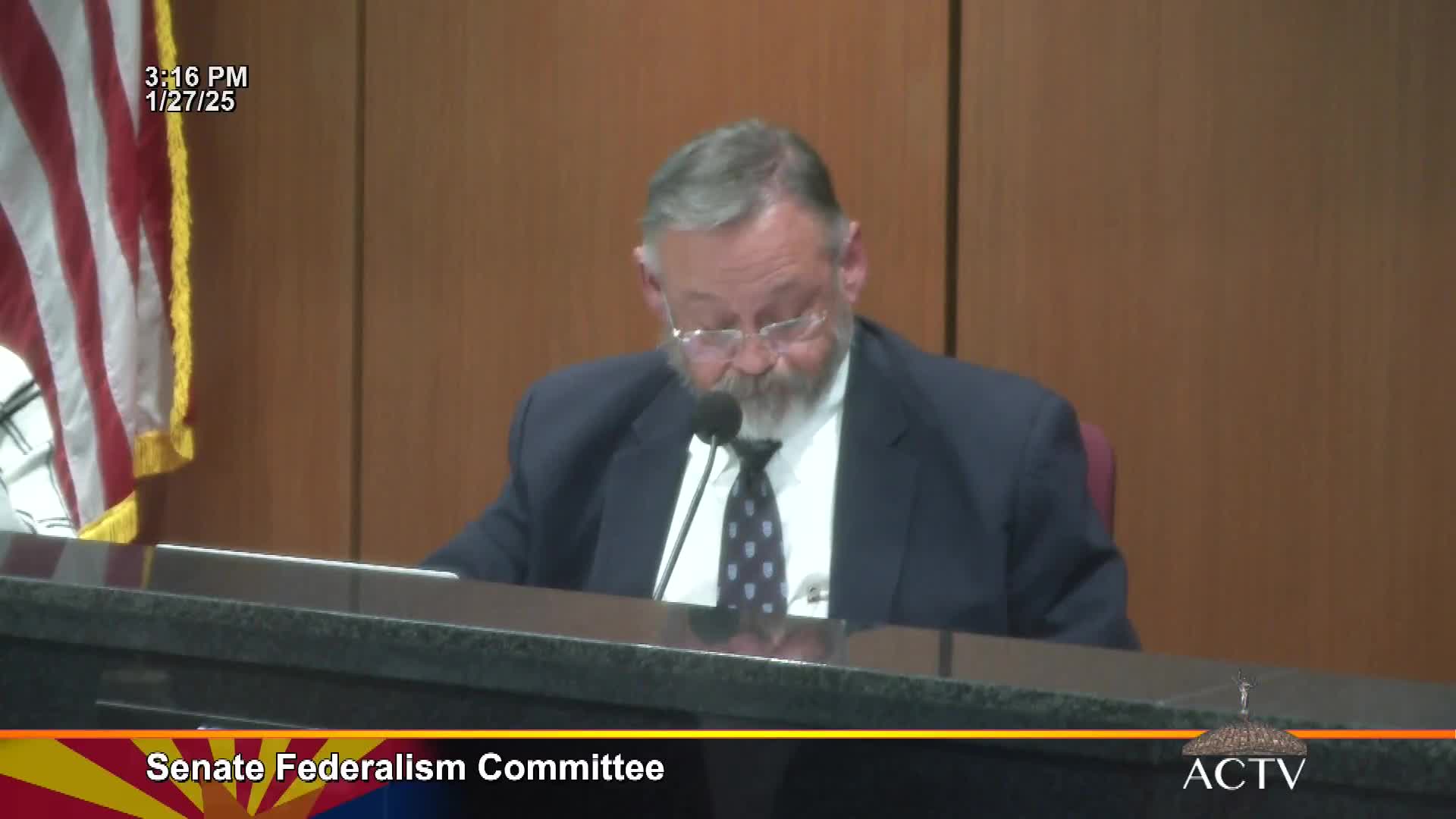
Panel advances bill to require legislative approval and reporting for private sales of Arizona land to federal government
Summary
SB 1068 would require legislative consent for private land transfers to the federal government, create reporting and committee review requirements and give the state first right of refusal; the committee gave the bill a due-pass recommendation after testimony from conservation, tribal and mining stakeholders.
The Arizona Senate Federalism Committee voted 4–3 on Jan. 24 to give Senate Bill 1068 a due-pass recommendation. SB 1068, as presented, would require a joint legislative resolution and a majority vote of the Legislature for the state’s consent to any acquisition, sale, gift or transfer of a privately owned Arizona property to the federal government. The bill also would establish reporting requirements and a state right of first refusal to purchase private property the federal government is contracting to acquire.
Anna Nguyen, the committee’s research analyst, summarized the bill: “Senate Bill 1068 requires the governor to sign a joint resolution adopted by an affirmative vote of a majority of the members of the legislature for the consent of the state to be given to any acquisition, sale, gift, or transfer of an ownership interest in privately owned real property in Arizona to the Federal Government,” she read to the committee.
Public comment and concerns: Sandy Barr, chapter director for the Sierra Club’s Grand Canyon chapter, testified in opposition and said the measure could block acquisitions intended to protect headwaters, springs, cultural resources and habitat and could interfere with tribal processes. “We are opposed to Senate Bill 1068,” Barr said, adding that outdoor recreation and public‑lands protections are important to Arizona’s economy and identity.
Adam Hawkins, a mining industry representative, testified to the committee describing minerals and private‑property development interests; he told senators the mining industry wants to continue responsible mineral development and expressed interest in how the bill might affect that work.
Senators debating the bill raised tribal and conservation concerns and noted potential interference with the federal land-acquisition process that is often part of tribal land-into-trust transactions or conservation purchases. Senator Ashwin explained a no vote based on concerns that the bill could impede conservation funding and tribal land processes, while Chair Finchem and others said the bill codifies a review process that they said already exists in constitutional text and would preserve the state tax base.
Actions and vote: The committee moved SB 1068 to a due-pass recommendation. Roll-call comments recorded support and opposition; the chair announced the committee vote as 4 ayes, 3 nays.
Ending: The committee advanced SB 1068 for further consideration. Committee members said they anticipate amendments to narrow the bill’s scope (the chair noted an upcoming floor amendment to exclude land swaps for rights of way), and members asked staff to circulate additional amendment language.