Get Full Government Meeting Transcripts, Videos, & Alerts Forever!
Get email alerts on the Natural Resources Budget topic
No spam. Unsubscribe anytime.
Natural resources subcommittee hears LFO orientation; members warned of fee shortfalls, wildfire and housing pressures
Summary
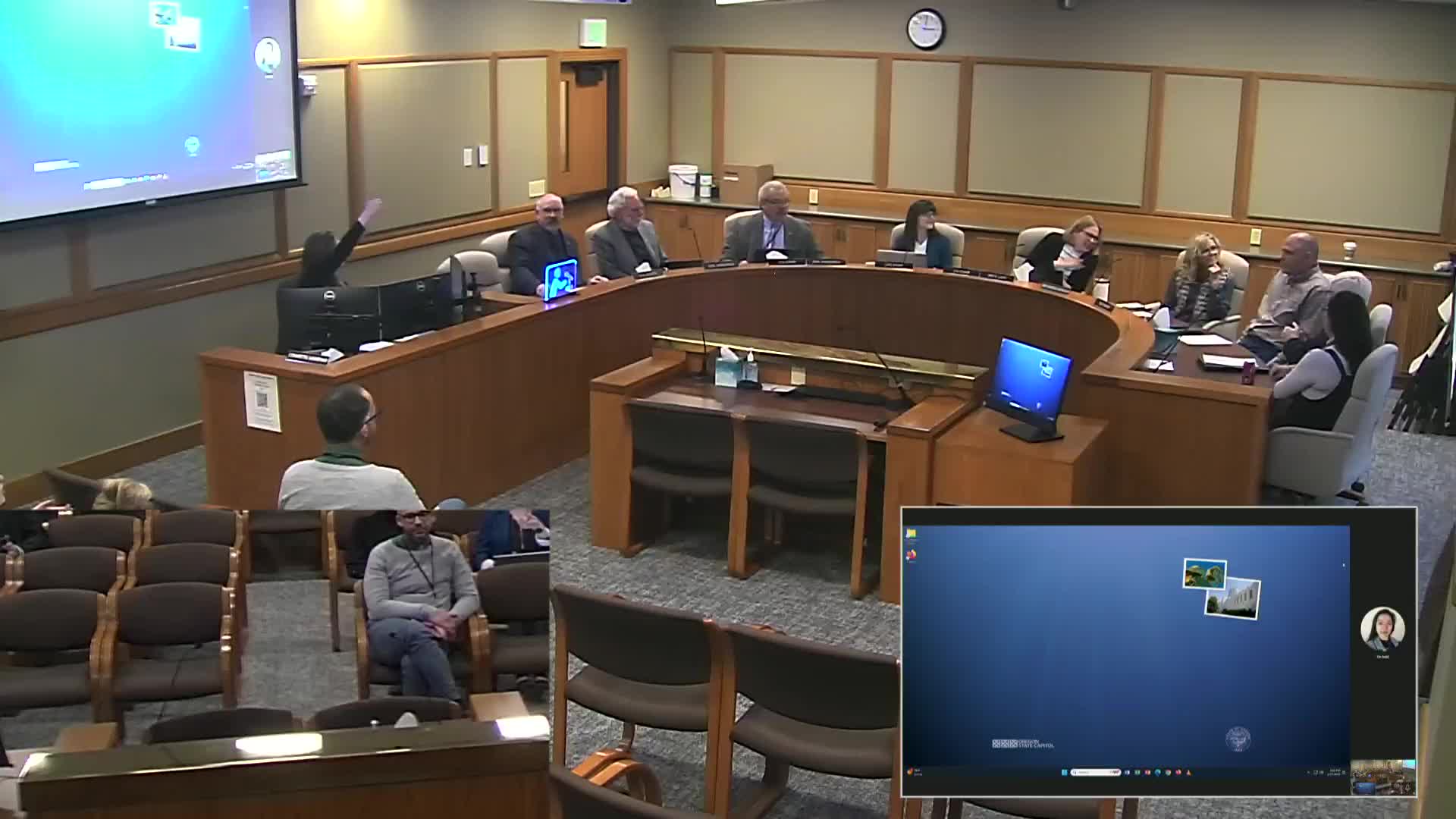
The Joint Ways and Means Natural Resources Subcommittee held an informational orientation on Monday, Jan. 27, 2025, where Legislative Fiscal Office staff explained the budget process and warned that fee revenue shortfalls, wildfire response costs and housing‑related permitting demands will be major issues for the 2025 session.
The Joint Ways and Means Natural Resources Subcommittee held an informational orientation on Monday, Jan. 27, 2025, where Legislative Fiscal Office staff explained the budget process and warned that fee revenue shortfalls, wildfire response costs and housing‑related permitting demands will be major issues for the 2025 session.
The presentation, given by April McDonald of the Legislative Fiscal Office, walked committee members through the state’s budget structure, LFO responsibilities and common issues across the natural‑resources program area. LFO staff told the subcommittee that natural‑resources agencies together account for a small share of total state spending but rely heavily on other funds and fees that are under pressure.
April McDonald, subcommittee coordinator at the Legislative Fiscal Office, said, "LFO is a permanent, nonpartisan, independent legislative service agency. Our mission is to promote fiscal accountability," and described LFO’s role in analyzing agency budgets, preparing fiscal impact statements and helping the subcommittee draft balanced recommendations to the full Ways and Means committee.
LFO told members that the natural‑resources program area covers 14 agencies and that five LFO analysts will split responsibility for those agencies during the session. The office presented basic budget concepts (general fund, lottery, other funds, federal funds), and noted that other funds — largely fees, licenses, timber sales, fire protection assessments and bond proceeds — make up the largest share of the program area budget. The presentation quantified the program area’s mix for the current biennium through December: other funds about 58%, general fund 22%, federal funds 13% and lottery funds about 8%.
LFO also highlighted several issues likely to shape the subcommittee’s work: rising personnel and contractor costs, fee revenue shortfalls across multiple agencies, long‑running flat federal support for some programs, wildfire costs and interactions between housing production and natural‑resource permitting. For example, LFO staff said federal funding for water pollution control grants has been "virtually flat since federal fiscal year 2013," and that lack of federal increases has reduced federal funds’ ability to cover program costs.
Wildfire funding was raised as a continuing concern. LFO noted a budget note tied to "Senate Bill 5 701" (as cited in the presentation) directed a wildfire funding work group, led by the Oregon Department of Forestry and the Office of the State Fire Marshal, to identify options for sustainably funding wildfire mitigation and response; the work group is preparing a report for this and other subcommittees.
Committee members asked procedural and document‑access questions. Representative Vicki Breese Iverson asked where members can find agencies’ full sets of policy option packages not included in the governor’s recommended budget; McDonald said the agency request budgets are public documents, are submitted to DAS before Sept. 1 of even‑numbered years, and are frequently posted on agency websites and DAS or LFO pages.
Members were also briefed on procedural rules for the subcommittee: meeting posting timelines (72 hours before a first public hearing; 48 hours for other meetings), the need for a quorum from each chamber to take action, voice votes by default with roll calls if requested, and rules for carrying over unfinished measures. McDonald said appropriation (budget) bills are the legal vehicle for the agencies’ budgets and that position authorizations appear only in budget reports, not in the bills themselves.
Senator Lou Lou Frederick, the subcommittee co‑chair, opened and closed the meeting; she thanked LFO for the orientation and adjourned after members’ questions. The subcommittee has another meeting scheduled the following day.
The session was informational; no committee actions or votes on budget measures were taken at this meeting.