Get Full Government Meeting Transcripts, Videos, & Alerts Forever!
Get email alerts on the Wildfire Preparedness topic
No spam. Unsubscribe anytime.
Vista fire chief outlines inspections, cameras, evacuation protocols after regional fires
Summary
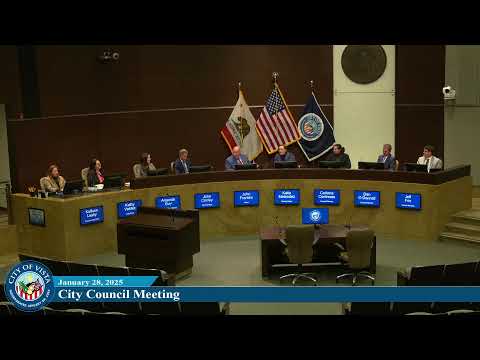
At a City Council meeting, the Fire Chief described stepped-up inspections, early-detection cameras, mutual-aid preplanning with CAL FIRE and law enforcement, and outreach measures including evacuation-app registration; council members asked about funding, station capacity and public education.
Fire Chief said the Vista Fire Department has conducted more than 8,000 fuel and defensible‑space inspections over the last cycle, using nine inspectors (five full‑time and four part‑time), and that forced abatements were rare — about 30 cases, or under 1 percent of inspections. The chief and other presenters described new early‑detection tools, expanded preplans for hazardous terrain, and coordination with county, state and neighboring agencies to preposition aircraft and strike teams when weather and topography raise risk.
The discussion matters because the region has recently seen multiple high‑velocity wildfires, and council members pressed the department about preparedness, communications and long‑term staffing and facility needs. The chief described a recent camera installation on San Marcos Peak that detected two fires in its first two weeks, and urged residents to register for county emergency alerts and to adopt defensible‑space practices.
The Fire Chief said the department now uses a combination of inspection, education and enforcement: "our goal isn't to force abate people. Our goal is to educate people and reduce the amount of fuel out there." He described the department's red‑flag protocol, including signage and unlocking fire‑access gates so responding engines and mutual‑aid units can enter remote areas without delay.
Staff described mutual threat zone designations with CAL FIRE that allow use of state resources without direct cost to the city for incidents that threaten both state and local lands. The chief also explained that evacuation messaging uses a county system (Genesys/Genesis Protect) and cell‑tower pings, and urged residents to register addresses and cell numbers for targeted alerts. He summarized deployments in 2024: "13 local state federal emergency incidents, 67 personnel were deployed," including Vista personnel sent to assist other fires.
Council members asked about funding and capacity. The city manager and chief said apparatus replacement and most vehicles are funded through the general fund and a replacement schedule, but that expanding the department would require new revenue. On station capacity, a council member recalled $5 million spent to retrofit Station 3 and referenced a reported $43 million figure for a new fire station as something seen in prior materials; the council did not adopt any capital plan at the meeting. The chief said he is working with the city attorney on proposed ordinance updates to align the city's code with district rules and to add clearer defensible‑space language (including discussion of palm fronds), and that aerial inspections and other technology are being evaluated.
Council members and the chief also proposed next steps: public education events and bilingual safety fairs, expanded community risk assessments and targeted outreach to residents with medical needs during planned power outages. Deputy Mayor Melendez and others expressed support for continued regional coordination and for bringing materials to the council for citizen‑facing education. The presentation closed with council gratitude for firefighters' recent responses and continuing training and mutual‑aid exercises.
An item of note is the department's stated approach to inspections and abatement: the department emphasized education first, rare forced abatements where property owners did not respond, and ongoing coordination with the city attorney before any new enforcement changes.