Get AI Briefings, Transcripts & Alerts on Local & National Government Meetings — Forever.
Longmeadow administrators recommend roughly $44.85 million FY26 budget; ask for $1.287 million more from town
Summary
Superintendent and finance staff presented the FY26 budget recommendation on Jan. 28, proposing a $1,287,000 increase in local general-fund support, maintaining current staffing and flagging potential investments in behavioral supports, preschool and curriculum renewal.
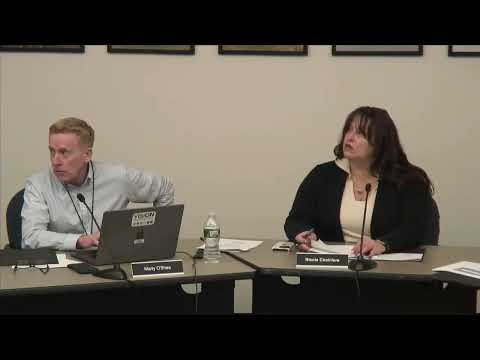
Superintendent Dr. O'Shea and Assistant Superintendent for Finance and Operations Tom Mazza presented the Longmeadow Public Schools’ recommended FY26 budget at the Jan. 28 School Committee meeting, outlining a proposed $1,287,000 increase in the town general fund contribution and a total FY26 budget in the mid-$44 million range.
The recommendation, presented as a level-service budget, would keep current staffing and programs while asking the town to cover an increased general-fund contribution (presented as $1,287,000 above FY25). Administrators said the recommendation couples that local increase with roughly $3.38 million in grant and special-revenue funding for a total budget of about $44.85 million for FY26.
The superintendent framed the request against the state foundation-budget calculation, which administrators said is rising faster than state Chapter 78 aid. Administrators noted the state’s foundation calculation increased materially year‑over‑year and that the governor’s House 1 proposal would raise Chapter 78 aid to Longmeadow only modestly (administrators cited a roughly $204,675 increase under the House 1 numbers). That gap, they said, places pressure on local budgets to cover education cost increases.
Administrators walked the committee through the main revenue and cost drivers: the district remains heavily dependent on the town general fund (about 92.5% of budgeted revenue), special education circuit-breaker aid, projected modest gains in school-choice/Metco receipts and other state and federal grants. On the expenditure side, the largest increases come from contractual obligations tied to collective bargaining; transportation cost increases the district expects from the Lower Pioneer Valley Educational Collaborative; higher out‑of‑district tuition and vocational/CTE tuition; and targeted paraprofessional and programmatic costs. Utilities and some software lines were projected to be relatively stable compared with the prior year.
Administrators also described planned reductions or offsets, including savings from anticipated retirements (hiring lower on the salary scale), a projected reduction of one kindergarten section (from 10 to 9) tied to lower kindergarten enrollment, and adjustments to some specialized services where partner institutions will provide support. The presentation said the recommended staffing level for FY26 would be essentially level with current staffing.
Committee members pressed administrators on how the district will handle late changes in state aid or unexpected enrollment swings. Administrators described past practice: if final state aid differs from the governor's proposal, additional revenue has been incorporated later via fall town meeting actions or other mid‑year adjustments; timing and allocation depend on town decisions. The superintendent said final state and federal aid levels are not expected to be certain until late spring or summer.
Committee members also asked for cost estimates on possible new investments administrators identified as priorities if additional funds become available: expansion of student behavioral and mental‑health supports (the district called these “student support centers” and cited Title I funding that has supported similar sites at some schools), full‑day preschool (the administration proposed piloting one full‑day preschool section in FY26), expanded instructional coaching, and fully funding curriculum renewal/adoption cycles. Administrators said they will return with more precise cost estimates to help the committee weigh tradeoffs.
The presentation closed with a calendar of next steps: a School Committee public hearing on Feb. 4, a possible committee vote on Feb. 11, presentation to the select board in early March and final consideration at the annual town meeting on May 13.
For now, administrators described the FY26 budget as a recommendation subject to change pending committee feedback, final state/federal aid numbers and town budget deliberations.
Ending — The committee took no formal vote on the FY26 recommendation during the Jan. 28 meeting; staff said they will provide line‑item cost estimates for the discretionary investments members asked about and will return for further committee review before the Feb. 4 public hearing.