Get Full Government Meeting Transcripts, Videos, & Alerts Forever!
Get email alerts on the School Facilities topic
No spam. Unsubscribe anytime.
Lewiston officials outline capacity strains and options for 287 Main Street
Summary
Superintendent Jake Langley told a Jan. 28 Lewiston Public Schools workshop that several elementary and secondary schools are running near capacity, that the district owns 287 Main Street and is weighing renovation costs and alternative uses, and that capital needs across the district total millions of dollars.
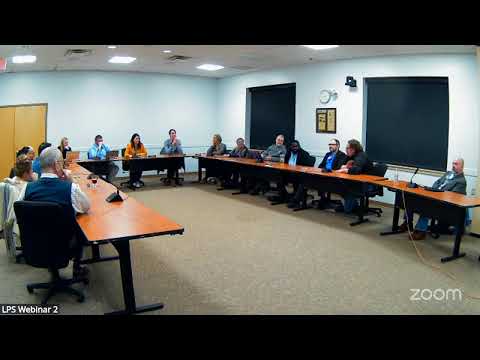
Lewiston Superintendent Jake Langley told a joint school-committee and city-council workshop on Jan. 28 that several Lewiston Public Schools are at or near capacity and the district is evaluating options for the recently purchased 287 Main Street building.
Langley said the district acquired 287 Main Street “last year” and is treating it as one possible solution to space constraints, but he warned “that building needs a lot of work” and cited a prior assessment that estimated about $14,000,000 to rehabilitate it for school use. He said the district has requested $1,000,000 in the LCIP (local capital improvement plan) to begin site cleanup and concept planning, but stressed the building “is not an end all, be all.”
Why it matters: The district is managing rising enrollment and program expansions — including bringing outplaced special-education students back into Lewiston schools — while balancing facilities work across 1.1 million square feet of school buildings and 247 acres of grounds. Choices about 287 Main Street, the Dingley Building and other facilities will affect where students learn, whether programs can expand, and the school budget and capital requests presented to the city and voters.
Langley walked through recent enrollment and building snapshots. He said Conners Elementary had about 737 students, Farwell 407, Geiger 574, McMahon 486 and Montello 672. He reported Lewiston Middle School enrollment around 739 and Lewiston High School “just under 1,500.” The district also operates two Lewiston Regional Technical Center campuses that serve about 981 students when combined with high‑school programming.
Langley described several options if enrollment continues to grow: renovate 287 Main Street; repurpose the Dingley Building (currently central office space) for school programs; or identify other community spaces. He noted the Dingley Building already houses human-resources, facilities leadership, nutrition, transportation and other central functions and that consolidating offices could free space for student programs elsewhere. “If that building became viable over time, one of the things we could do is re-centralize our office,” Langley said.
Langley also summarized a recent community survey about 287 Main Street. He said the top five preferred uses were daycare, staff space, special-education programming, child-development services and community meeting/collaboration space.
Costs and next steps: Langley cited the facilities assessment number of roughly $14 million to ready 287 Main Street for school use and said the district is pursuing a mix of funding: federal and state grants, private donors, and possible congressional discretionary funds. He asked the public to weigh in before the district commits to a path and said the district will produce a concept plan if cleanup and initial work are approved.
Context and constraints: Langley reminded listeners that school buildings meet different codes than many other uses, which raises refurbishment costs. He also said prior community resistance slowed previous efforts to redraw school attendance lines and that moving students between buildings can be disruptive to families. Several elected officials at the meeting — including Councilor Kim Gallant and Councilor Mike Roy — urged the district to continue public outreach and to provide clear visual materials so residents can understand building uses and staffing.