Get Full Government Meeting Transcripts, Videos, & Alerts Forever!
Get email alerts on the Education Discrimination Enforcement topic
No spam. Unsubscribe anytime.
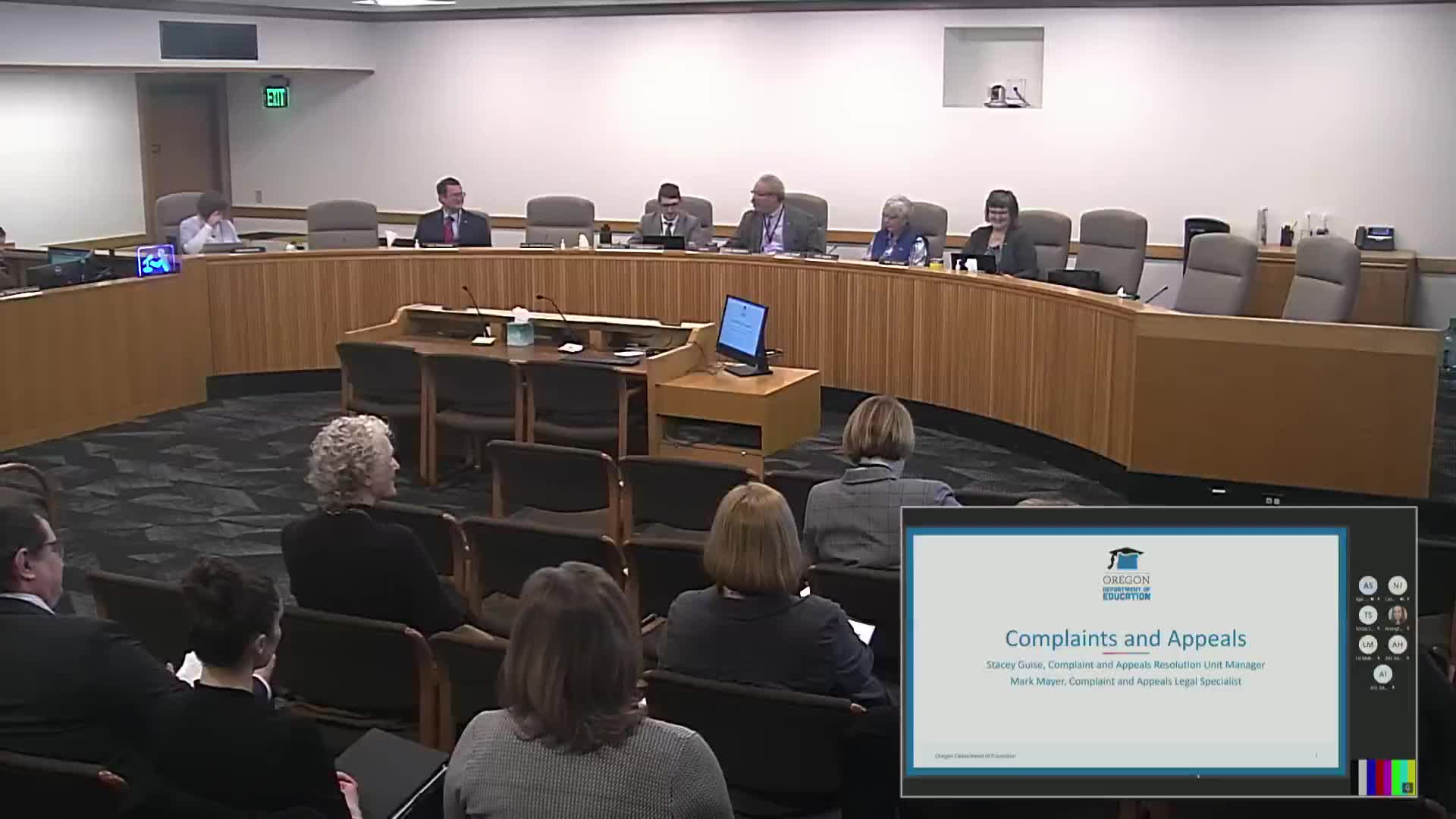
ODE seeks broader remedies for student discrimination, drops contested religious-activity standard in SB 867 hearing
Summary
At a Senate Education Committee hearing, Oregon Department of Education staff proposed new authority to order schools to recompense students harmed by discrimination, described limits on the proposal, and said they will seek an amendment to remove a provision on religious-entanglement complaints.
The Oregon Department of Education told the Oregon Senate Education Committee during a public hearing that Senate Bill 867 would let the agency order public schools to recompense students who lose educational services because of unlawful discrimination and would change how certain reports of misconduct are handled.
ODE officials also said they will seek an amendment to remove a section of the bill that would have created a new pathway for complaints about religious activity in public schools, calling the law on religious entanglement unsettled and not ready for definition in statute.
The proposal would authorize ODE to require a school to provide lost services or to reimburse “reasonable costs incurred” by a student or parent to obtain those services, similar to “compensatory education” in special education law. Mark Mayer, a complaint appeals legal specialist at ODE, said, “the idea here is the same except it would apply for all discrimination cases.” He cautioned the measure is limited to discrimination investigations and limited to students; it would not apply to non-students who allege discrimination in schools except under the separate, broader discrimination statute that ODE can already enforce in certain circumstances.
Maya Heim, manager of ODE’s Conduct Investigations Unit, described additional changes SB 867 would make to ODE’s handling of allegations of misconduct. Among the modifications discussed: clarifying whether pre-kindergarten-only providers are covered (the bill would exclude such providers unless they are under the direct control of a K–12 provider); allowing ODE to substantiate reports of misconduct for up to two years after an individual’s last service period with a provider; requiring ODE to inform a reporter whether the agency’s finding was substantiated without automatically releasing the full confidential determination; and adding language to require law enforcement to share investigative reports with ODE when relevant to ODE’s inquiries.
Committee members pressed ODE staff on capacity and timelines. Emily Nazarov, ODE’s government legal affairs manager, said the agency has a backlog and that the department received 14 additional positions in the 2023 session and is hiring; she said the rule requires investigations to be finished within 180 days but allows extensions for good cause. ODE staff described intake flexibilities that permit the department to accept appeals after 90 days or after 30 days if a district’s multistep complaint process does not timely respond at a given step.
Committee discussion included questions about which types of complaints require exhaustion of local processes and which may be accepted immediately by ODE. Mark Mayer said the proposed recompense authority would apply primarily in direct-discrimination cases and that liability damages in harassment cases remain governed by federal deliberate-indifference standards.
The hearing closed without a committee vote. ODE said it will return with an amended proposal that removes the religious-entanglement complaint language and may bring that issue back in a later session.