Get Full Government Meeting Transcripts, Videos, & Alerts Forever!
Get email alerts on the County Administration topic
No spam. Unsubscribe anytime.
Lake County supervisors hear department reports on permitting, public safety, health and county finances
Summary
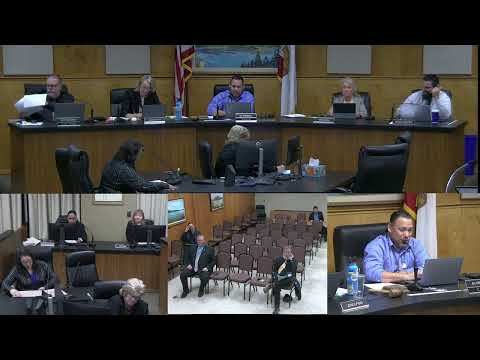
At a multi-hour January meeting, Lake County department heads updated the Board of Supervisors on priorities ranging from a new ePermitting launch and the county's general-plan update to public-safety staffing, health services outreach and a 10-year enterprise software contract the board approved.
Lake County department heads presented progress reports and budget, staffing and program updates at a multi-hour board meeting that included discussion of permitting and planning technology, public-safety staffing and communications, health-department outreach and countywide financial systems. The board approved a 10-year agreement for enterprise finance and human-capital software.
Countywide context: The meeting collected routine annual reports from agencies that set near-term priorities: Community Development highlighted the Lake County 2050 general-plan process and a new ePermitting launch, Health Services described a new mobile clinic truck and tobacco retail licensing, Public Works outlined a road-maintenance plan and planned capital projects, and several public-safety agencies reported recruitment and staffing efforts. The board also voted to approve a countywide enterprise resource planning (ERP) contract (Workday) the county will use to replace multiple legacy finance and payroll systems.
Community Development and permitting: Community Development Director Mariah Turner told the board the department completed year one of Lake County 2050, the countywide general-plan update, and held extensive public outreach including two countywide surveys and 46 public meetings. Turner said planning and code divisions recently implemented an electronic permitting system (OpenGov/ePermitting) and plan to launch a public portal soon (staff said Feb. 12 was the planned date mentioned at the meeting). The department reported 470 planning applications in 2024 and roughly 1,810 building-related permits issued across the county; 296 permits were finaled and inspectors completed about 5,230 inspections. Turner said the department expects more detailed, customizable reports once ePermitting is online and will provide permit breakdowns by type on request.
Public safety and sheriff updates: Sheriff Luke Bingham reported progress on recruitment and a move toward beat-based deputy assignments tied to community engagement. The sheriff said patrol staffing has increased and that the department intends to move deputies onto multi-month beat assignments when additional hires are in place. Bingham also said the department has obtained funding and a plan to install the Goat Mountain radio repeater, which will expand public-safety radio coverage to Spring Valley and parts of the North Shore.
Probation and public defender: Chief Probation Officer Wendy Monfrance described recruiting gains in probation and expansion of reentry and housing-related work; she said a site selection for a county-supported housing project is approaching completion and a groundbreaking is expected in 2026. Public Defender Ray Buenaventura said the office now has nine lawyers, two investigators and two support staff, expanded an expungement program and is planning further hires to meet Sixth Amendment staffing recommendations.
Health services, mobile clinic and tobacco licensing: Health Services Director Anthony Arton said the county acquired a mobile medical unit (the "Wow" truck) that is undergoing repairs and policy development, and described improved recruitment and an expanded home visiting program. Arton reported the county has implemented tobacco retail licensing and a smoke-free ordinance across jurisdictions, which he said is expected to influence health metrics over several years.
District Attorney and criminal-justice changes: District Attorney Susan Kronos told the board her office is implementing changes required by state law, including redaction work under "racially blind" charging rules and operational changes tied to recent drug diversion and retail-theft rules (commonly called Prop. 36 changes). Kronos said new state-required redactions have required outside vendor services and will increase time and cost per case; she said additional clerk or assistant positions are likely to be requested in the next budget.
County technology and library: Information Technology Director Shane French described cybersecurity upgrades, an ongoing migration to Microsoft 365 and rollout of multi-factor authentication. Library Director Christopher Veach reviewed a 50th-anniversary year, the bookmobile service funded with ARPA and state grants, and plans to launch a modern online catalog and library app that will allow remote self-checkout.
Social services and fiscal risks: Social Services Director Rachel Dollman Parsons emphasized a wide range of state and federal funding risks. She highlighted implementation work on Medi-Cal-related programs (CalAIM), IHSS and foster-care rate changes and said a recently issued Office of Management & Budget (OMB) directive had temporarily frozen some federal funding portals; she said county staff and state partner agencies were pursuing clarifications. Parsons also said certain federal program reauthorizations (older-adult services and Affordable Care Act provisions) are being watched closely because pauses or changes could require shifting county reserves or realignment funds.
Treasury, tax collection and county finance modernization: Treasurer-Tax Collector Patrick Sullivan reviewed recent enforcement and collection steps (lockbox processing for property tax, cannabis audits, chapter 7 and 8 tax sales activity) and described the county's need to consolidate and modernize legacy finance and tax systems. Separately the board approved a 10-year ERP agreement (Workday) to replace multiple legacy systems; county staff said the contract funds implementation, vendor-owned data extraction and training. County managers said the software is intended to reduce the current patchwork of legacy tools, centralize finance and HR, and remove multiple manual workarounds.
Public works, parks and solid-waste planning: Public Works Director Glenn March said the department oversees about 485 miles of paved roads and 130 miles of unpaved roads and plans a more transparent annual road-maintenance program; the department expects to complete 35 miles of chip seal in the coming year and outlined priority capital projects including landslide repairs and a Soda Bay widening project. Public Services Director Lars Ewing reported landfill expansion planning, completed Lucerne Harbor dredging and museum and parks improvements; he previewed grant-funded work and a parks-and-trails master plan scheduled for board review soon.
Special districts and water/wastewater: Special Districts Administrator Robin Bory described wastewater and water utility accomplishments: line cleaning volume, zero spills during heavy winter rain after recent work, and awarded design contracts for pump station and well projects. Water Resources Director Juan Upadhyay described grants and pilot projects, noted work on the Middle Creek ecosystem restoration land acquisitions and said the department continues outreach including the Clear Lake Integrated Science Symposium and regional studies on lakebed leasing and debris removal.
What the board decided: The Board of Supervisors approved the county's 10-year Workday ERP contract (agenda action), and reappointed members to two regional advisory town-hall committees. Several departments were directed to return with additional metrics or follow-up reports as requested by supervisors (for example, more detailed permit counts after the ePermitting launch and comparative health indicators tied to new tobacco and mobile-clinic efforts).
Why it matters: The presentations reflect near-term implementation work for public services (permitting, roads, waste, public-safety radio coverage) and county modernization efforts (ERP, ePermitting, digital permitting dashboards). Several departments flagged fiscal or operational risks driven by state and federal policy changes, program realignments and legacy software gaps that the board and administration will monitor during the upcoming budget cycle.
Looking ahead: Staff said they will return with launch metrics for ePermitting after the public portal goes live, with updated permit breakdowns; the sheriff and probation offices will report on recruitment and the planned beat-assignment model as hires are completed; and Social Services will update the board as federal funding questions are resolved. The county will begin vendor-led ERP implementation activity now that the contract is approved.