Get Full Government Meeting Transcripts, Videos, & Alerts Forever!
Get email alerts on the State Budget Assessments topic
No spam. Unsubscribe anytime.
DAS tells General Government subcommittee assessments will rise as federal funds taper
Summary
Department of Administrative Services officials told the General Government Subcommittee on Jan. 28 that the department's assessment share funded by the general fund is expected to rise from about 50.5% to 55.5% in the 2025-27 biennium, driven by tapering federal funds and other adjustments to DAS cost recovery methods.
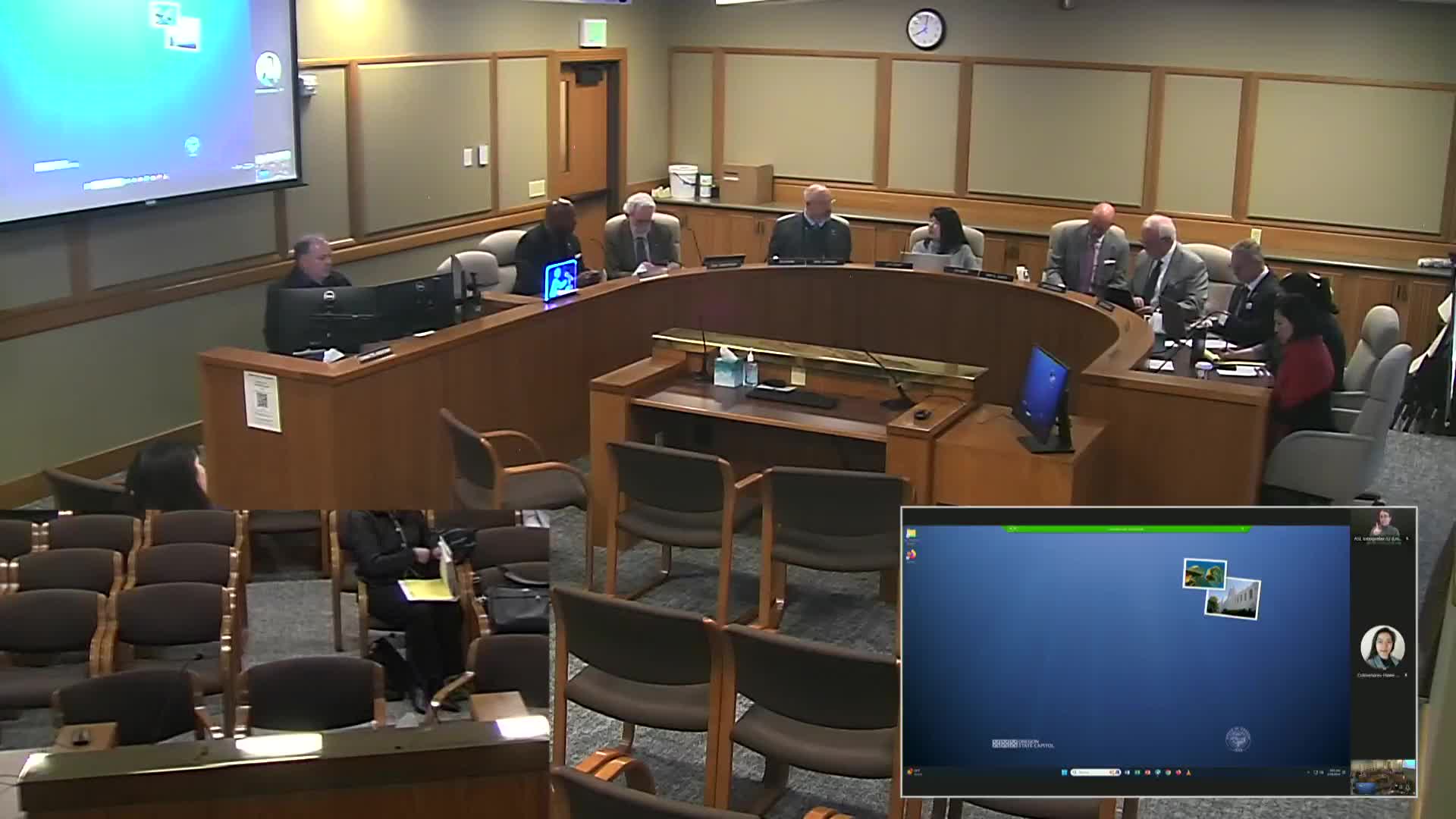
At a Jan. 28 meeting of the General Government Subcommittee, officials from the Oregon Department of Administrative Services said the portion of DAS costs paid from the general fund is expected to increase from about 50.5% to roughly 55.5% in the 2025-27 biennium, largely because federal stimulus and COVID-related federal funding are tapering off.
Malia Mesiba, legislative director for the Department of Administrative Services, introduced the presentation and the DAS team for the informational session. Kate Nass, chief financial officer for DAS, and Robert Otero, DAS budget director, walked lawmakers through how DAS sets assessments and rates, how those charges feed into agency budgets and the controls DAS uses to show federal partners how administrative costs are allocated.
The change matters because DAS assessments are built into every state agency's budget and fund central policy and administrative functions used statewide, including the chief operating officer's office, human resources policy and the statewide accounting manual. "We set an assessment based on whatever the right criteria is for that particular thing," Kate Nass said, describing the department's effort to tie assessments to measurable drivers such as agency FTEs, budget size and license counts.
DAS officials said about half of assessment-based revenue currently comes from the general fund, with roughly 13% from federal funds, 36% from other funds and a small share from lottery funds. Robert Otero said the expected rise in general-fund share is driven primarily by a projected decline in federal funds: "Federal Funds is tapering off. So COVID funds, that's just COVID funds and other federal stimulus that we're anticipating to taper off," he said.
Officials described the price list process that agencies use to budget for DAS charges. DAS publishes a detailed statewide price list three times during budget development: in the spring (for agencies' current service level budgets), in the governor's proposal and after the legislatively adopted budget, so agencies can update their requests as DAS and legislative decisions change projected costs. Otero said DAS aims not to make a profit on rates and instead to recover projected costs for the upcoming biennium and to maintain a 60-day working capital standard.
The presentation included examples of assessment and fee-for-service methodologies. Assessments fund policy functions such as the chief financial officer and human resources offices (often allocated by FTE or budget size), while fees-for-service cover usage-based items such as data-center consumption, fleet fuel and building rent. Otero warned that when agencies stop using a service, the remaining customers can see higher per-unit fees because the cost pool shrinks.
Lawmakers pressed DAS on how the department balances mid-biennium cost pressure. Representative Reschke noted that percentage changes can reflect either a larger or smaller total budget and asked for historical data to clarify trends: "You can look at the slices of a pie back and forth, but you also can look at the size of the pie," Reschke said. DAS staff agreed to provide additional multi-year figures going back several biennia.
Committee members asked about several specific items: accounts receivable and delinquent interagency payments (DAS said an accounts receivable management report was due Feb. 1 and would include more detail), the state's risk fund (DAS said the Legislature provided an infusion during the 2024 session rather than raising assessments mid-biennium), and whether semi-independent entities such as the state lottery receive assessments (DAS said it varies by service and offered to provide specifics).
DAS also described organizational changes that affect assessment lines in 2025-27, including creation of a Strategic Initiatives and Enterprise Accountability Office and a Workday support division that consolidates HR and payroll systems support. Those internal shifts move costs between assessment lines but do not necessarily represent additional new spending, officials said.
Robert Otero summarized DAS' price-list mechanics: "We project out how much we need for next biennium," and divide the total cost to recover across assessment and fee-for-service lines, accounting for beginning balances and the 60-day working-capital target. The department also emphasized the importance of clear cost allocation to federal partners through the statewide central cost allocation plan (SWICAP) to avoid disallowances of federal reimbursements.
Lawmakers raised a late-breaking national issue during the meeting: an announcement of a federal pause on some disbursements. DAS staff said they needed immediate analysis of what a federal pause would affect and how long the effects might last; they emphasized that more work is required to determine which federal payments, if any, would stop and what that would mean for state cash flow.
The subcommittee scheduled additional DAS testimony in coming days, including more detail on Workday, labor relations, pay equity and the accounts receivable report. DAS officials offered to provide multi-year trend data, a breakdown of which semi-independent entities are assessed, and details on collection mechanics and past delinquency patterns.
Mesiba opened the session by identifying the presenters: "My name is Malia Mesiba. I serve as the legislative director for the Department of Administrative Services." Nass, Otero and Mesiba concluded by offering the committee the published price list and additional follow-up materials and said they would return for more detailed briefings later in the session.