Get Full Government Meeting Transcripts, Videos, & Alerts Forever!
Get email alerts on the Teachers Union Morale topic
No spam. Unsubscribe anytime.
Teachers report low morale in HTA survey; teachers warn 4‑day cycle reduces instructional time
Summary
The Horseheads Teachers Association reported low staff morale in a survey and teachers described how the new four‑day cycle and consolidated schedule have reduced science and social studies time and shifted specials; the board asked for the teacher's written materials and said it will consider changes.
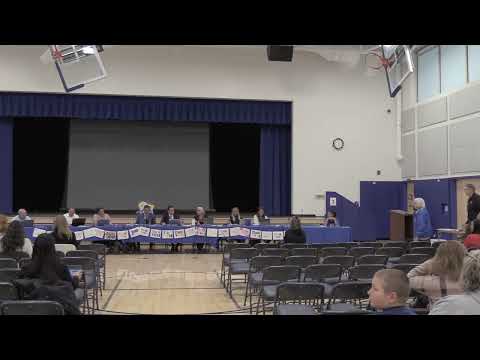
The Horseheads Teachers Association (HTA) told the Board of Education on Oct. 16 that a member survey showed low staff morale after the start of the 2025–26 school year, and teachers used the public‑comment period to describe instructional disruptions under the district’s new four‑day cycle.
Bill Finnerty, introduced himself as president of the Horseheads Teachers Association, and told the board the HTA survey had more than 72% participation and that results “reflected a low morale and general negative opinion toward the changes, decision making practice[s], quick processes, and district leadership.” He said many respondents were long‑time district employees who see a decline in public perception and pride in the district.
Why it matters: teachers framed scheduling and decision‑making as affecting classroom instruction and student outcomes. Board members said they would review the survey and requested follow‑up conversations.
A fourth‑grade teacher, Tizzy Palmer, described classroom‑level effects she attributes to the four‑day cycle. Palmer said social studies and science blocks are being interrupted more frequently under the new schedule and that specials (band, orchestra, instrument lessons) rotate in ways that pull students from core instruction. She described a classroom example of a four‑day rotation that reduced cumulative minutes of science and social studies and said math instructional minutes declined from 60 to 50 minutes per day under the new schedule.
Palmer presented calculations during public comment—she said the changes reduce science/social studies minutes by an amount she equated to 2,100 minutes (about 70 30‑minute lessons) for a given period and said the change in math minutes represented roughly an 1,800‑minute difference (presentation contained transcripted totals). Board members asked Palmer to submit her document to the district clerk so the board could review the calculations in detail.
Board response and follow‑up: Board members and administrators acknowledged the concerns and described ongoing review processes. Mr. Gill and building administrators said the administration is monitoring instruction and is conducting site visits and teacher meetings to identify where schedules and rotations can be tweaked. Multiple board members suggested forming committees or retreats to examine instructional performance data and to allow more interactive presentation formats so the board can ask detailed questions.
No formal action to change the schedule was taken at the meeting. The board later voted to form an ad hoc committee to review start times and related scheduling issues; that committee will be asked to consider teacher feedback alongside transportation, special‑area programming and state timing requirements. "If there's very specific things we need to address, then let's do that," a board member said during the discussion.