Get Full Government Meeting Transcripts, Videos, & Alerts Forever!
Get email alerts on the Healthcare Facilities topic
No spam. Unsubscribe anytime.
Committee advances minimum standards, transparency rules for freestanding emergency departments
Summary
The committee adopted a first substitute and voted to pass House Bill 152, which sets minimum equipment and personnel standards and price-transparency requirements for freestanding emergency departments in counties of the first and second class and adjusts licensing and capacity provisions.
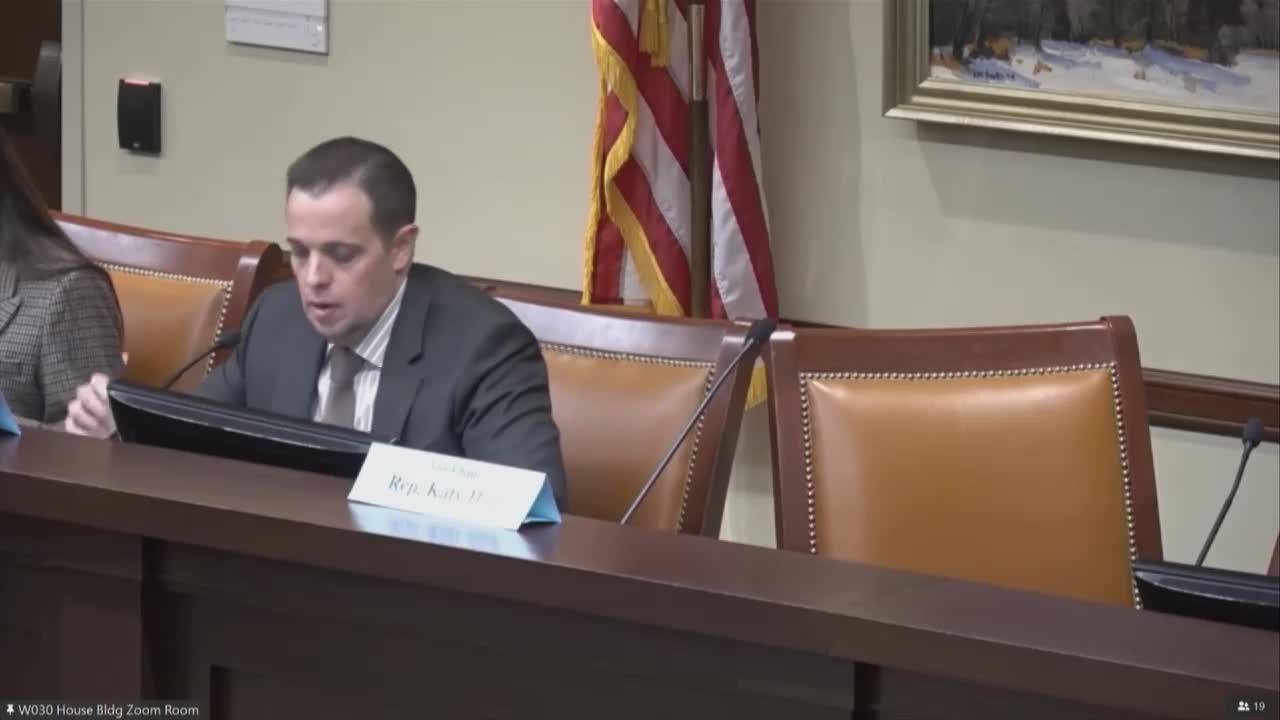
Representative Katie Hall presented substitute language for House Bill 152, Healthcare Facilities Amendments, saying the measure establishes minimum standards for freestanding emergency departments in Utah's first- and second-class counties, adds price-transparency requirements, and changes licensing and renewal procedures for the Department of Health and Human Services (DHS).
"This bill requires freestanding emergency departments in counties of the 1st and second class to meet a minimum standard of equipment and personnel," Hall said, noting the bill targets facilities where residents have raised concerns about staffing and diagnostic capabilities.
Hall told the committee the provision is the product of more than a year of interim work and a multi-stakeholder working group that visited facilities and sought consensus with hospitals, physicians and nurses. She said the substitute narrows the requirement to first- and second-class counties to account for rural constraints while addressing safety concerns in more populous areas.
Nurses and physician groups testified in favor. Rachelle Larson, speaking for the Utah Nursing Association Government Relations Committee and identifying herself as a nurse in a freestanding ER, described patient-safety risks when labs or specialized staff are not available: "When we have traumas, it is only 2 nurses working with a doctor. Now with the lab being taken away, I am now your respiratory therapist and assisting the doctor in inserting a chest tube or inserting an airway... I'm only 1 person," Larson said.
Michelle Macomber, CEO of the Utah Medical Association, and Francis Gibson of the Utah Hospital Association both told the committee they supported the substitute and said stakeholders reached compromises on several items.
Representative Daley Provo moved to adopt the first substitute; the committee voted to adopt the substitute. Representative Ward then moved that the committee pass the first substitute HB 152 with a favorable recommendation; the chair announced the motion passed.
Sponsor and supporters said the substitute also addresses price transparency so patients are less likely to use high-cost emergency facilities for minor care, and it aligns DHS licensing and renewal procedures under the new standards. Hall said she expects the substitute to reduce or eliminate a fiscal note attributable to licensing changes once the Legislative Fiscal Analyst updates the estimate.
Votes at a glance: the committee adopted the first substitute and passed out HB 152 with a favorable recommendation; the chair announced both motions passed (roll-call tallies not specified).