Get Full Government Meeting Transcripts, Videos, & Alerts Forever!
Get email alerts on the Blockchain topic
No spam. Unsubscribe anytime.
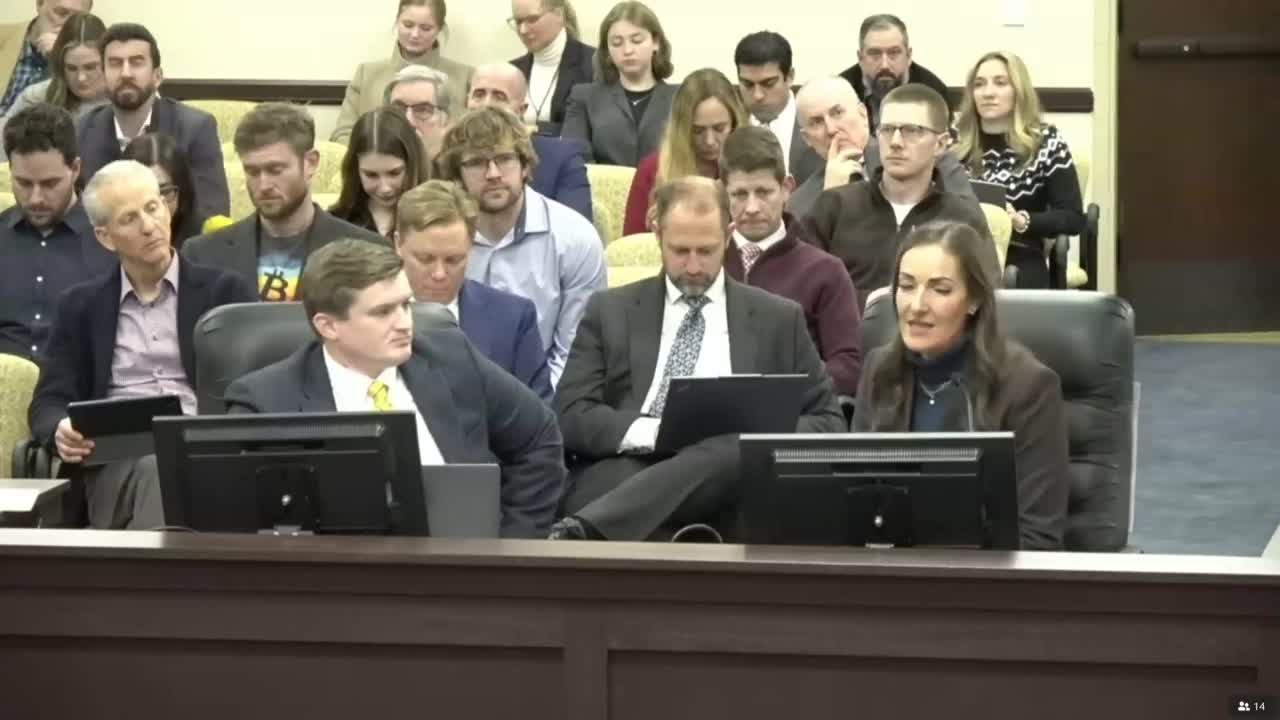
Committee advances broad blockchain bill: self‑custody protections, mining zoning, limited state investment authority
Summary
The House Economic Development Committee approved the second substitute of HB 230, a sweeping blockchain package that affirms self custody rights, sets mining‑facility zoning standards, and authorizes the state treasurer to invest up to 5% of certain reserve funds in qualifying digital assets.
After extended discussion and public testimony, the House Economic Development Committee passed the second substitute of HB 230, a broad package of blockchain and digital‑innovation measures that (1) affirms individuals' right to self custody of digital assets, (2) creates a legal and zoning framework for larger‑scale digital‑asset mining operations, and (3) permits the state treasurer discretion to invest up to 5% of specified public reserve funds in digital assets that meet market‑cap and custody standards.
Sponsor remarks and task‑force background: Representative Tuscher explained the bill grew from the state's Blockchain and Digital Innovation Task Force and was unanimously recommended by that body. Task‑force members and witnesses said the measure is intended to balance innovation with investor protections and local control. "This bill protects self custody," the sponsor said, and the bill also "establishes clear guidelines to support the growth" of mining companies while keeping them out of residential areas.
Key provisions: - Self custody: The bill explicitly guarantees an individual’s right to hold and control private keys and use hardware for custody of digital assets. Testimony from advocates stressed the legal protection of self custody for private persons. - Mining zoning and standards: The bill defines a digital-asset mining operation and limits the presumptive industrial placement of larger operations (the substitute defines a threshold at 1 megawatt for a single site in the second substitute). It requires mining operations at that scale to comply with non‑discriminatory industrial zoning and allows local noise, safety and land‑use rules to remain enforceable so long as they are applied consistently. - State investment authority: The second substitute authorizes, but does not require, the state treasurer to invest up to 5% of identified reserve funds (a set of rainy‑day and stabilization accounts specified in the bill) in digital assets that meet objective criteria (including a market‑cap threshold and qualified custodian requirements). Treasurer Marlo Oakes told the committee his office supports careful evaluation and that the bill permits but does not mandate purchases. The treasurer and other witnesses discussed portfolio management, custody standards, and avoidance of excessive risk.
Public comment and debate: The committee received wide public testimony from blockchain advocates, industry representatives, municipal associations, nonprofit service groups and finance professionals. Supporters said the bill would help Utah attract innovation and create a clear framework for custodianship and mining. Municipal officials (Utah League of Cities and Towns) said limiting larger mining facilities to industrial zones while preserving applicable local codes was an acceptable balance. Several public commenters urged strong custody rules (direct state custody if a strategic reserve is adopted) and cautioned about counterparty risk. Others urged caution about investing public money in highly volatile assets.
Vote and next steps: Representative Fiafia moved adoption of the second substitute and then moved to favorably recommend HB 230 to the full House. The committee voted in favor; the record shows one dissenting vote from Representative Jack who expressed concern about investing state funds in digital assets. The bill will be reported to the full House for further consideration.
Votes at a glance: HB 230 (second substitute) — motion to adopt the second substitute (mover: Representative Fiafia) and motion to favorably recommend the bill to the full House (mover: Representative Fiafia); committee approved the second substitute and recommended the bill by voice vote; Representative Jack recorded the lone dissent on final recommendation.