Get Full Government Meeting Transcripts, Videos, & Alerts Forever!
Get email alerts on the Child Online Safety topic
No spam. Unsubscribe anytime.
Senate committee advances App Store Accountability Act after hours of public testimony
Summary
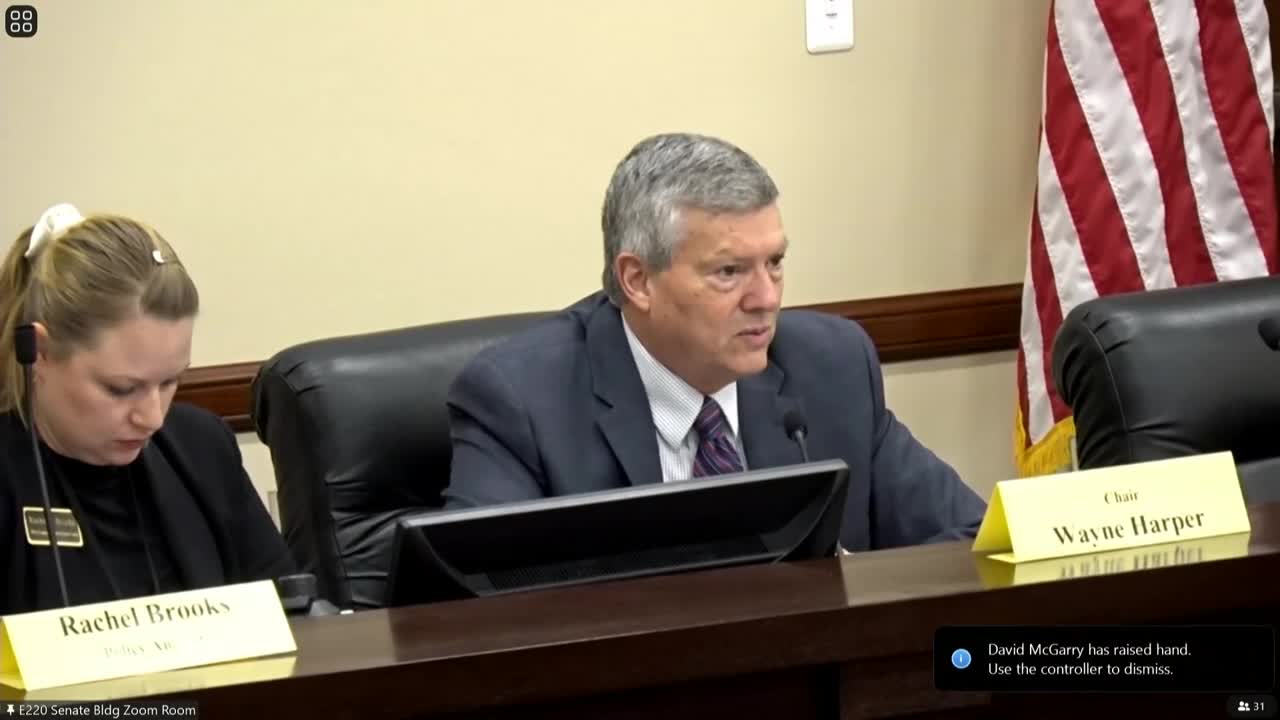
The Senate Transportation committee adopted a first substitute and gave a unanimous favorable recommendation to SB 142, the App Store Accountability Act, following extensive testimony for and against age-verification and parental-consent requirements for app stores.
Senator Wyler's App Store Accountability Act (SB 142) was substituted and advanced out of the Senate Transportation, Public Utilities, Energy and Technology Standing Committee with a unanimous favorable recommendation after more than two hours of public comment and debate.
The bill would require app stores to provide mechanisms for parental approval and to verify users' ages so that minors cannot enter binding app-store contracts or access age-inappropriate apps without parental consent. Sponsors and advocates characterized the measure as restoring parental oversight; opponents warned it would create privacy and security risks, impose burdens on small developers and likely face constitutional challenges.
Proponents, including sponsor Senator Weiler (Senator Wyler in parts of the transcript) and witnesses such as Melissa McKay, urged the committee to adopt age-verification standards tied to parental consent. McKay, identified herself as “a Utah mother to five children and a device and online child safety expert,” and said the bill focuses on three areas: (1) preventing minors from entering binding contracts with app stores, (2) correcting deceptive age ratings, and (3) requiring verified-age signals to enforce age-appropriate defaults and privacy protections. She said the concept is technologically feasible and had been reviewed by constitutional attorneys.
Dozens of public commentators turned out. Supporters included the Utah PTA’s digital wellness specialist Tina C. Strand, Utah Parents United, the Sutherland Institute, the National Center on Sexual Exploitation (testimony read by its CEO), Utah Parents United, and a number of parents and teens who testified that parental tools are currently insufficient. Opponents included TechNet, the R Street Institute, the Chamber Progress, the Taxpayers Protection Alliance, NetChoice, the Digital Progress Institute, the Retail Merchants Association and a range of tech-industry and privacy experts. Opponents argued the bill would force app stores to collect large amounts of identifying data, increase risk of breaches, create regulatory burdens on small developers, and would likely be blocked in court under First Amendment and privacy law precedents. Several witnesses proposed alternatives such as expanded education, better use of existing parental-control tools and voluntary industry measures.
Committee members asked about implementation details. McKay and other supporters said age verification could rely on existing wallet/ID verification flows that return an anonymized age signal to apps. Questions were raised about emancipated minors and refugees; McKay said documentation of legal status could be uploaded in similar verified ways. Industry witnesses and trade groups asked the sponsor to clarify who bears specific technical burdens, and multiple witnesses warned of the risk of centralizing sensitive personal data.
Committee action occurred in two parts: first, Senator Wilson moved to delete the body and title and replace SB 142 with the first substitute (motion adopted by voice vote earlier in the hearing). Later, after public comment and debate, Senator Riebe moved that the committee recommend first substitute SB 142 favorably to the full Senate. The committee voted in favor; the chair noted the motion passed unanimously (reported as 7–0). No roll-call vote with individual member names was recorded in the transcript.
The bill as substituted retains the core parental-consent and age-verification requirements while leaving some technical details to rulemaking and further negotiation. Multiple speakers asked to continue working with the sponsor on implementation details (verification methods, data minimization, timelines for Attorney General rulemaking and burdens on small developers). The committee indicated support to move the substituted bill to the Senate floor.
The committee also adopted the first substitute earlier in the hearing and instructed the sponsor to continue accepting stakeholder input as the Legislature proceeds.