Get Full Government Meeting Transcripts, Videos, & Alerts Forever!
Get email alerts on the Homelessness topic
No spam. Unsubscribe anytime.
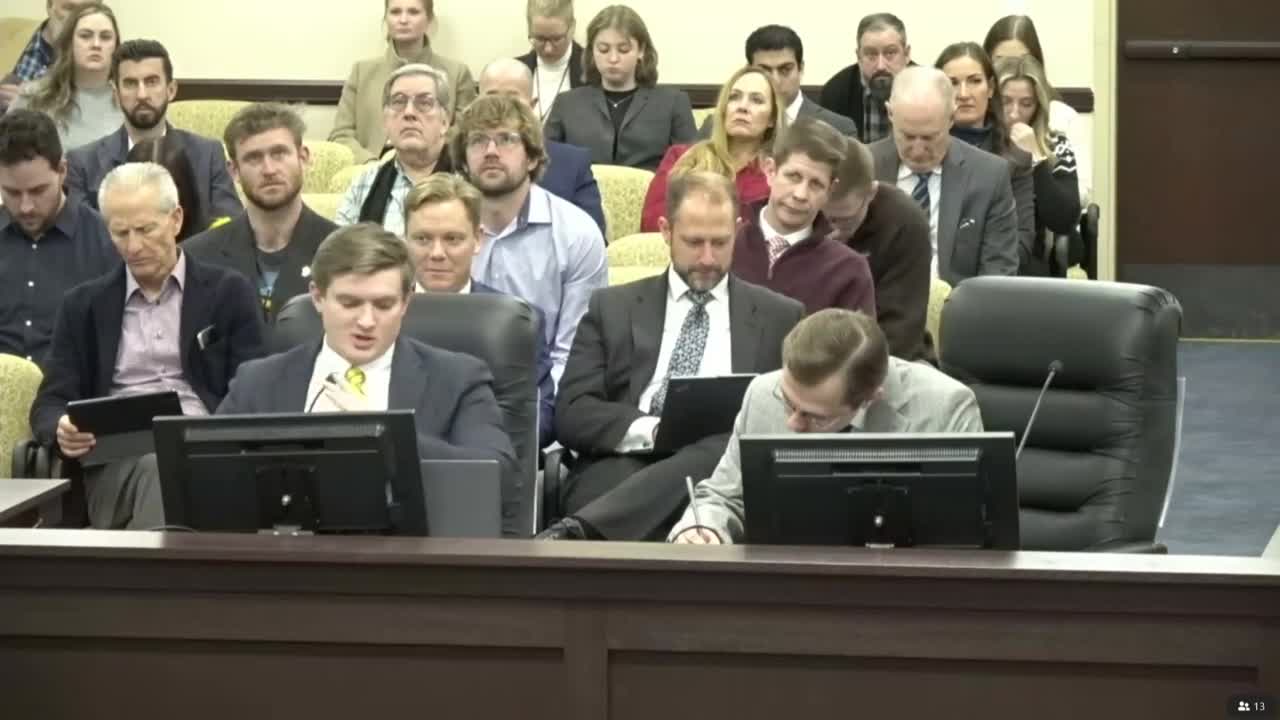
Committee backs concurrent resolution seeking HUD flexibility for local homelessness programs
Summary
Lawmakers unanimously recommended HCR 6, which asks federal partners to allow Utah more flexibility with federal homelessness funds — including relief from certain 'Housing First' requirements — so local governments can match interventions to distinct community needs.
The Economic Development Committee unanimously recommended House Concurrent Resolution 6, which urges the federal government to provide Utah greater flexibility in how federal homelessness funds are used and administered, including waivers from some elements of the federal "Housing First" regime.
Representative Clancy, sponsor of HCR 6, said the resolution does not eliminate Housing First but requests flexibility so communities can apply different program models to varied local needs. "House Concurrent Resolution 6 asks for flexibility," the sponsor said, noting that some federal rules can disqualify local programs that use sobriety or other participation requirements even when such programs may better serve certain subpopulations.
Testimony came from a range of providers and advocates. Devin Kurtz of the Cicero Institute described national data and said the Continuum of Care structure tied to HUD funding has restricted state experimentation. Preston Cochran, CEO of The Other Side Village, and Jan Hemming, a Solutions Utah board member, both described alternative approaches focused on recovery and long-term rehabilitation. Representatives of the Utah Homeless Services Board and other service providers urged both innovation and careful measurement; the Disability Law Center expressed concerns about block-grant-style funding and urged investment in affordable housing and community-based wraparound services.
Sponsor Clancy said the resolution aims to expand options and local decision-making rather than remove existing program choices: "If you favor a housing first model, if you favor a low barrier model or a middle to high barrier model, all of those things are still on the table. This just allows us the opportunity to identify all of those different pathways and invest in them."
Representative Jack moved to favorably recommend HCR 6; the committee voted in favor by voice vote.
Votes at a glance: HCR 6 — concurrent resolution urging changes to federal homelessness regulations (mover: Representative Jack); committee passed it with a favorable recommendation.