Get Full Government Meeting Transcripts, Videos, & Alerts Forever!
Get email alerts on the Sign Installation topic
No spam. Unsubscribe anytime.
Committee adopts change to allow sign technicians to do limited wiring within 10 feet under voltage/amperage cap
Summary
The committee adopted a first substitute to HB 28 that clarifies on‑premise sign installation: minor electrical work incidental to sign installation within 10 feet is permitted for sign technicians provided the work does not exceed 120 volts and 20 amps; the bill passed unanimously.
Representative Moss presented HB 28 (first substitute) to clarify that on‑premise sign installers may perform minor electrical work incidental to a sign installation when the connection is within 10 feet and does not exceed specified voltage and amperage limits. The committee adopted the first substitute unanimously and then passed the bill with a favorable recommendation.
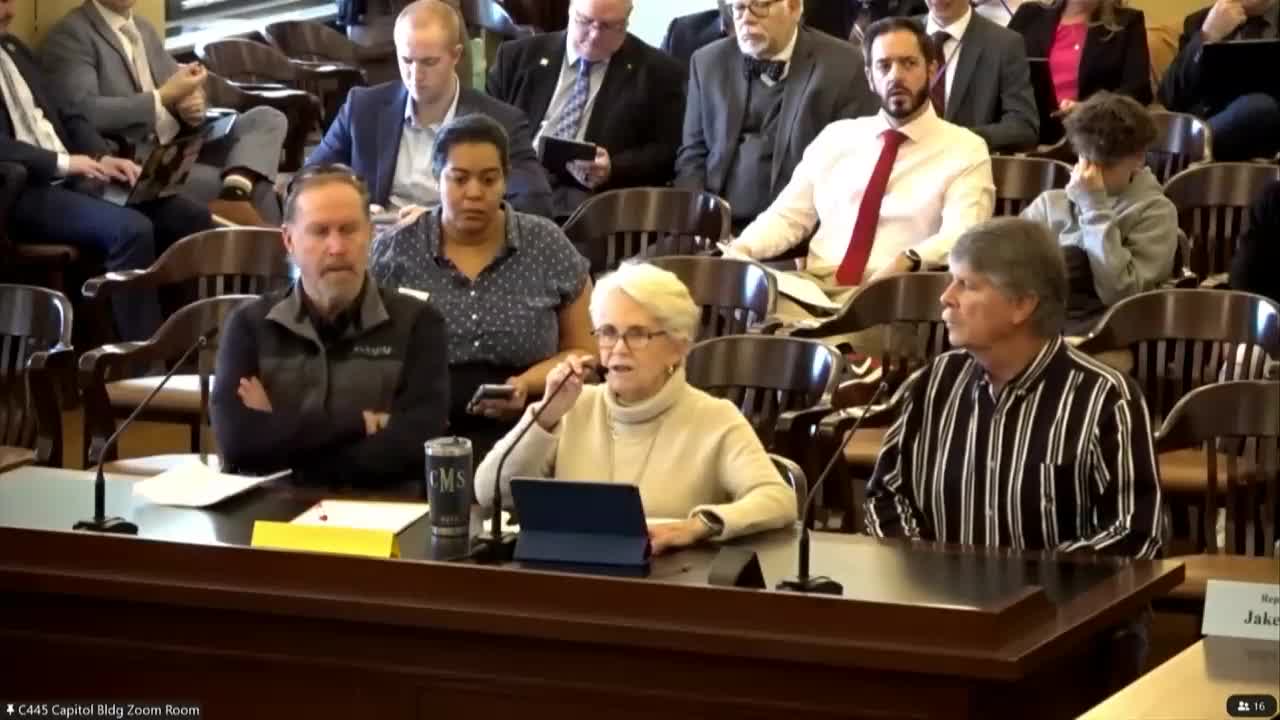
The sponsor said the change codifies long-standing practice: sign technicians have historically connected storefront signs to nearby power supplies within 10 feet using a short run of cable and a disconnect switch at the sign. Kevin Anderson of the Utah Sign Association and Randy George (a sign-industry representative) described routine practice: run an MC cable up to a labeled breaker or power box and connect the sign, often with a local disconnect, without invoking a licensed electrical contractor for a small, low-voltage connection.
The language was clarified during the hearing to add a safety cap suggested by the National Electrical Contractors Association and the Independent Electrical Contractors: the substitute specifies that incidental sign-wiring “does not exceed 120 volts and 20 amps.” Representative Ivory asked specifically whether three-phase or 240‑volt work is involved; witnesses replied no. NECA/IEC representatives told the committee they appreciated the clarifying voltage/amperage limits.
Representative Ivory moved to adopt the first substitute and then to pass HB 28 favorably; the committee adopted the substitute and passed the bill unanimously. Sponsor Moss said the measure will help thousands of small businesses by removing ambiguity for sign companies and avoiding unnecessary electrician service calls for routine low‑power sign hook-ups.