Get Full Government Meeting Transcripts, Videos, & Alerts Forever!
Get email alerts on the Comprehensive Annual Financial Report topic
No spam. Unsubscribe anytime.
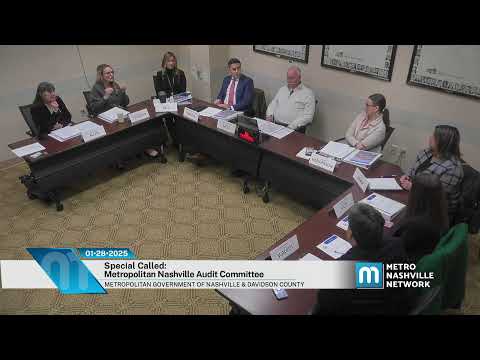
Audit Committee accepts Metro Nashville ACFR; fund balance cited as policy-compliant
Summary
The Audit Committee reviewed Crossland’s draft Comprehensive Annual Financial Report and voted to accept it. Committee members discussed fund balance compliance, property tax timing, tax abatements and component-unit reporting.
The Metro Nashville Audit Committee on Oct. 31, 2024 reviewed Crossland’s final draft of the Comprehensive Annual Financial Report and voted to accept the report.
The county’s outside auditors from Crossland delivered the draft ACFR and told the committee the audit was substantially complete. “We’ve reviewed the ACFR from Metro and believe it’s fairly stated in all material respects,” Katie Farris of Crossland said.
Committee members focused on three areas of context: general fund balance compliance, the timing of property tax revenues, and disclosures of tax abatements and component units. The committee was told the general fund balance at June 30 is in line with the council-approved fund balance policy. The report also showed that most departments spent less than budgeted, returning resources to the general fund for that fiscal year.
Committee members noted timing differences in property tax collections that affect revenue forecasts for fiscal 2025. Staff said the majority of property-tax receipts are not finalized until February and that the office is still closing February collections before finalizing an FY25 revenue forecast. Auditors and staff reported a net increase in property-tax revenues from the prior year of roughly $20 million, but that figure did not meet the budget target for the year.
Members asked about tax abatements and where those commitments appear in the ACFR. Staff pointed to the ACFR notes on tax abatements (Note 16 on the copies used in the meeting) and confirmed abatements and similar commitments are disclosed in the notes and in the component-unit schedules where appropriate. The committee also asked how component units such as business-improvement districts are reflected; staff explained those flows are recorded after Metro receives remittances from the state (for sales-tax linked fees) and that Metro runs monthly reconciliations and pays component units within a few days after receipt.
After discussion, a motion to accept the ACFR carried. The committee also approved minutes from its prior meeting earlier in the session.
Members said they will follow up on specific line-item questions (for example, changes between drafts in short-term liabilities and bond schedules) and requested staff trace differences between drafts for clarification.
The committee adjourned ACFR business after accepting the report; staff will return with follow-up where members asked for additional detail.