Get Full Government Meeting Transcripts, Videos, & Alerts Forever!
Get email alerts on the Homelessness Public Health topic
No spam. Unsubscribe anytime.
Delegation, council seek stronger statewide support for shelters, street medicine and syringe cleanup
Summary
Bangor council and state legislators discussed homelessness response, mobile syringe service licensing and funding for street medicine, urging statewide coordination and new grant support for needle cleanup.
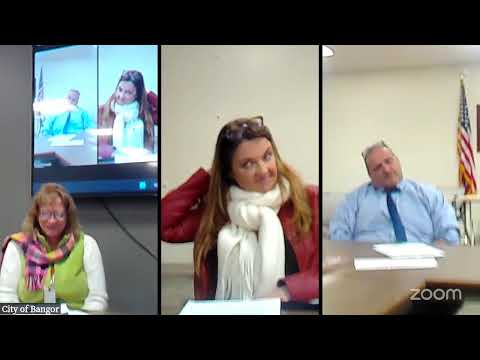
City officials, public health staff and members of the state legislative delegation used Monday’s joint meeting to press for a more coordinated statewide approach to homelessness, street medicine and syringe cleanup.
Councilors and legislators described an ongoing HIV cluster, gaps in local public-health capacity and a patchwork of mobile syringe service licenses they said the municipality sometimes learns about only after licenses are issued. Council Chair Pelletier and Councilor Beck said they want clearer communication and shared processes so communities are not surprised when mobile syringe services locate on municipally owned property.
Representative Ambrin Rana said she will file a bill this week to create a syringe cleanup grant program. She described that bill as intended to help large municipalities finance cleanup, track distributed supplies and reduce public-health risks. Representative Rana noted the bill’s objective is both cleanup and improved tracking of distributed supplies.
Several legislators and councilors argued for stronger state funding of emergency shelter capacity. Delegation members said the state currently funds emergency shelters at a level they described as about $7.3 million per year and that the funding has not increased in recent years; they urged higher funding levels to support a statewide shelter network.
Speakers also urged expansion of street-medicine and paramedicine programs to reduce emergency-room and EMS burdens. Delegation members said mobile outreach programs, including a mobile unit from Maine Family Planning and pilot projects by Northern Light, have been useful but not uniformly available. Lawmakers and councilors pressed for state-level programs that would place or fund outreach teams in municipalities rather than relying solely on local nonprofits.
Councilor Beck warned against legislation that would allow individual municipalities to block mobile syringe service providers without statewide public health criteria, saying municipal denials could reflect stigma rather than public-health best practices.
Ending: Delegation members asked city staff and public-health partners to compile examples of successful street-medicine models and to coordinate follow-up meetings with the Maine CDC to refine best practices and licensing procedures.