Get Full Government Meeting Transcripts, Videos, & Alerts Forever!
Get email alerts on the City Budget General Assistance topic
No spam. Unsubscribe anytime.
Portland finance director: proposed state cuts to general assistance, shelter reimbursements could add millions to municipal budget
Summary
Portland Finance Director Brendan O'Connell told the City Council at a budget workshop that proposed state changes to general assistance reimbursement and shelter caps could shift millions of dollars of costs to the city, and councilors offered nonbinding guidance on a starting tax-levy range for the upcoming budget.
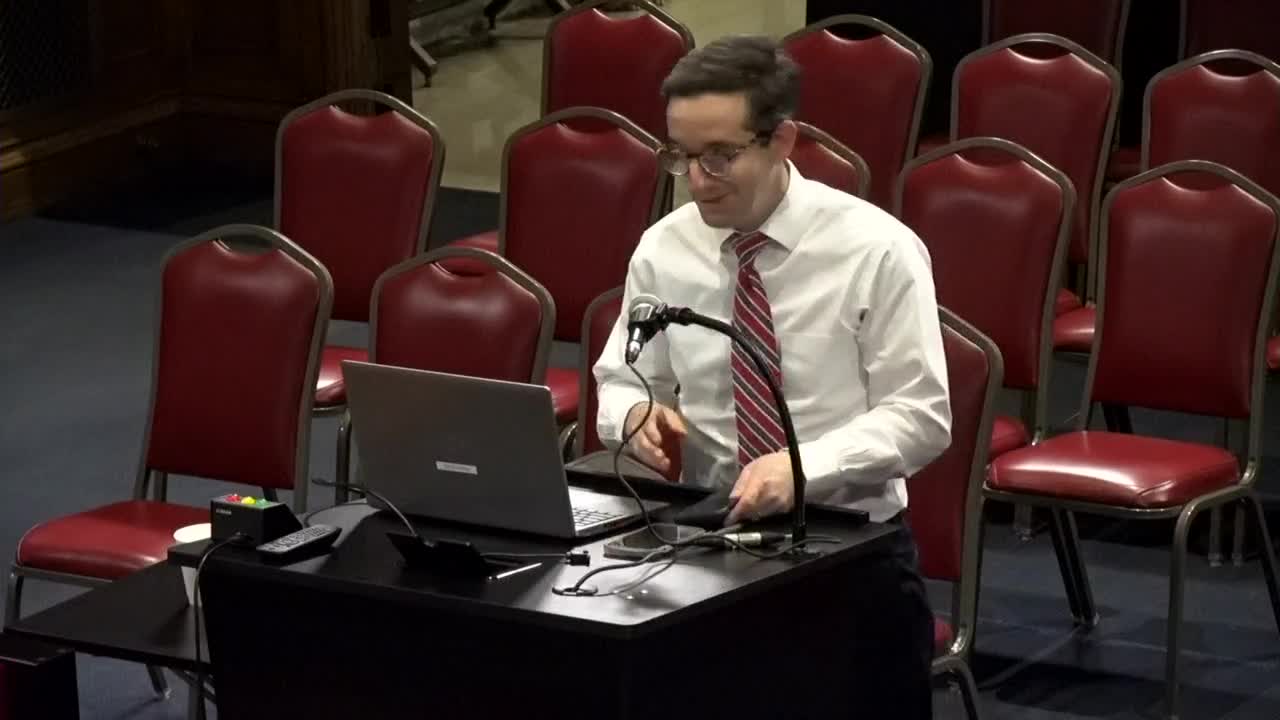
Brendan O'Connell, Portland's finance director, told the City Council at a workshop that proposed changes in the state of Maine's handling of general assistance reimbursements and shelter per‑bed reimbursement caps could force the city to absorb millions in added costs if the Legislature enacts them.
O'Connell said the state budget proposal would limit emergency housing assistance to three months and would apply a per‑bed night reimbursement cap to congregate shelters. "There's a portion of my presentation tonight where I'll talk about an upcoming year where there's the potential to be a budget decrease, but all depends on the decision making of the council," he said as he summarized his analysis of fiscal risks.
The discussion matters because the city already faces rising costs from inflation, union contract increases and health insurance, and Portland is a high‑use provider of shelter and services to asylum seekers and other people seeking general assistance. O'Connell told councilors the city is tracking several state proposals that together could raise the municipal tax levy by tens of millions if municipalities must fully cover the costs now subsidized by the state.
O'Connell provided specific figures and scenarios during the workshop. He said Portland's state reimbursement of eligible general assistance costs fell from about 67% in 2022 and 69% in 2023 to roughly 50% in 2024, largely because some shelter costs — such as food and utilities in congregate settings — are not eligible for state reimbursement. He said the governor's biennial budget proposed capping emergency assistance eligibility at three months, and the city found 592 households in its records that had been on general assistance longer than three months.
On congregate shelter reimbursement, O'Connell said the state is proposing a maximum per‑bed night reimbursement equal to 70% of $44 per night (the non‑congregate cap the state has used), while Portland's Homeless Services Center operates at roughly $87 per bed night. He estimated that imposing the cap could reduce the city's shelter reimbursement by about $4.4 million.
O'Connell said he was holding a $5 million planning assumption for the fiscal exposure if the state withdraws support for longer emergency rental assistance and related costs; he held $4.4 million for the shelter cap and a placeholder $1 million for potential impacts if Saco's asylum seeker shelter funding ends and those residents present in Portland. "Each one of these has some variability associated with it," he said, and noted the total of the items he discussed summed to roughly $22 million of potential impact in a worst‑case aggregation.
Councilors asked clarifying questions about how those state changes would interact with existing local contracts and leases. Councilor Sykes asked whether fixed costs for shelter development would change if the state reduced reimbursement; O'Connell and City Manager Danielle West replied that fixed lease or contract obligations would remain and that reduced reimbursement would still harm operators regardless of who runs a facility.
Several councilors volunteered nonbinding guidance ranges for the municipal tax levy increase to guide the city manager and finance staff as they prepare a recommended budget. Mayor Michael (last name not specified in the transcript) said he would start with 7 percent as a planning figure. Councilors offered a range of views in the workshop: some named 3.2 percent (roughly equal to the recent consumer price index figure), some 4 percent, others 6 percent, and some supported the 7 percent figure. O'Connell translated the levy guidance into household impact: a $1 million change in the municipal tax levy is roughly equivalent to $25 on the annual tax bill of a median Portland homeowner; a 5–7 percent municipal increase would roughly equal $125–$175 annually for that homeowner, he said.
O'Connell also reviewed other structural budget pressures: already‑approved contract settlements for several unions that together add roughly $4.7 million for FY26, projected double‑digit increases in health‑insurance costs, rising headcount tied to shelter operations, and a multi‑decade pension obligation bond that drives elevated debt service. He said the city used a debt service reserve and reissued certain debt to smooth the final balloon payment tied to that pension obligation bond and avoid immediate tax impacts on local property taxpayers.
City Manager Danielle West and O'Connell said staff will continue to analyze the proposed state budget, work with Maine Municipal Association and the city's legislative delegation, and present more detailed impacts to the council's finance committee. West said the state proposals were recent and staff would provide a full analysis to the legislative and finance committees as it becomes available.
Ending: The council did not take a formal vote at the workshop. Instead, members gave nonbinding direction and asked staff to return with detailed, committee‑level analysis of the state proposals, shelter costs, and the range of options to cover budget shortfalls before final decisions later in the budget cycle.