Get Full Government Meeting Transcripts, Videos, & Alerts Forever!
Get email alerts on the Work Plan topic
No spam. Unsubscribe anytime.
Portland housing committee previews 2025 work plan, flags Maine State Pier assessment and housing application reforms
Summary
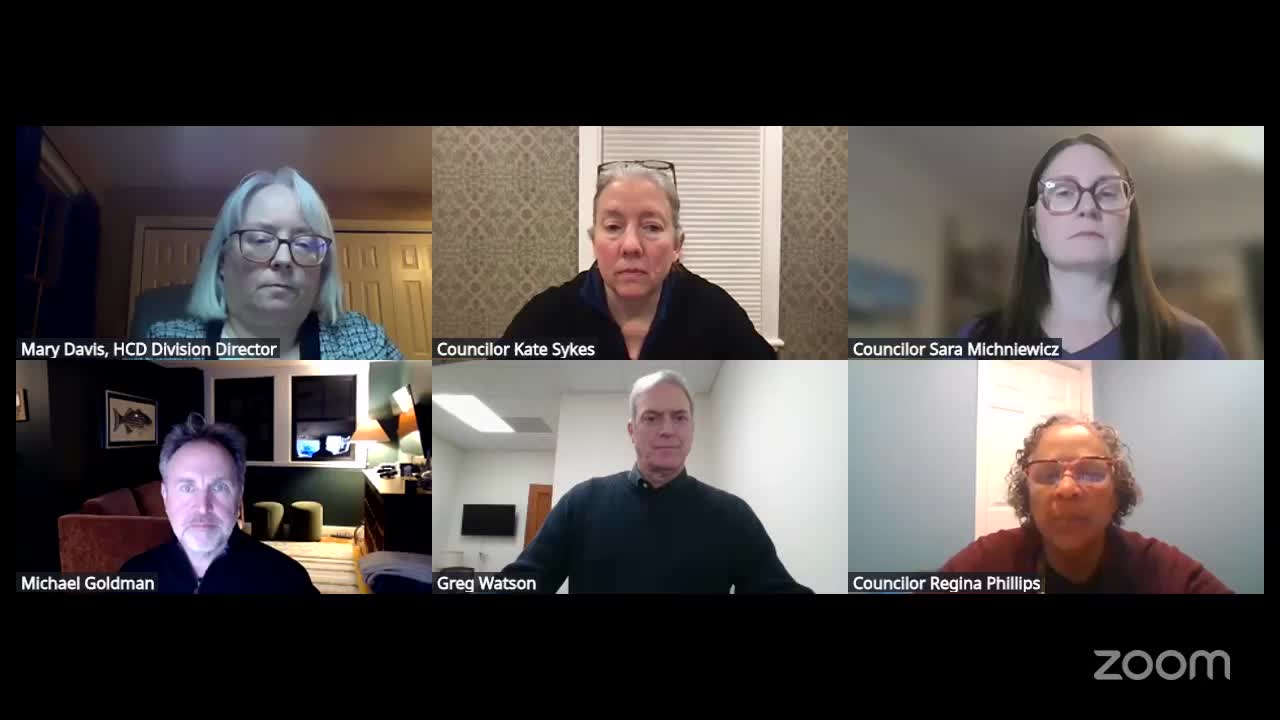
The City of Portland Housing and Economic Development Committee reviewed a draft 2025 work plan that prioritizes an environmental and structural assessment of the Maine State Pier, promotion of social housing and revisions to the city’s affordable housing application and TIF processes.
The City of Portland Housing and Economic Development Committee reviewed a draft 2025 work plan that prioritizes an environmental and structural assessment of the Maine State Pier, promotion of social housing work, and revisions to the city’s affordable housing application and tax‑increment financing (TIF) processes.
Greg Watson, director of the Housing and Economic Development Department, told the committee that staff have sought EPA funding and engaged a consultant, Novus, to scope an assessment of the pier’s environmental condition and structural health and to pair that with reuse planning. "We will know more about the full scope and how much money EPA will be directing to the city for this late January into February," Watson said.
Why it matters: the pier assessment could guide future waterfront planning and remediation decisions and may require cross‑departmental coordination, department staff said. The committee also discussed items the staff elevated for early 2025 consideration, including continued work on a social housing task force, a hotel inclusionary zoning ordinance (following a hotel moratorium adopted last fall), a commercial vacancy program for downtown, and recurring administrative items such as annual HUD work plans and housing application cycles.
Watson told members the committee’s draft calendar tries to match policy initiatives with meeting dates and that many items are carryovers from last year or referrals the committee did not reach. He said staff are coordinating with MaineHousing on how the state Qualified Allocation Plan (QAP) and the 9% low‑income housing tax credit process affect local TIF and credit‑enhancement strategies. "The entire process is not likely to change this year because the QAP doesn't come up for review again until the subsequent year," Watson said, adding that staff will continue conversations to make the process more user friendly.
Committee members flagged several scheduling and priority questions. Councilor Sykes (District 5) asked that the minimum wage ballot question be moved earlier on the calendar because it likely must appear on a council agenda by March. "If we're talking about it in March, that's probably too late," Sykes said. Sykes also asked that rent‑control enforcement reporting (quarterly reports from the permitting office and the rent board annual report) be added to the work schedule.
Councilor Regina Phillips (District 3) sought clarification on the Maine State Pier work and whether the Sustainability and Transportation committee should receive updates. Watson described the pier effort as originating from a brownfields grant application and said it will be coordinated with Parks, Recreation & Facilities, Sustainability and Planning. Dina Livner, assistant city manager, and others agreed regular updates to the Sustainability and Transportation committee would be appropriate.
Several members urged staff to ensure equity and inclusion are explicit in the committee’s goals. Councilor Sarah McNevich (District 1) said she wanted the committee to keep equity, diversity and inclusion on the agenda and suggested developing a statement or resolution. Dina Livner said staff are early in drafting a mission/vision/values exercise and will bring policy recommendations forward if they surface.
On economic development, members raised the Portland Development Corporation's (PDC) programs aimed at supporting minority‑ and immigrant‑owned businesses. Committee members asked staff for a report on existing PDC efforts and whether those programs could be amplified or paired with new outreach and technical assistance for prospective developers. Mary Davis, Housing and Community Development Division director, described ongoing conversations with partners — including the Genesis Fund and Prosperity Maine — and planned conversations with an organization that provides incremental development training.
Mary Davis also presented a communication memo that kicks off a staff effort to revise the city’s affordable housing development application (including TIF requests). Davis said staff want projects to be more "shovel ready" and less conceptual when seeking local support, to reduce delays tied to state competitive tax credit cycles and multiple rounds of local review. "We'd like projects that are more fully developed and less conceptual by the developer as they come through our processes so that they're more likely to get funding," Davis said. Staff intend to bring specific proposed changes to the application to the committee at a future meeting for feedback.
Councilor Saez praised the memo and urged staff to quantify the administrative costs and staff time tied to projects that do not move forward, calling it "an eye opener" and saying passive reliance on outside developers has produced significant time and fund losses. Saez also supported exploring social housing.
Separately, Councilor Magnavich proposed a "housing‑to‑employment" model that would combine temporary supportive housing, recovery resources, job training and employment to help people transition to permanent housing. He said the model could use city land and partner with workforce organizations and existing programs such as MainWorks.
Votes at a glance: the committee approved the minutes from the Nov. 19 meeting and later moved to adjourn. Both motions passed on roll call. The record shows Councilor Sykes, Councilor McNevich, Councilor Phillips and Chair Councilor Piyos Ali voting yes on both motions.
What’s next: staff will return with proposed application text changes and priority recommendations at a later meeting, and officials asked that updates on the Maine State Pier assessment be shared with the Sustainability and Transportation committee as the EPA scope is finalized.
The meeting closed after members moved to adjourn.