Get Full Government Meeting Transcripts, Videos, & Alerts Forever!
Get email alerts on the 197 Oxford Housing First topic
No spam. Unsubscribe anytime.
Contested public hearing on 197 Oxford Street Housing First project draws advocates and neighbors
Summary
The Planning Board on Jan. 14 held a lengthy public hearing on a three‑phase residential proposal at 197 Oxford Street that would include a Phase 1 building with 28 Housing First units and 20 affordable/workforce units and two subsequent market-rate phases.
The Planning Board on Jan. 14 held a lengthy public hearing on a three-phase residential proposal at 197 Oxford Street submitted by Avesta Housing and Redeveloper partners. The phased project would deliver up to 96 residential units across three parcels: Phase 1 (197 Oxford) proposes 48 units — 20 workforce/affordable units and 28 Housing First units with 24/7 on-site support — while Phases 2 and 3 would each include 24 market-rate units at 50 Cedar Street and 158 Lancaster Street.
Why this matters: The first phase proposes a sizable, mixed-use residential building with an on-site Housing First program that provides permanent units and on-site supportive services for people experiencing chronic homelessness. Housing First projects have been central to the city and state’s broader strategy to reduce chronic homelessness, but they also generate neighborhood concerns about operations, safety and site servicing.
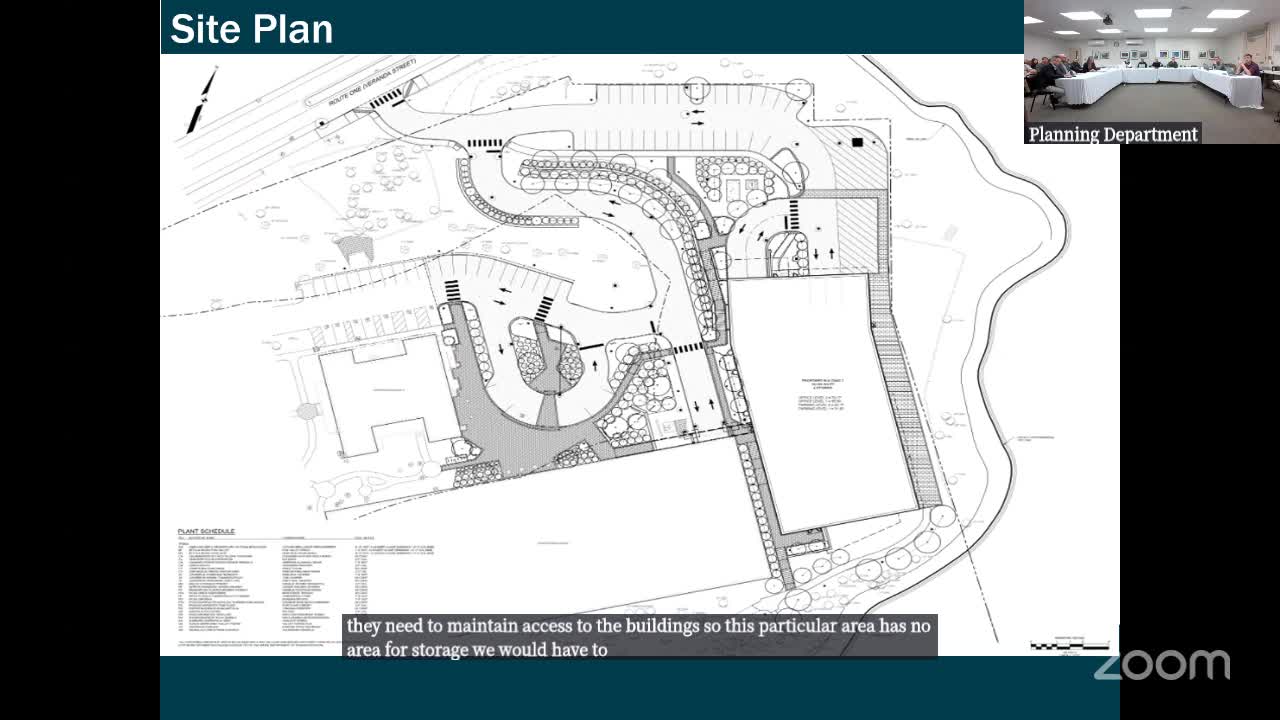
Project scope and phasing - The applicant described a phased plan that includes sidewalk and street reconstruction (Cedar, parts of Oxford, Chestnut and Lancaster Streets) carried out incrementally with each development phase. Phase 1 proposes five off-street parking spaces (accessed from Chestnut), landscaping and a first-floor area allocated to resident services tied to the Housing First program. - The applicant said the three parcels are under a joint-venture ownership arrangement for the development and that deed restrictions and covenants will record the affordable-housing commitments and operational obligations.
Board and staff points - Staff explained that Phase 1 is reviewed under the R6 zoning standards in effect when the project was first applied for and that many dimensional measures (height, lot coverage, landscaped open space and impervious limits) meet the R6 requirements as presented. Staff flagged three requested waivers: (1) tree-preservation waiver for trees at the rear of the Phase 1 parcel, (2) a drive-aisle width reduction for Phase 3, and (3) a partial waiver of electric-vehicle charging station requirements for a constrained parking area. - Staff also listed conditions the applicant must satisfy prior to a building permit, including an affordable-housing agreement (a deed covenant outlining workforce units and dwelling comparability), ability-to-serve utility letters, a revised plan to meet a 20-foot drive aisle, and a campuswide Transportation Demand Management package if off-site parking provisions will be used. The staff memo additionally referenced a required contribution amount in the draft conditions (the transcript notes a $24,800 figure; the board record should confirm the payment recipient and purpose prior to finalizing conditions).
Public testimony Public testimony at the hearing split between neighborhood concerns and strong endorsements for the Housing First approach: - Several neighborhood residents voiced concerns about public safety, existing illegal dumping, and the potential for increased problems near their yards. One speaker described personal safety incidents on Chestnut Street and urged changes to the design (for example, removing a dividing wall in the building footprint) to avoid concentrating uses. - Supporters of Housing First — including people with lived experience, Housing First operators and state housing officials — urged approval. Speakers said Housing First sites provide on-site supportive services, stabilize chronically unhoused individuals, and lead to net reductions in public costs for emergency services and health care. Representatives from Homeless Voices for Justice, a Housing First tenant, a faith-based street ministry leader and a senior adviser from the governor’s office all spoke in favor of the project and described Housing First as an evidence-based model used statewide.
Safety, operations and oversight - Board members and staff asked applicants to explain operational details: how 24/7 on-site staffing would be provided, how service providers would be qualified and how security, lighting and camera placement would be handled. The applicant said the Housing First service provider will be qualified through Maine housing and HHS processes and that operational protocols consistent with other Housing First sites will be used. The applicant also presented a lighting/security plan for common areas at Phase 1; board members requested more detail on how on-site services will coordinate with neighbors and emergency services.
Ownership and covenant issues - The board and public questioned how joint-venture ownership, deed covenants and potential future transfers would affect the long-term covenanting of affordable units. The applicant stated that deed restrictions and a recorded affordable-housing agreement will tie the units and the covenants to the specific parcels and that the joint-venture structure has been reviewed by city staff and legal counsel; board members asked staff to ensure the final agreement language is recorded and enforceable.
Outcome and next steps - The hearing was a public hearing stage only; no final board vote or approval was recorded during the transcript excerpt. Staff and the applicant will return with required revisions, finalized affordable-housing covenants and the technical documents (utility letters, updated drive-aisle plan and the final TDM packaging) before any action to issue permits or finalize approvals.
The hearing highlighted the competing public priorities at stake: neighborhood livability and public-safety concerns raised by nearby residents, and advocates’ and state officials’ calls to expand Housing First capacity to address chronic homelessness.