Get Full Government Meeting Transcripts, Videos, & Alerts Forever!
Get email alerts on the Opioid Prevention And SBIRT topic
No spam. Unsubscribe anytime.
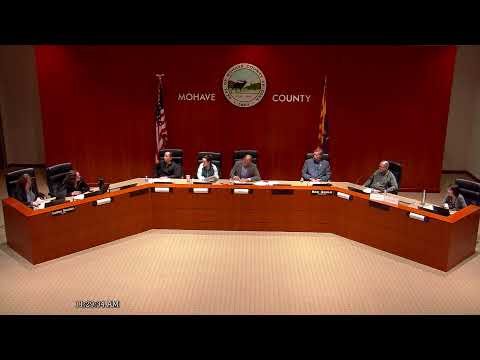
Mohave County Board of Health hears opioid-settlement grantees on youth prevention and hospital screening program
Summary
Mohave County Board of Health members on Jan. 27 heard presentations from three recipients of county opioid-settlement funding on prevention, family navigation and a hospital-based screening-and-referral program.
Mohave County Board of Health members on Jan. 27 heard presentations from three recipients of county opioid-settlement funding on prevention, family navigation and a hospital-based screening, brief intervention and referral-to-treatment program.
The presentations described complementary work aimed at preventing youth substance use, connecting families to services, and identifying patients at risk of substance use disorders when they present at health-care facilities. The board heard from Kelly Tanner of Arizona Youth Partnership; Wendy Gustafson, regional program manager, and Elena Savalta, director of programs, from Not My Kid; and Dr. Anthony Santarelli and Heather Miller from Kingman Regional Medical Center (CareMC), with behavioral-health nurse Antolin Rosales present.
Why it matters: County opioid-settlement funds are intended to expand services that reduce overdoses and link people to treatment. Board members were given early data showing operational changes at the hospital emergency department and community-level prevention activity that county staff said could reduce return emergency visits and overdose deaths.
Arizona Youth Partnership: Kelly Tanner of Arizona Youth Partnership described in-home family wraparound services for youth affected by opioid use, saying the program “wrap[s] our arms around the whole family.” Tanner said staff provide prevention education, family navigation, Narcan distribution, help re-enroll youth in school, attend juvenile court or recovery court hearings with families and run a 30/60/90-day aftercare check-in program for youth transitioning out of treatment. Tanner said Mohave County currently has no juvenile treatment beds, which often requires families to travel to Phoenix or Prescott for services.
Not My Kid: Wendy Gustafson, regional program manager, and Elena Savalta, director of programs, summarized Not My Kid’s prevention and early-action programs in Mohave County. They said the organization provides school-based life-skills curricula, parent workshops (English and Spanish), faculty training, 5-hour early-action sessions called Project Rewind, behavioral-health services (including virtual options), family navigation and intensive outpatient programming when indicated. Savalta said the organization served 37,701 Mohave County youth and adults in the grant year and reported increases in youth perception of the harms of opioids and in family communication after the programs.
Kingman Regional (CareMC) SBIRT expansion: Dr. Anthony Santarelli and Heather Miller described a CareMC project funded by a roughly $98,000 contract from the county’s opioid-settlement grant process to expand a screening, brief intervention and referral-to-treatment (SBIRT) workflow across emergency and outpatient sites. Santarelli said the program’s goals are to identify individuals at risk, administer validated assessments, provide a brief clinical intervention by a behavioral-health nurse and refer patients to specialized treatment when needed.
Miller described the two-tier screening deployed in the emergency department: a NIDA Quick Screen (primary nurse) for patients 14 and older, and, when warranted, a more in-depth NIDA-modified ASSIST administered by the behavioral-health nurse. The team said they launched a quick screening in October 2024, brought on the behavioral-health nurse in December, and went fully live in the ED on Jan. 2, 2025.
Early CareMC results and projections: CareMC staff reported that just under 44% of all ED patients were screened from October through Jan. 6 (about 6,000 people). Of those screened, 33% indicated weekly or daily use of alcohol, tobacco, prescription drugs for nonmedical reasons or illegal drugs; 19.2% (393 individuals) reported weekly or daily nonmedical prescription-drug or illegal-drug use. Staff said they expect to enroll roughly 120–130 patients per month into the SBIRT pipeline from the ED and project that, if current trends continue, the program will directly impact more than 24,000 people by year end. CareMC is piloting naloxone distribution in the ED; physicians and ED staff have access to free naloxone and patients receiving opioid prescriptions are also receiving naloxone prescriptions.
Board response and next steps: Board members asked whether naloxone distribution was integrated into the ED workflow and urged wider county collaboration. CareMC staff said they plan to improve SBIRT reporting, expand into urgent care, and work with community partners for referral and follow-up. No formal action was required of the board on these presentations.
Ending: Presenters provided contact information and said materials and recorded presentations are available through their organizations. Board members thanked the presenters for the information and asked to be kept informed of program metrics as CareMC expands screening and referral work.