
Subcommittee sends short-term boost to film production tax credit to Appropriations
Get AI-powered insights, summaries, and transcripts
Subscribe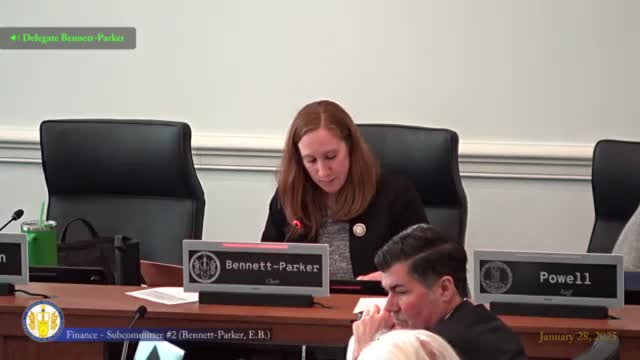
Summary
House Bill 2108 would raise the annual cap on the motion picture production tax credit from $6.5 million to $8.5 million through fiscal 2026. The subcommittee voted 7-0 to report the bill to Appropriations after testimony that producers and unions expect immediate projects if incentives are available.
The House Finance Subcommittee voted unanimously (7‑0) to report House Bill 2108 to Appropriations. The bill temporarily raises the annual aggregate cap on motion picture production tax credits from $6.5 million to $8.5 million through the end of fiscal year 2026.
Delegate Del. Charniele Herring, the bill’s patron, framed the measure as a short‑term, targeted increase intended to keep Virginia competitive for productions currently considering the Commonwealth. Herring said the size of the program has not been adjusted for inflation since 2015 and that Virginia ranks poorly regionally and nationally for production incentives. The Virginia Film Office estimated there are two major productions now considering Virginia that could generate at least $250 million in economic impact; Herring said the industry supports hundreds of high‑wage jobs and broader economic activity.
Labor and industry witnesses supported the bill in testimony. Beau Cribbs of IATSE Local 487 described the measure as a short‑term fix to secure immediate projects and preserve crew jobs; Matt Benedetti of the Virginia Production Alliance and other witnesses likewise urged approval, saying lack of incentive funds has constrained work. One local industry speaker described only one show being produced in Virginia since 2022 and said the industry needs funding now to keep crews employed.
After supporters’ remarks and committee discussion, Delegate Watts moved and the subcommittee voted 7‑0 to report the bill to the Appropriations Committee so the General Assembly can consider the temporary funding increase.
The bill’s supporters characterized the change as a stop‑gap to land imminent projects; the bill as reported would be time‑limited, expiring at the end of FY 2026 unless extended.