Get Full Government Meeting Transcripts, Videos, & Alerts Forever!
Solid-waste subcommittee reviews master plan, landfill and recycling contracts, and compost pilot
Summary
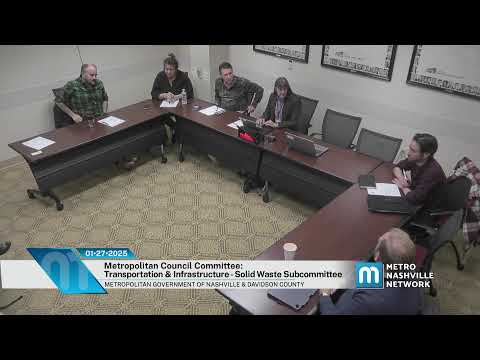
Members of the Transportation & Infrastructure Committee’s Solid Waste Subcommittee discussed the county’s 10-year solid waste master plan, recycling and composting capacity, upcoming hauling and processing contract expirations, and next steps for department structure, transparency and pilot-program funding.
At a meeting of the Transportation & Infrastructure Committee’s Solid Waste Subcommittee (date not specified), the chair opened by noting the group’s purpose and asked staff to summarize the county’s 10-year solid waste master plan and current services.
The subcommittee heard a presentation from Jen Harmon, a Metro Waste Services presenter, who summarized the plan’s history and key targets and described current programs and infrastructure. “The main goal is really diversion. It’s 90% diversion from landfill,” Harmon said, summarizing the plan’s “zero waste” definition and priority areas: increasing recycling, recovering food waste, expanding composting, and diverting construction and demolition material.
Why it matters: subcommittee members said the city is approaching a short window to resolve disposal and processing capacity. Members raised imminent contract expirations and limited local infrastructure as immediate operational and budgetary questions that affect service reliability, costs and where residents’ trash and recycling are ultimately processed.
Most important facts
- Legal and planning context: Harmon said state rules administered by the Tennessee Department of Environment and Conservation (TDEC) require each solid waste region to maintain a 10‑year solid waste management plan; Davidson County acts as its own region and must submit an annual progress report to TDEC. Harmon traced the plan’s development from a 2017 waste-characterization study through board approval in December 2019, TDEC approval in early 2020 and Metro Council adoption in 2021.
- The master-plan goal: The plan defines “zero waste” as 90% diversion from landfill and prioritizes recycling, organics recovery (food and yard waste), construction and demolition (C&D) diversion, and public education.
- Waste composition (2017 characterization, municipal solid waste…
Already have an account? Log in
Subscribe to keep reading
Unlock the rest of this article — and every article on Citizen Portal.
- Unlimited articles
- AI-powered breakdowns of topics, speakers, decisions, and budgets
- Instant alerts when your location has a new meeting
- Follow topics and more locations
- 1,000 AI Insights / month, plus AI Chat