Get Full Government Meeting Transcripts, Videos, & Alerts Forever!
DLS fiscal briefing: Governor's FY26 plan narrows a shortfall but leaves structural gap, proposes broad tax changes and education cuts
Summary
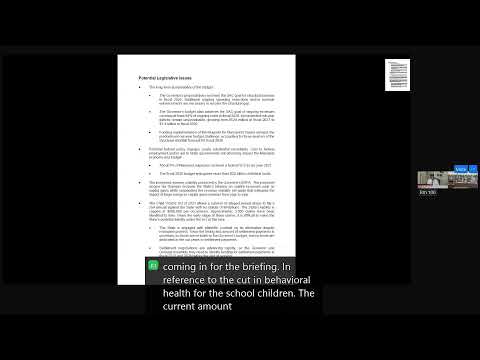
David Romans, an analyst with the Maryland Department of Legislative Services, told the House Judiciary Committee on Jan. 28, 2025, that the governor’s proposed $67 billion budget balances on a cash basis for fiscal 2026 but leaves a structural deficit of about $186 million and relies on nearly $3 billion of statutory changes in the Budget Reconciliation and Financing Act (HB 352).
David Romans, an analyst with the Maryland Department of Legislative Services, told the House Judiciary Committee on Jan. 28, 2025, that the governor’s proposed $67 billion budget is balanced on a cash basis for fiscal 2026 but still leaves a structural deficit of about $186 million and depends on nearly $3 billion of statutory changes contained in the Budget Reconciliation and Financing Act (HB 352).
Romans said the administration’s plan shows $791,000,000 of overall budget growth over the prior year and a 1.0 percent decline in state general fund revenues — a drop of about $274,000,000 to just over $27,000,000,000 — driven in part by the governor’s cost‑containment measures. On a cash basis, he said, the budget leaves a $106,000,000 balance in the general fund and keeps more than $2,000,000,000 in the rainy‑day fund (about 8 percent of general fund revenues), exceeding the Spending Affordability Committee’s 7.5 percent target.
“The governor’s budget fails to” achieve structural balance, Romans said, noting that achieving the committee’s structural goal would require additional revenues or spending reductions (or a mix of both) to close the $186,000,000 gap.
Why it matters: the proposal mixes revenue changes, transfers and cuts to close an immediate cash shortfall but shifts persistent costs into local governments or future years. Romans flagged risks not reflected in the forecast, including possible federal grant reductions and economic volatility tied to capital gains revenue and federal workforce changes.
Major revenue and tax proposals
Romans described roughly $1.4 billion in new revenue in fiscal 2026 from a package of tax and fee changes. Highlights he cited include personal income tax reform estimated to raise about $691,000,000; a temporary (four‑year) 1 percentage…
Already have an account? Log in
Subscribe to keep reading
Unlock the rest of this article — and every article on Citizen Portal.
- Unlimited articles
- AI-powered breakdowns of topics, speakers, decisions, and budgets
- Instant alerts when your location has a new meeting
- Follow topics and more locations
- 1,000 AI Insights / month, plus AI Chat