Get Full Government Meeting Transcripts, Videos, & Alerts Forever!
Get email alerts on the Criminal Procedure topic
No spam. Unsubscribe anytime.
Appeals court hears challenge to modified unanimity instruction and jury‑deliberation timing in State v. Sliger
Summary
The Court of Criminal Appeals heard argument in State v. Billy Gene Sliger on whether a modified unanimity instruction and a late deliberation deadline improperly affected the jury's verdict.
The Court of Criminal Appeals heard argument in State of Tennessee v. Billy Gene Sliger on whether the trial court misused a modified unanimity instruction and whether the trial judge’s communication with the jury during deliberations created coercive pressure.
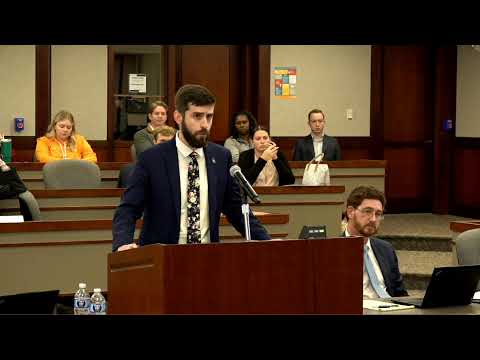
Public defender Mitch Raines, representing Billy Gene Sliger, argued that the trial court incorrectly gave a modified unanimity instruction under Qualls (referred to in briefing) because the victim, then 15, testified in a manner that the defense says was sufficiently specific and limited to three discrete incidents of penetration. Raines told the panel the modified instruction is intended for prosecutions involving numerous, often indistinct instances where a child cannot identify discrete events; he said the totality of the record here did not fit that model and that the state could have made a clearer election for count 2 (for example, by electing the last of the contested incidents) but did not. Raines also urged that the instruction benefitted the state by forcing the jury to consider multiple instances together.
On the jury‑timing issue, Raines argued the trial judge’s late‑afternoon entry into the jury room—telling jurors they needed a unanimous verdict by 5:00 p.m. or deliberations would continue after the weekend—created coercive pressure. He said that the court’s statements, made with under an hour left in the day after a long deliberation, effectively forced a deadline and risked impermissible coercion.
Assistant Attorney General Garrett Ward defended the modified instruction, saying Qualls and subsequent Tennessee cases allow the jury instruction where the proof at trial prevents precise election; Ward told the court that the trial record showed the victim gave testimony that was not specific enough to permit a reliable election on the remaining counts and that the TPI‑form modified instruction used here was correctly limited to exclude the count the state had elected. On the jury timing, Ward argued that the defense waived contemporaneous objection because counsel did not object in the jury room or seek further relief at trial, and he said the foreman told the court the jury was close to a verdict, reducing the risk that a juror was coerced. Ward also argued plain‑error review fails because there was no clear breach of black‑letter law and the judge’s statements told jurors they could continue deliberating after the weekend.
The court questioned counsel about (1) the practical means by which the state could have made a permissible election among similar incidents, (2) Qualls’s footnote reserving questions about mixed specific/generic evidence, and (3) whether the timing and phrasing of the trial judge’s communication with jurors was a routine administrative scheduling statement or a coercive instruction. Counsel reserved rebuttal; no ruling was announced at argument.
The court also touched briefly on sentencing, with the state noting the trial court made enhancement findings (including abuse of a position of trust) sufficient to support consecutive sentences even if the judge emphasized deterrence in remarks.