
West Allis-West Milwaukee board reviews five-year “Operation 2030” strategic plan draft
Get AI-powered insights, summaries, and transcripts
Sign Up Free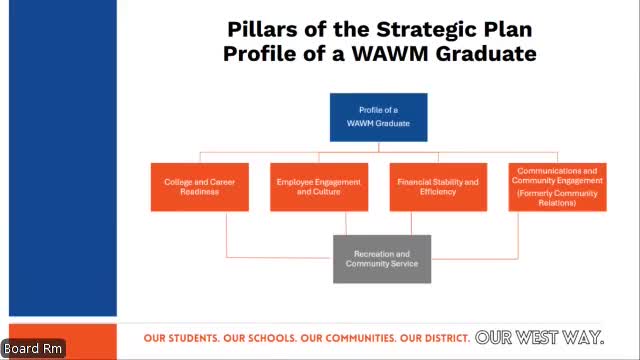
Summary
Superintendent Dr. Robinson presented a proposed five-year strategic plan framework — “Operation 2030” — asking board committees and a new steering committee to develop measurable key performance indicators tied to a district ‘profile of a graduate.’
Superintendent Dr. Robinson opened a workshop presentation on a proposed five‑year strategic plan he called “Operation 2030,” asking board committees and a newly formed steering committee to develop measurable goals and key performance indicators to guide district priorities.
Dr. Robinson told the board the plan will center on a single organizing idea — a profile of a West Allis‑West Milwaukee graduate — and said committees should align specific targets to that profile. He said the work will include revising the district’s mission, vision and equity beliefs "to make sure they align with the profile of a graduate."
The presentation outlined phases: stakeholder engagement (focus groups and surveys), vision and priority setting, committee work to set SMART goals and KPIs, periodic measurement and a public implementation plan. Dr. Robinson said previously collected data from referendum listening sessions and staff surveys will inform the plan and recommended three formal KPI reviews per year to assess progress.
Jody Landish, the district’s secondary leadership coach, and Dottie Rodriguez, identified in the meeting as director of urban leadership at ASSA, joined Robinson in describing the plan’s emphasis on measurable outcomes and broad stakeholder involvement. Board members asked for clarity on how committees will receive data and whether additional community surveying should precede or accompany the steering‑committee work.
Board members advocated for broad, representative input. Board member Carr and board member Steele emphasized outreach to parents and families and the need to capture voices that do not usually participate in district advisory groups. Board member Becker and others recommended targeted focus groups for specific programs such as CTE to ensure specialized programs inform the graduate profile.
Dr. Robinson asked committees to draft five to seven KPIs tied to each committee’s pillar — examples given were college and career readiness; employee engagement and culture; communications and community relations; and financial stability and efficiency. He said the recreation and community services committee will provide input across pillars rather than serving as a separate pillar.
The superintendent said the district will form a steering committee composed of board members, principals, parents, students, union representation and community representatives to serve in an advisory role and provide feedback across the process. He described the steering committee as advisory only and said members would meet roughly three to five times for about 90 minutes each during the planning period.
The presentation closed with next steps: finalize steering‑committee membership, set a timeline for data collection (surveys and focus groups), and have board committees develop KPIs for review in upcoming committee meetings. Dr. Robinson said he expects to present annual progress reports to the board and to tell the board whether the district is on target after the first year of implementation.
The board did not take a formal action on the strategic plan during the workshop; members asked staff to return with additional detail and a proposed schedule for committee sessions dedicated to KPI work.