Get Full Government Meeting Transcripts, Videos, & Alerts Forever!
Get email alerts on the Municipal Budget topic
No spam. Unsubscribe anytime.
Plymouth select board holds first public hearing on 2025–26 budget; estimated town portion of tax rate rises about $0.09
Summary
At a public hearing, Plymouth officials presented a proposed 2025–26 municipal budget that would raise gross appropriations about $794,021 and, if all warrant articles pass, increase the town portion of the tax rate by about 9 cents. Officials said revenues and a planned use of unassigned fund balance could limit the impact.
The Plymouth Select Board opened a public hearing on the town’s proposed 2025–26 budget and detailed spending priorities, potential warrant articles and the estimated effect on the town portion of the property tax rate.
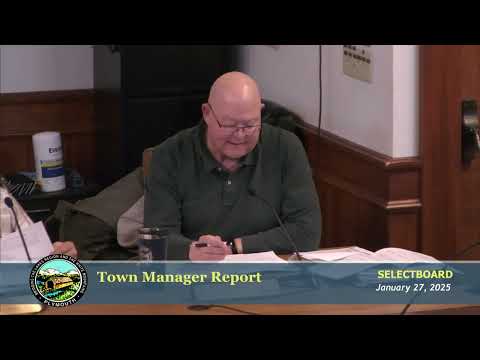
Town Manager Scott, speaking for staff, said the proposed budget increases gross appropriations by $794,021 but that new and expected revenues offset much of that rise so the town portion of the tax rate would increase by about $0.09 if all warrant articles pass. "For the 1st month, we will receive a credit of $1,217.36," Scott said of solar-array revenue, adding that monthly credits should average to an annual credit in the low‑to‑mid five figures. He also said the town holds about $1.8 million in unassigned fund balance that could be used to offset tax impacts.
Why it matters: the hearing outlined personnel changes, new collective-bargaining contracts and capital projects that drive the increase. The board said voters will have the final say at town meeting and at individual warrant-article votes.
Board members and staff described the principal drivers: negotiated union contracts for police, fire and dispatch staff; a proposal to add a firefighter/EMT position (year 3 of a 3‑year staffing plan); and capital spending for roads, vehicles and building repairs. Scott told the board that the ambulance-billing approach has changed, moving toward per-call invoicing for contract towns to recover the full cost of service.
On revenues and credits, staff said the solar array has begun generating credits to the town and that renewable-energy‑credit (REC) revenue expectations range in staff discussions from roughly $23,000 to $25,000 a year, though the town also noted some REC and federal grant funds are currently frozen at state or federal levels and remain uncertain.
Capital projects outlined included Emerson Street and Highland Street road work; the board said it will use roughly $500,000 left from a downtown drainage project to cover the town's 20 percent local matches on those two road items so the projects will not further raise the tax rate. The board also listed several vehicles and equipment leases (fire tanker replacement, a new ambulance, a dump truck), library roof and drainage work, and a proposed fire and police building needs assessment.
The hearing also reviewed smaller-line changes: a proposed full‑time building inspector (land-use enforcement moved to full time), and a shift of personnel-administration costs (health and dental) into general government lines. The town manager and finance staff emphasized that tax-rate impacts are estimates based on current valuation and contingent on revenues, collection rates and final warrant outcomes.
Votes and warrant changes discussed during the hearing included a motion to amend a conservation-commission warrant article for a natural-resources inventory from $23,000 down to $14,000; a board member moved the amendment, it was seconded and the board voted in favor. Staff said the conservation commission has funding to cover the remaining portion of that project.
The board closed the public hearing and scheduled a second budget hearing for Thursday, Feb. 6. Staff said that, ahead of final rate setting, the board will consider using unassigned fund balance to reduce the tax impact if revenues permit.
Ending: The board left the record open for further comment and will return for a second public hearing; voters will consider the final budget and individual warrant articles at town meeting and on election day.