Get Full Government Meeting Transcripts, Videos, & Alerts Forever!
Get email alerts on the Rental Registration topic
No spam. Unsubscribe anytime.
Committee adopts amended rental-registration fee schedule, forwards Ordinance 101024 to council
Summary
The Evanston Planning and Development Committee on Jan. 27 approved an amendment to Ordinance 101024 changing the city’s rental-registration fee structure and inspection-related charges and forwarded the measure to the full City Council.
The Evanston Planning and Development Committee on Jan. 27 voted to amend and approve Ordinance 101024, which updates Title 5 (Housing Regulations), Chapter 8 (Registration of Rental Residential Buildings), changing annual renewal and inspection fees and moving the amended ordinance to the full City Council.
The ordinance matters because it establishes a new fee schedule and inspection-fee structure that will affect rental-property owners across Evanston, from single-unit “mom-and-pop” landlords to institutional owners, and clarifies inspection frequency tied to unit-level violations. Committee members and staff said the change responds to stakeholder feedback and an inspection program that the city says had not had a fee update since 2008.
Public comment opened with Eric Passett, who identified himself as a North Shore Apartments and Condos manager and a 4th Ward resident. Passett said he has no objection to inspections but raised concerns about how violations are counted and how inspection frequency would apply to larger buildings. “So if we have 10 violations in a 100 unit building, that’s not too many,” Passett said, urging clearer, objective thresholds and more time to refine the policy.
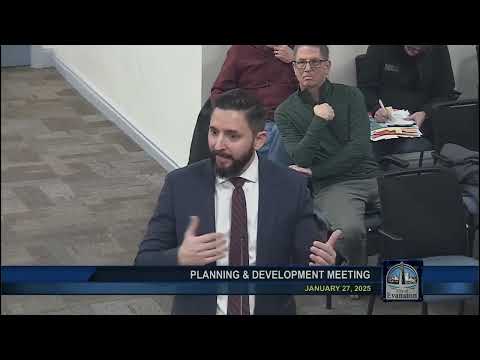
Andrew San Roman, Building and Development Services manager for the city, responded with technical details on how the inspection cycle and violations work. “The number of violations is on a per unit basis, not for the entire building,” San Roman said. He described the inspection cadence staff will use: “Those who have more than 7 violations or an infestation would be inspected within the next year. Those who have between 1–7 violations would be inspected in 3 years, and those who have no violations would be inspected again in 5 years.” San Roman also said the inspectors follow a written checklist based on the International Property Maintenance Code and that staff is working to publish the exact checklist used for inspections on the city webpage.
On fees, staff described multiple proposals presented to landlords in December and a new alternative developed after outreach. Staff said 70 landlords attended stakeholder meetings and 210 survey responses were received; 110 of those respondents favored the earlier “proposal 3.” The new alternative adopted by the committee bases the annual renewal fee on units at $12 per unit and adds inspection-year fees (staff cited an illustrative $50 per unit inspection fee). Using that example, San Roman said a 30-unit building could face about $1,500 in inspection fees in an inspection year in addition to annual renewal charges. Staff told the committee the prior annual renewal fee schedule had not been updated since 2008 and that the proposed adjustments reflect inflation and program costs.
Committee discussion reflected two themes: (1) clarifying how the inspection cycle treats major versus minor violations and whether building-level conditions (for example, an exterior structural issue affecting multiple units) should trigger more frequent building-wide inspections; and (2) whether the fee schedule could or should provide differentiation or incentives for locally based small landlords versus large institutional owners. Reid, Kelly and other committee members asked staff and the City’s corporation counsel to research legal limits on preferential fee treatment by ownership type. Alex Ruggie, corporation counsel, said the law department would examine that question and return with guidance.
Committee member Reid moved to amend the ordinance to adopt the new alternative fee schedule. The amendment passed on a roll-call vote, and after additional procedural motions (including a brief effort to table that was withdrawn), the committee voted on the amended ordinance. The final committee vote approved the amended ordinance and forwarded Ordinance 101024 to the City Council for consideration.
What happens next: the committee’s amended version of Ordinance 101024 will be considered by the full City Council. Staff said it will post the inspection checklist online and that the law department will be asked to report back on whether the city can legally differentiate fees or provide incentives for local small landlords versus out-of-town or institutional owners.
Votes at a glance: the amendment to adopt the new alternative passed (roll-call: Reid Aye; Hart Keiser Aye; Ravel Aye; Wynne Aye; Kelly Aye; Nussbaum Aye). Final vote on the ordinance as amended: Reid No; Hart Keiser Aye; Ravel Aye; Wynne Aye; Kelly No; Nussbaum Aye; the amended ordinance passed and was forwarded to council.
—
Sources: Evanston Planning and Development Committee meeting transcript, Jan. 27 (public comment by Eric Passett; staff presentation and answers by Andrew San Roman; legal counsel comments by Alex Ruggie).