Get Full Government Meeting Transcripts, Videos, & Alerts Forever!
Get email alerts on the Public Comment Policy topic
No spam. Unsubscribe anytime.
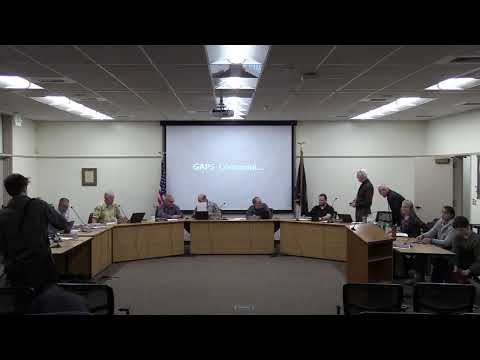
Greater Albany board debates how — and when — to reinstate public comment
Summary
The Greater Albany Public School Board discussed reinstating public comment at meetings, weighing time limits, placement at the end of meetings, topic restrictions and whether to pair monthly comment periods with quarterly listening sessions. Board members agreed to draft rules and return a proposed policy for adoption.
The Greater Albany Public School District 8J Board of Education discussed reinstituting public comment after a roughly three- to four-year pause, with members debating timing, time limits, topic scope and procedures for tech-enabled testimony.
Board chair Morris opened the discussion by saying the board wants to “bring public comment back” and asked members to think about how it should work. He said the board’s plan is to return a draft policy for a vote at a future meeting.
Members focused on several recurring details: whether public comment should be at the end of meetings or at a designated time; whether the board should pair monthly public comment with quarterly listening sessions that allow more conversational follow-up; and whether to impose time and subject limits.
Board member Roger, who has extensive experience with public meetings, urged the board to expect unpredictable remarks and recommended a conservative approach to time limits. “You can put a total, both an individual and a total time limit on it — 3 minutes an individual and no more than 15 minutes probably would be a good place to start,” Roger said.
Board member Ryan and others favored keeping listening sessions once a quarter to enable two-way conversation while holding shorter monthly public comment at the end of regular meetings. Ryan said he likes the listening sessions because “you actually can talk to somebody instead of just coming up and making your statement.” Several members said they prefer the end of the meeting so staff and board members can follow up without interrupting agenda business.
Several board members said they want rules that define acceptable subject matter and behavior during public comment. One board member suggested restricting comments to topics related to the school district, students or staff to avoid tangential or abusive remarks; another suggested the chair or a small committee pre-clear invited testimony in advance. Staff member Chris Green had already gathered examples from other districts, the board said.
The board agreed on next steps without taking a vote: two board members will work with chair Morris and staff to draft a public comment policy covering placement during meetings, time limits, topic scope and tech procedures for remote commenters. That draft will come back to the board for formal consideration and, if adopted, would be implemented at a later date. Chair Morris said he expects the proposed policy and procedures to return to the board for a vote at a subsequent meeting.
The discussion included repeated cautions about enforcement. Roger said sanctions for out-of-order remarks should be limited and procedural — recess public comment, adjourn, or suspend the period — and warned against using the gavel to “gavel them down” unless necessary. Other members emphasized the need for transparent notice of rules so commenters know the consequences for violating them.
The board did not adopt any new policy during the meeting. Instead, a subset of members will draft procedures and present them at a future meeting for adoption.