Get Full Government Meeting Transcripts, Videos, & Alerts Forever!
Get email alerts on the Stormwater topic
No spam. Unsubscribe anytime.
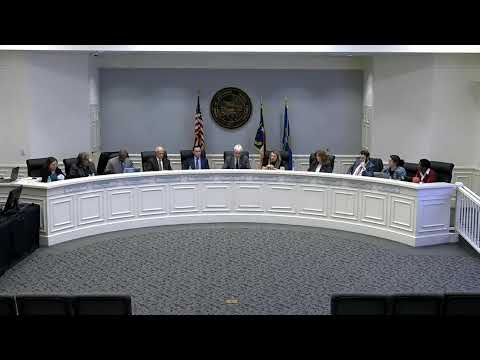
Matthews commissioners debate stormwater fee increase, defer final vote pending more analysis
Summary
Town staff told commissioners the stormwater enterprise fund faces a roughly $400,000 shortfall and presented a base rate increase plus three add-on options. Commissioners discussed timing, a possible county sales-tax vote and public outreach and agreed to delay a final decision until more data is provided.
Town of Matthews staff told the Board of Commissioners on Jan. 27 that the town’s stormwater enterprise fund is operating at a shortfall and recommended raising the monthly base rate this year while considering additional staffing and mapping options.
CJ, the town stormwater lead, told commissioners the department expects to bring in about $926,000 in revenue for fiscal 2025 while expenditures are projected near $1.3 million, producing an operating gap staff said must be addressed. "We are currently bringing in expected to bring in, $926,000 for FY 'twenty 5, while our expenditures are, 1,300,000," CJ said.
The presentation outlined a base-rate increase that staff described as necessary to cover ongoing costs and three optional enhancements: (1) creation of a fund to assume responsibility for neighborhood stormwater control measures (SCMs) if neighborhoods request town takeover; (2) a ditch-maintenance crew (estimated at roughly $260,000 per year); and (3) a survey/GIS crew to map the stormwater system and support proactive maintenance. CJ recommended prioritizing the base increase, then the GIS survey crew, then ditch maintenance and lastly SCM takeover.
Why it matters: Stormwater was run as an enterprise fund with one rate increase since 1992; staff said the fund’s reserve has been nearly exhausted and annual revenues no longer cover payroll, contracts and equipment. Commissioners and the manager flagged timing risks tied to a potential countywide 1¢ sales-tax proposal on the November ballot that could provide new revenue to local governments, but staff warned that relying on that uncertain outcome would leave the town without a solution for fiscal year 2026.
Discussion highlights and public input
Commissioners asked about recent flooding events, the survey the town used to gauge public support and how many residents responded. CJ said roughly a hundred responses were collected; staff presented survey percentages indicating majority support for each option (about 56% in favor of the base-rate option, 65% in favor of the ditch-maintenance option and roughly two-to-one support for the GIS option). "When we did go to the public... over 56% of people that took that survey were in favor of doing this versus 33% who were against," CJ said.
Becky Hawk, the town manager, cautioned against relying on the proposed sales-tax revenue as a certainty. She told commissioners that if the board does not set a stormwater rate this spring it would not be able to revisit the fee until the next annual cycle, leaving fiscal 2026 with a projected shortfall. "If action is not taken by the board this March, then we will not be able to relook at the rate for another 12 months," Hawk said.
Several commissioners said they favored at least the base-rate increase to avoid cutting services or transferring general-fund money into the stormwater enterprise. Commissioner Leon Threep said the roughly $5 increase under the preferred scenario would address most problems; Commissioner Ken McCool proposed doing the minimum now and revisiting additions after the sales-tax question becomes clearer. Mayor Pro Tem Gina Hoover suggested waiting for March to see whether county or state developments change the town’s options.
Decision and next steps
The board did not approve a rate change at the meeting. Commissioners agreed to delay final action for about one month to allow staff to provide additional scenario analyses, cost projections and the effect on taxpayers alongside other anticipated local funding changes. Staff said they can return with additional “bookend” scenarios showing higher and lower expenditure growth rates and with more detailed cost breakdowns.
Staff noted procedural constraints: stormwater fees must follow county adoption and notification timelines; any new rate would be submitted to the county, publicized, and, if adopted, go into effect July 1 and appear on the first water bill after that date. Hawk also flagged that the town could choose to reduce rates in a future year if external revenues materialize, but that would be a separate decision.
Ending
Commissioners asked staff to return with additional analysis and public-communication plans in time for a February or March board decision. The board recessed discussion without taking a formal vote on any stormwater rate change.