Get Full Government Meeting Transcripts, Videos, & Alerts Forever!
Get email alerts on the Education Budget And Mandates topic
No spam. Unsubscribe anytime.
Legislators brief Prior Lake‑Savage board on session priorities as district narrows 2025 platform
Summary
Representative Jess Hansen (House District 55A) and Senator Eric Pratt (Senate District 54) briefed the Prior Lake‑Savage Area Schools board on upcoming education legislation and state budget pressures, and the board agreed to condense its 2025 legislative platform around funding, assessments and K‑3 discipline.
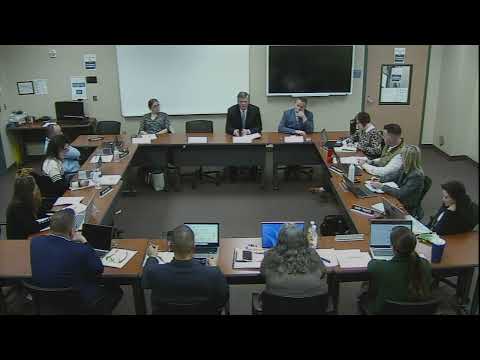
Representative Jess Hansen (state representative, District 55A), Senator Eric Pratt (state senator, Senate District 54) and other state lawmakers met with the Prior Lake‑Savage Area Schools board to preview education bills and hear district concerns about rising mandate costs and the state funding formula.
Board members and legislators framed the discussion around three near‑term priorities the district will emphasize at the Capitol: a review of the K‑12 funding formula and local optional revenue; a work group to review state assessments; and changes to K‑3 discipline and several under‑funded mandates, including Earned Sick and Safe Time (ESST), paid family medical leave and state unemployment funding for school districts.
Why it matters: District officials and lawmakers said those items are driving local budget pressure and increased staffing costs, and could force property tax increases if state aid does not offset new requirements. Senator Eric Pratt noted the state faces a multibillion‑dollar budget swing, saying the prior biennium produced an $18 billion surplus but that lawmakers now see a roughly $5.1 billion projected deficit going forward. "Money is going to be tight," Pratt said.
Representative Jess Hansen, who represents Savage as part of House District 55A, told the board she is prioritizing equitable funding, supports nurses and social workers in schools and highlighted the interplay of state policy and local contract negotiations. "School was one of the only places I ate," Hansen said, describing why free and reduced lunch programs and student supports matter in her advocacy.
Board members pressed legislators for specifics on unfunded mandates. A district staff member summarized the district's tally: "We are between $22,500,000 in unfunded or underfunded mandates in our district," and asked legislators to consider those figures when negotiating session bills. Board members said they will provide a refined list of local mandates for legislators to review.
Mandates flagged during the meeting included ESST, a recently passed beyond‑bullying standard described in the transcript as protections for malicious and sadistic conduct, paid family medical leave, and the Minnesota unemployment expenses that districts currently cover. Legislators and district leaders discussed practical cost estimates raised by staff: ESST exposure was described at roughly $308,000 for the district if fully new; paid family medical leave was described by staff as adding roughly $312,000 to $425,000 depending on rates; and the district said REED Act training and related obligations could total about $1,000,000 under some scenarios.
Assessment policy and accountability also drew sustained attention. Board members and staff asked for a task force or work group to evaluate whether the state’s Minnesota Comprehensive Assessments (MCAs) should be replaced or supplemented at the high‑school level with a nationally recognized entrance exam such as the ACT, and whether the state assessment system aligns to standards and yields timely, useful information for students and districts. "Colleges don't look at the MCA," one staff presentation said, arguing for better alignment and timelier results.
Several board members urged a narrow, tightly focused legislative platform. Director Mason argued for concentrating advocacy on a few achievable items: "Give us control and we'll figure it out," Mason said, urging emphasis on local control and select funding changes rather than a long list of requests.
Next steps: District administration said it will produce a one‑page legislative platform that highlights the agreed priorities and will circulate a companion “cheat sheet” with estimated dollar impacts for key mandates. Staff said the board will revisit and approve a final platform at the February business meeting and continue follow‑up conversations with legislators during session.
Sources and attributions in this report are drawn from the board meeting transcript and statements by Representative Jess Hansen (House District 55A), Senator Eric Pratt (Senate District 54), district administration staff and multiple board members.