Get Full Government Meeting Transcripts, Videos, & Alerts Forever!
Get email alerts on the Fentanyl Homicide topic
No spam. Unsubscribe anytime.
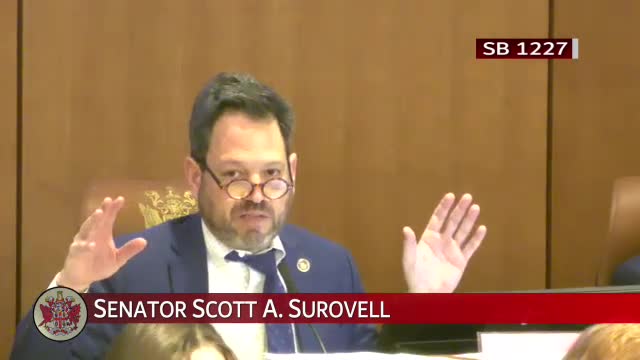
Senate panel advances bill to create fentanyl-related homicide charge for certain deaths, drawing strong emotion and mixed legal views
Summary
After emotional testimony from multiple family members who lost loved ones to fentanyl, a Senate subcommittee voted to report a substitute fentanyl-related homicide bill and refer it to Finance, while criminal-justice groups urged careful drafting to avoid public-safety and due-process pitfalls.
The Judiciary subcommittee advanced a substitute measure that creates a new statutory pathway to prosecute certain fentanyl-related deaths as homicide under circumstances described in the substitute. The discussion was among the meeting's most emotional: numerous family members of overdose victims testified in support of a stronger tool for prosecutors, describing sudden deaths of young people and pleading for penalties that reach traffickers.
Supporters argued the difficulty of proving proximate causation under existing law can leave dealers and distributors uncharged when victims die after ingesting substances that often include fentanyl. They urged a statute that allows convictions when evidence shows a distribution led to a fatal fentanyl ingestion, including where traffickers supply counterfeit pills or fentanyl-laced products. Several parents described situations where the alleged seller remained free and continued selling.
Opponents, including criminal-justice reform groups and civil liberties organizations, warned that adding homicide charges for drug distribution risks unintended consequences: they said existing drug distribution and enhanced-sentencing statutes already impose severe penalties and that adding homicide charges could deter witnesses or 911 calls during overdoses (a public-safety risk). They also warned about proof challenges and urged investments in public-health and harm-reduction responses.
The substitute that the committee accepted focused the new criminal pathway on fentanyl-related deaths and included an accommodation clause that reduces penalties in cases where two people used a substance together (commonly described as an 'accommodation' between users) so that co-users are not treated the same as a trafficker. Sponsors and counsel discussed venue and proof issues and agreed to further technical work to ensure venue rules allow prosecution in appropriate jurisdictions when victims are moved for treatment or die outside the place of distribution.
The committee voted to report the substitute and refer it to the Senate Finance Committee for fiscal review; the hearing record shows a recorded vote in favor of reporting.
Why this matters: Fentanyl is the leading driver of overdose fatalities in Virginia and nationally, and families and prosecutors are pressing for better tools to reach distributors of counterfeit pills and traffickers who sell fentanyl-laced products. But criminal-justice advocates worry new homicide charges could have perverse effects and urged careful crafting of venue, causation and mens rea elements.
Selected testimony excerpt: "My son paid for his mistake with his life. The dealer is still out there. He sold my son a pill that was supposed to be Percocet, but it was straight fentanyl. The dealer has been caught multiple times selling back in and out again. We need laws that allow prosecutors to go after traffickers who cause deaths."
Ending: The substitute advances to Senate Finance; sponsors and opponents signaled they will continue negotiating technical language, venue provisions and proof standards before the bill reaches the floor.