Get Full Government Meeting Transcripts, Videos, & Alerts Forever!
Get email alerts on the Elections Voting topic
No spam. Unsubscribe anytime.
Senate advances election changes: absentee‑ballot receipt deadline moved and presidential primary scheduling aligned
Summary
On Jan. 27 the Virginia Senate approved measures setting a later deadline for receipt of absentee ballots and aligning presidential‑year primary dates with the presidential primary; other election bills were debated or advanced for later action.
RICHMOND, Va. — The Virginia Senate on Jan. 27 approved changes affecting election administration, including extending the deadline for receipt of absentee ballots and aligning primary dates in presidential years with the presidential primary.
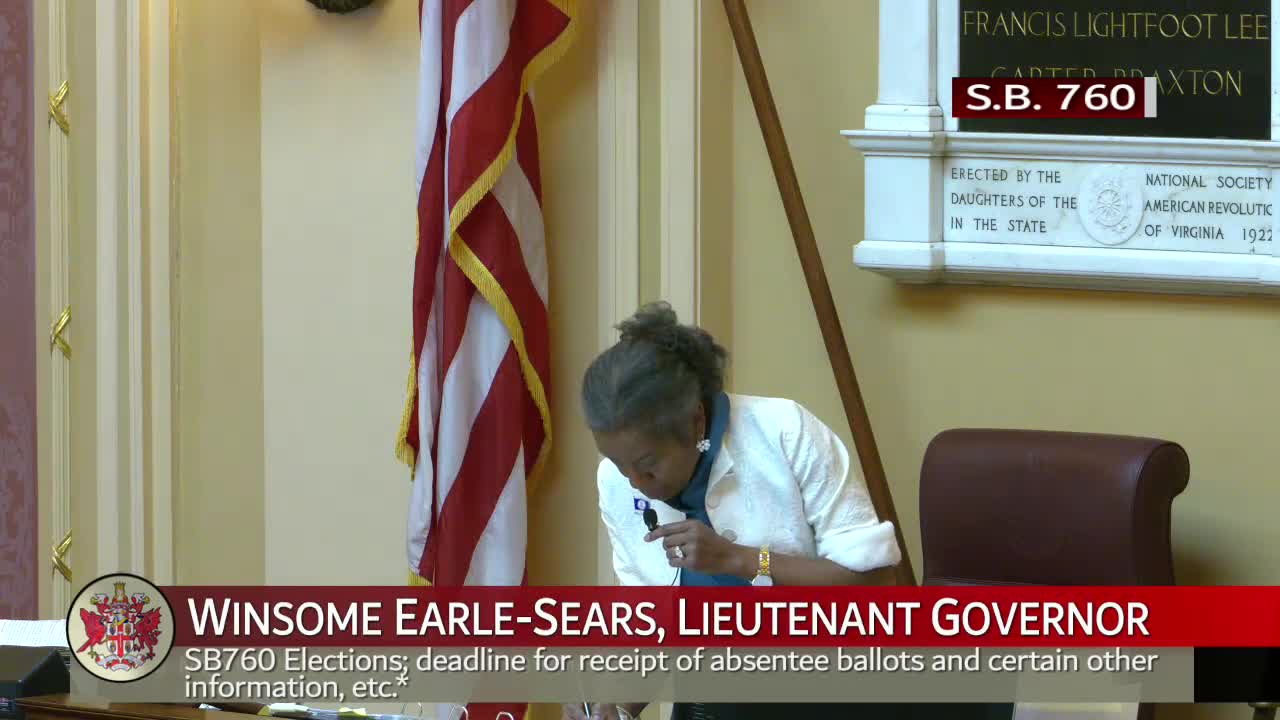
Senate Bill 760 moves the deadline for absentee ballots to be received from noon on the third day after an election to 5 p.m. on that third day; the measure passed 23–15. Sponsor Senator Favola (Arlington) said the change recognizes typical mail delays and cited the U.S. Postal Service national average delivery time of 2.8 days to justify allowing three full days for ballots to arrive.
Senate Bill 1119, a bill to align primary dates in presidential election years with the presidential primary (intended to reduce voter confusion and the number of separate elections), passed 27–11 after floor amendments and procedural steps to advance it to third reading.
Other election‑related measures were considered on the floor, including bills directing periodic review of voter rolls and rules on district conversions; some measures were advanced in committee or taken up later in the day for additional amendment.
Why it matters: The absentee‑ballot receipt deadline and the scheduling of primaries affect how many ballots are counted and when voters receive notice of elections. Officials and local registrars have to adjust workflows and public guidance when statutory deadlines change, and alignment with presidential primaries can reduce administrative costs and voter confusion in presidential years.
Key votes and actions
- SB 760 (absentee ballots: deadline for receipt moved to 5 p.m. on the third day after elections): Passed Ayes 23, Noes 15. Mover: Senator Favola. Sponsor argued change is reasonable given postal delivery averages; opponents voted no but debate did not show a subsequent motion to reconsider.
- SB 1119 (align primary dates in presidential years to presidential primary; no change to signature requirements): Passed Ayes 27, Noes 11 after floor amendments were agreed to and the Senate waived the third constitutional reading.
- SB 813 (regular periodic review of voter registration records): Introduced and explained by sponsor Senator Rouse; transcript did not include a recorded final roll‑call tally in the floor excerpt, so vote details are not specified in the public floor transcript provided.
What supporters said
Proponents framed SB 760 as modest, pragmatic housekeeping that helps both voters and postal services: “If it's 2.8 days [average delivery], giving them 3 full days to make sure the ballots are received seems very reasonable,” Senator Favola said.
Supporters of SB 1119 said aligning primaries reduces voter confusion, saves money and eases workload for registrars and election officials during presidential years.
What opponents said
Some senators expressed concern about timing, local control, and whether changes needed additional technical fixes; a handful of election bills were taken up later or sent back for additional drafting to address drafting or policy concerns.
Next steps
Bills that passed the Senate will go to the House and may be amended. Implementation steps—such as new guidance to registrars, public outreach on new deadlines, and updated vendor/configuration changes for election systems—would follow final enactment and any applicable effective dates.
Sources: Virginia Senate floor proceedings, Jan. 27, 2025, including recorded roll calls and floor explanations.