Get Full Government Meeting Transcripts, Videos, & Alerts Forever!
Get email alerts on the Municipal Aggregation topic
No spam. Unsubscribe anytime.
Senators debate municipal aggregation pilot to lower Appalachian Power customers' bills
Summary
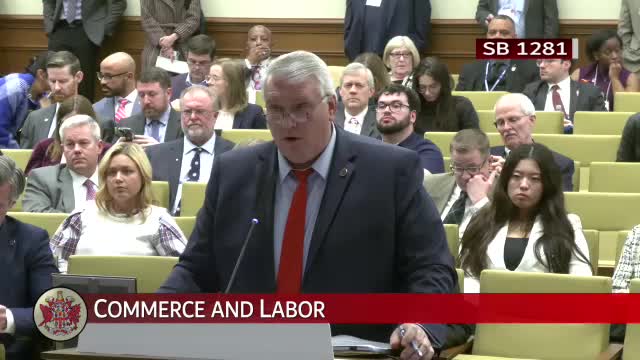
Patrons and witnesses spent more than an hour debating Senate Bill 1281, a bill that would authorize a municipal aggregation pilot in Appalachian Power Company’s territory to let localities negotiate power supply on behalf of residents and businesses.
Patrons and witnesses spent more than an hour debating Senate Bill 1281, a bill that would authorize a municipal aggregation pilot in Appalachian Power Company’s (APCO) territory to let localities negotiate power supply on behalf of residents and businesses.
The nut graf: Supporters say municipal aggregation can lower bills, offer price stability and consumer protections, and give local governments tools to procure cheaper or cleaner electricity; Appalachian Power and other opponents said the proposal risks customer protection gaps, potential cost‑shifts and planning complications.
Sen. Hackworth, sponsor of SB 1281, argued the measure would create a temporary pilot allowing local governments in APCO territory to aggregate customers for procurement from competitive suppliers and would require the State Corporation Commission to analyze benefits and potential adverse impacts. He said the program would be limited to APCO territory and include a sunset date.
Supporters included local residents and consumer advocates who described hardship from recent APCO rate increases. Rocky Hill of Southwest Virginia told the committee, “The monopoly and the guaranteed profit margin with AEP has to stop today,” describing large residential bills and disconnections for nonpayment. The Virginia Poverty Law Center, consumer groups, some competitive energy suppliers and renewable advocates testified in favor, saying municipal aggregation is used in other states and can achieve savings and consumer protections when structured carefully.
Opponents included Appalachian Power and major utilities. Ron Jefferson of Appalachian Power warned the committee the bill would bypass existing customer‑protection provisions in Virginia code and could leave nonparticipating customers with higher costs if suppliers “cherry‑pick” more profitable customers. Company representatives also argued that the State Corporation Commission’s current planning processes and existing regulatory structures are the appropriate venues to examine wholesale and retail market design.
Several senators said they sympathize with APCO‑territory consumers, including testimony about wildly high bills in some counties, and urged careful study. Multiple legislators proposed sending the bill to the Commission on Electric Utility Regulation and to the SCC for deeper analysis. A substitute motion to pass the bill by indefinitely (PBI) with a letter to the Commission on Electric Utility Regulation was discussed on the floor; committee debate continued and the hearing record shows the bill was debated extensively with motions made, but the transcript does not record a single final committee disposition on the original language during the session excerpted here.
Why it matters: APCO customers in parts of Southwest Virginia testified to steep rate increases and hardship; the bill attempts a locally controlled procurement mechanism that proponents say reduces rates and protects communities, while utilities warn of unintended market and planning consequences.
What to watch next: The committee and multiple senators signaled interest in referring the concept to the Commission on Electric Utility Regulation or the SCC for more study and analysis. If a legislative vehicle moves forward, sponsors and opponents said they will negotiate consumer‑protection language and limits on scope and timing.
Ending: The committee hearing captured sharp regional tensions over electricity costs, with legislators weighing urgent constituent needs against broader concerns about market structure and long‑term regulatory consequences.