Get Full Government Meeting Transcripts, Videos, & Alerts Forever!
Get email alerts on the Foreign Funding Transparency topic
No spam. Unsubscribe anytime.
Panel debates bill to require board approval, disclosure before partnerships with 'countries of concern'
Summary
Senate Bill 1247 would require public institutions to obtain governing‑board approval and to disclose certain partnerships or grants involving foreign "countries of concern," drawing debate about state authority and academic freedom.
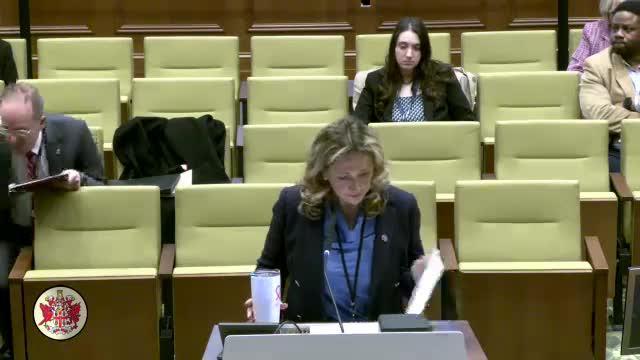
Senate Bill 1247, a transparency and national‑security‑framed proposal, prompted a lengthy debate in the Virginia Senate Higher Education Subcommittee over the appropriate scope of state oversight of university relationships with foreign governments.
Sponsor presentation: Senator Richard Durant (patron) said the bill would require public institutions of higher education to seek governing‑board approval before accepting a grant or entering a partnership with a foreign country of concern as defined by the bill. Durant told the committee the bill is modeled on measures from other states and reflects federal concern about foreign influence in university research and campus activity. He cited reports and federal warnings that have highlighted alleged efforts by foreign governments to obtain technological secrets and influence campus discourse.
Definition and scope: The bill uses a definition of “countries of concern” tied to lists maintained at the federal level, and would require institutions to establish compliance mechanisms overseen by the State Council of Higher Education for Virginia (SCHEV). Durant said the bill would require the council to establish and enforce mechanisms for compliance and penalties for noncompliance.
Questions and limits of authority: Senator Hashmi questioned whether the U.S. Secretary of Education has the authority to make national security determinations; Durant and other proponents responded that federal agencies and executive branch determinations inform the list of countries of concern and that SCHEV and governing boards would act after those federal determinations.
Support and opposition: The Office of the Attorney General filed support. Opponents included the Virginia Coalition For Human Rights (Nancy Ween), the Virginia Conference of the American Association of University Professors (Brian Turner), and student and advocacy groups. Opponents said the bill risked chilling academic collaboration, would fall outside state authority on foreign policy, and could deter faculty research and student exchanges. Brian Turner of the AAUP said the practical effect would be a chilling effect on hiring, research collaboration and exchanges because institutions and faculty would fear civil penalties.
Legal and procedural context: Durant cited the U.S.‑China Economic and Security Review Commission and referred to a pending federal court challenge in the Southern District of Florida to related state legislation. He acknowledged the bill would create an infrastructure to track and disclose foreign funding and said he did not have a figure for how many grants from countries of concern Virginia institutions currently receive.
Committee action: Senator Hashmi moved to pass the bill by indefinitely; Senator Ehret seconded. The motion and voice vote are recorded in the transcript; the final roll call tally on the motion is not specified in the portion of the transcript provided. Committee members asked for additional information about administrative capacity at SCHEV and potential impacts on exchange programs such as Fulbright.
Why it matters: Proponents say the bill would protect research and national security by increasing transparency and board oversight of foreign funding sources; opponents warn it would deter legitimate academic collaboration and impose state‑level foreign‑policy decisions on campuses.
Next steps: The transcript documents the motion to pass by indefinitely and substantive testimony for and against; committee members requested follow‑up materials on the number of affected grants, SCHEV’s enforcement capacity and potential impacts on exchange programs.